

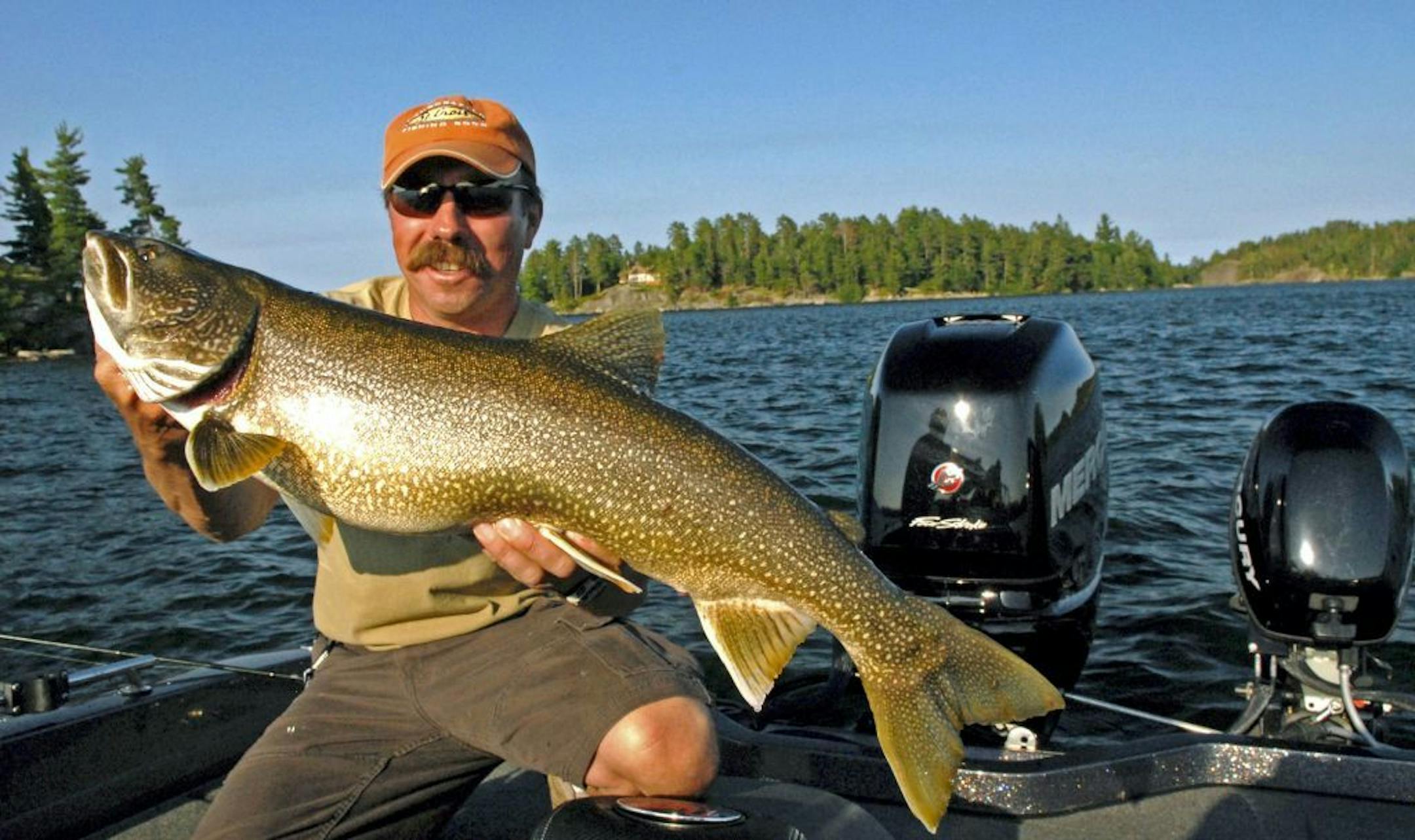
LAKE OF THE WOODS - Not far from the island in this big border lake where he grew up, Rob Horley dropped a jig over the boat's side the other evening. We were fishing for lake trout in 70 feet of water, and Rob's jig drifted through those depths a few long seconds before settling onto the bottom, his excess line gathering limply in loose circles on the surface.
I also had a jig resting on the rocky bottom, but only momentarily before reeling it quickly back toward me, mixing into this motion hurried upward sweeps of my rod, trying to trigger a strike.
"A trout will also hit a jig if you stop reeling on the way up and let it sit a second or two," Rob said.
We were on the Ontario side of Lake of the Woods, and the evening was warm but not hot. A soft breeze rose and fell as it made its way across the water and wound among the red and white pines on an island not far away. We saw no other boats.
Winding my jig to the surface, I flipped open my reel bale and again sent the lure to the bottom. Trout we were seeking could weigh up to 20 pounds, maybe more, their strikes vicious.
"This is a good spot," Rob said. "They're in here."
Rob's grandparents first came to Lake of the Woods in the summer of 1929, arriving in the Sioux Narrows area from the south end of the lake. They paddled multiple canoes and towed others, with a team of sled dogs in one. Erecting a tent on an island, they fished and gardened and picked berries and sometimes a moose fell to the pot. Fights between the dogs, so important in winter, and the island's bears caused no end of racket. Come late autumn, before freeze-up, they paddled south again, to Rainy River, Ontario, where they passed the winter.
Rob's grandparents eventually established a permanent home on the island to raise a family and build a fishing camp, the Sanctuary, which still exists.


