
At HCMC, she speaks up when patients can't

November 18, 2010 at 4:59AM
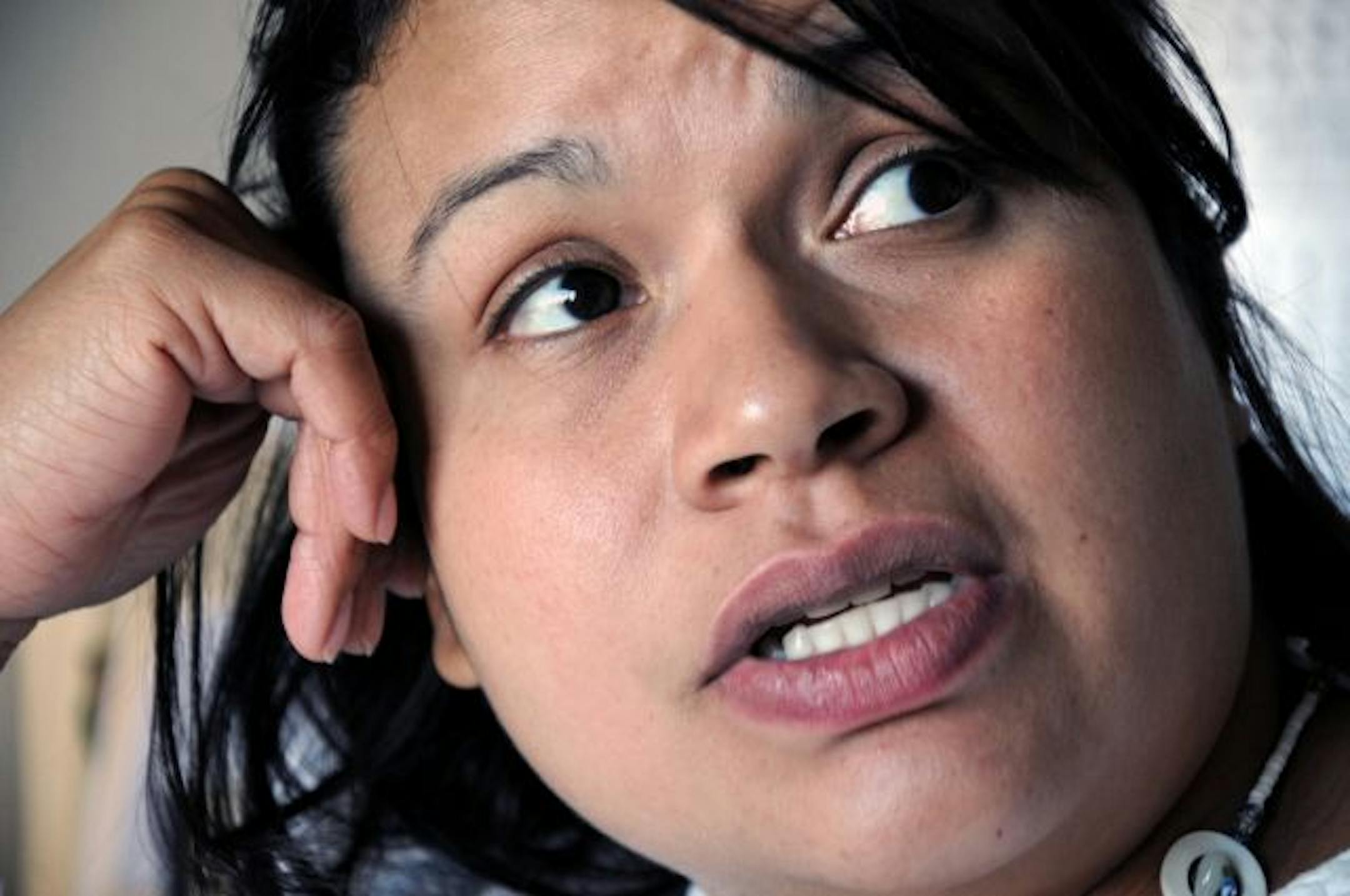
Aida Winona Strom, a member of the Sisseton Wahpeton Dakota Oyate, fills an unusual and essential role at HCMC as an American Indian patient advocate.
Aida Winona Strom, a member of the Sisseton Wahpeton Dakota Oyate, fills an unusual and essential role at HCMC as an American Indian patient advocate. (Star Tribune/The Minnesota Star Tribune)

Aida Winona Strom moves efficiently from room to room at the Hennepin County Medical Center, clipboard in hand, her gentle greeting a pleasant surprise: "Hello, I'm Aida. Where are you from?"

Strom, 35, has just completed her first year as the hospital's American Indian patient advocate, a unique role developed to build trust with the hospital's growing number of American Indian patients and improve their health outcomes. Many face chronic conditions such as diabetes and kidney failure. Strom's warm smile and expertise in "translating" the medical system are sweet medicine.

"It's easier when they know me," she said. "When we greet each other, we ask, 'Where are you from? Oh, I know someone from Standing Rock.' It's a connector. The comfort level is there."

A member of the Sisseton Wahpeton Dakota Oyate of South Dakota, Strom knows family names, traditions, quirks. She understands how scary it can be to be sick far from family and farther still from familiar healing practices. Calm and organized, she's relentless on the phone when advocating for her patients, whose needs range from easy (a meal or blanket) to complex, such as bringing in a medicine man or finding sleeping quarters for family members who often accompany a loved one to the hospital, then stay for weeks.

"That's the typical dynamic of Indian people, especially from out of state," she said. "The patient is flown in and, all of a sudden, 10 family members are there because that's what we do."

Social work manager Sara Molstad said patients "perk up" when Strom walks into the room. "They appreciate that someone is there to ask them how they're doing or, 'Would you like a visit from a community elder?' Sometimes people face barriers because they don't know how to ask," Molstad said. "Aida is that voice."

The mother of a 4-year-old daughter born at HCMC, Strom isn't opposed to tough love, either. "A patient will tell me, 'Look, I've been buzzing this buzzer for two minutes now.' I'll say, 'You're on a floor with 25 other people. You may have to wait.'"

Advocates like Strom are rare. Molstad knows of only one other, in South Dakota. HCMC has had four advocates over 20 years, their duties crafted and evolving with guidance from local American Indian leaders. In January, the Shakopee Mdewakanton Sioux Community gave HCMC a $10,000 grant to increase Strom's hours from 20 to 24 hours a week. Still, she barely comes up for air.
"When I interviewed for the position, I was told the average number of patients monthly was 50 to 60. But 130 is the reality, and I don't even deal with the emergency room."

Her days begin about 8 a.m. On this morning, she was on the phone working to get a prosthesis for a 20-something car crash victim. She doesn't care if she sounds pushy. "Great, it's Aida again," she mimicked with a laugh.

Then she was up and out into the hallway. Wearing comfortable gold flats and moving fast, she went from the burn unit to obstetrics, greeting 2-year-olds and 80-year-olds. She's surprised by the number of tribes represented at HCMC, including members of her own Sisseton. "That speaks volumes about this hospital," she said.

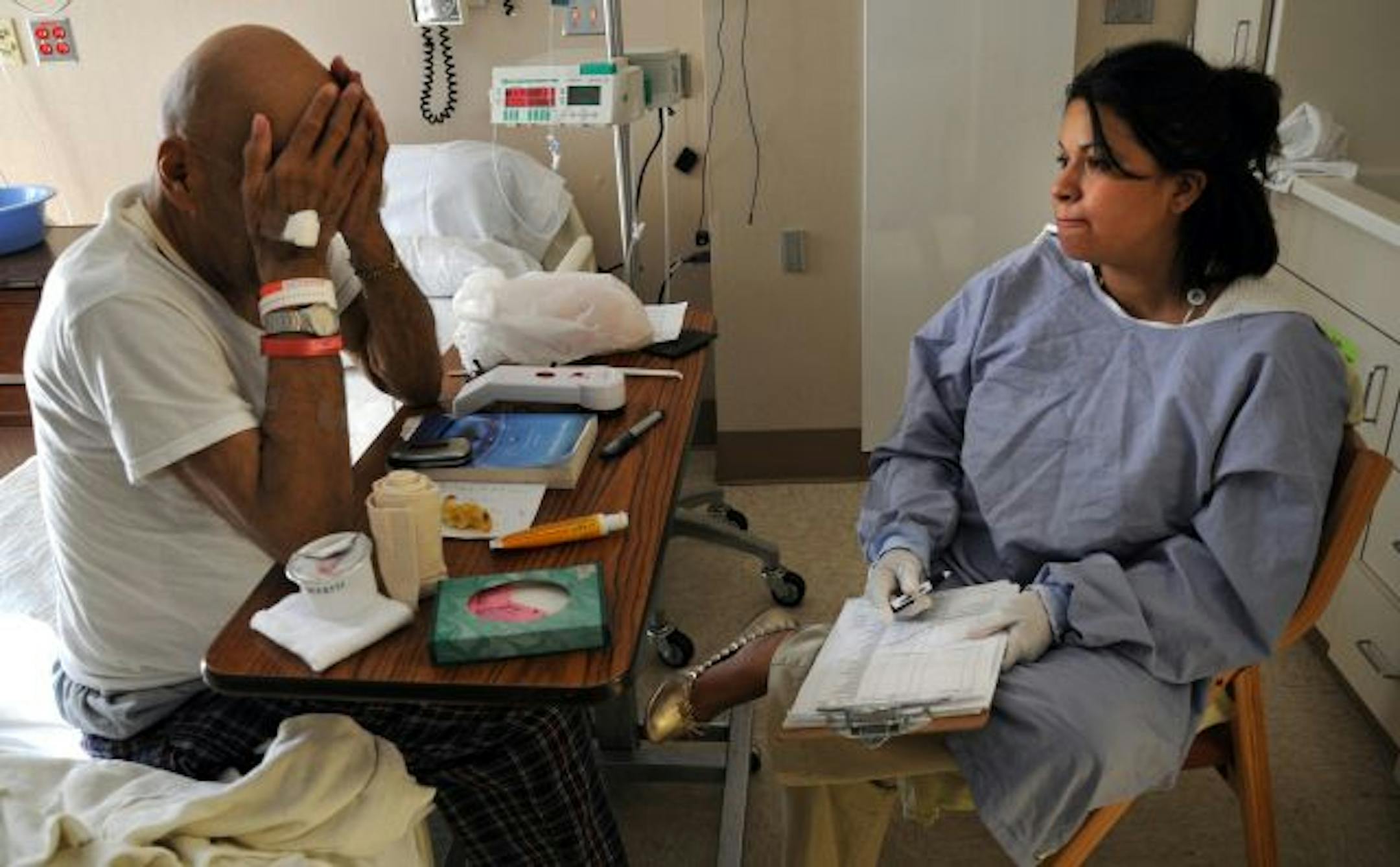
She enters the room of heart patient Glenn Greene. He sits up in bed, a cell phone, book and apple core on the bedside table. "How's the food?" she asks him.

"Could be better."

She smiles, then asks him about insurance and whether he will need a personal care attendant when he goes home. He resists. She suggests an attendant within the Indian community, and he nods. She assists another patient with a medication refill and suggests that he connect with the Native American Community Clinic in Minneapolis, which has a strong diabetes clinic.

Growing up in South Dakota, she had no concept of cultural disparities until she moved to the Twin Cities in high school so her mother could become head of the St. Paul American Indian Center.

Coming from a tight-knit family and a small town where everyone knew each other, Strom was shocked by the number of children mired in the foster care system. "Watching all these Indian kids who were disenfranchised and separated from their families really struck me," she said.

She attended Carleton College but was "extremely homesick. That's when I really started to understand my connection to my culture, because it wasn't there." Later, she was placed into the buyer program at Target, spending "late nights trying to come up with a new color for yellow. It wasn't doing it for me."

She began to advocate on behalf of American Indian girls throughout the Twin Cities and that felt right. When the HCMC job opened up, she jumped. "The work I'm doing is awesome," she said. "Clearly I'm privileged and in a different place than a lot of the people coming in.

"The work is fast-paced, which I love. The commitment is different, too. People have to know me and trust me way more quickly. And they do."

Gail Rosenblum • 612-673-7350 • gail.rosenblum@startribune.com

Aida Winona Strom talked with heart patient Glenn Greene from the Leech Lake Reservation about arranging for personal care when he leaves the hospital.
Aida Winona Strom talked with heart patient Glenn Greene from the Leech Lake Reservation about arranging for personal care when he leaves the hospital. (Star Tribune/The Minnesota Star Tribune)
about the writer

about the writer

Gail Rosenblum

Inspired Editor

See Moreicon