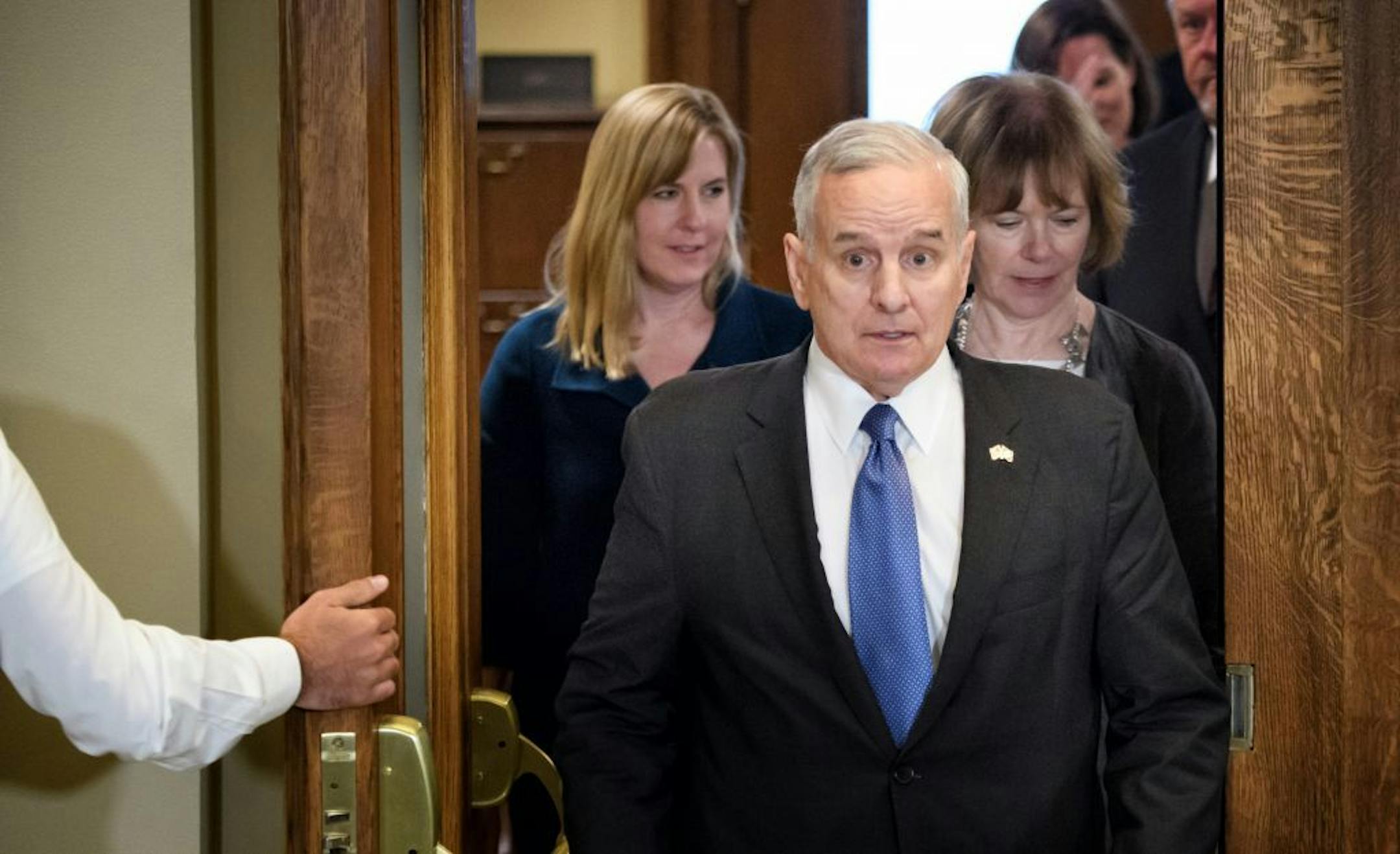
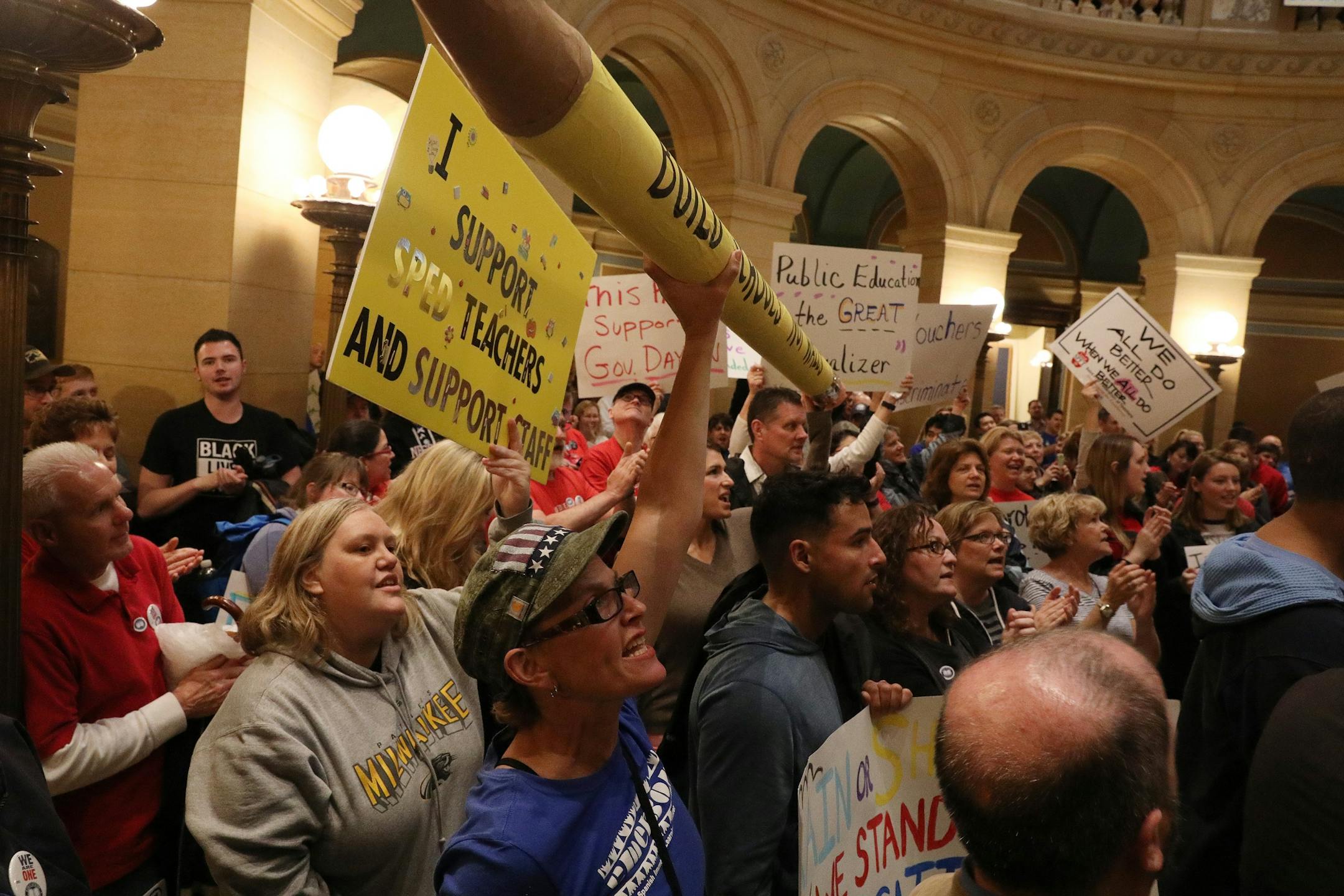
Minnesota lawmakers have only two days left in their nearly five-month session and one huge, unfinished job in deciding how the state should spend $46 billion over the next two years.
Despite the urgency, Saturday was a day of relative quiet at the State Capitol. Gov. Mark Dayton and top commissioners negotiated in private throughout the day with Republicans who control the Legislature, hoping to overcome major divisions on taxes, transportation and spending on health and human services programs. By evening, the kind of last-minute rush of activity that usually accompanies a session's closing hours had not yet materialized.
Secrecy around budget talks often means both sides think they're making progress. But in the absence of concrete proof of that, uncertainty was in the air inside the statehouse. Would the DFL governor and Republican Legislature find a way to compromise by Monday's midnight deadline, striking a balance between DFL spending priorities and tax cuts sought by Republicans? Can the two sides avoid a special session and threat of government shutdown?
Lobbyists, activists, reporters and even most lawmakers waited on the sidelines as the leaders scrambled to strike a deal out of public view. Also not clear was whether Republicans continued to insist on a handful of policy priorities Dayton has called unacceptable, including a ban on the ability of cities to set their own minimum wage and sick leave regulations.
For rank-and-file legislators out of the loop but accountable to constituents, it's a frustrating time.
"Out of 134 [House members], about 125 of us are waiting in the wings," said Rep. Jack Considine, DFL-Mankato. "Which frankly, I don't believe is what I was elected to do."
As the session careens to a close, some at the Capitol drew comparisons to Dayton's first year in office, 2011. That year, the DFL governor and a Republican-majority Legislature failed to strike a budget deal before the June 30 close of the state's fiscal year, forcing Minnesota into a nearly three-week government shutdown.
Though the state has the same divided government this time around, Senate Minority Leader Tom Bakk, DFL-Cook, said there is much that sets 2017 apart from 2011. Most notably, that year Dayton and lawmakers were forced to account for a $5 billion budget deficit; this time, a $1.65 billion budget surplus makes the debate about what to do with extra money rather than how to make up for a lack of it.