

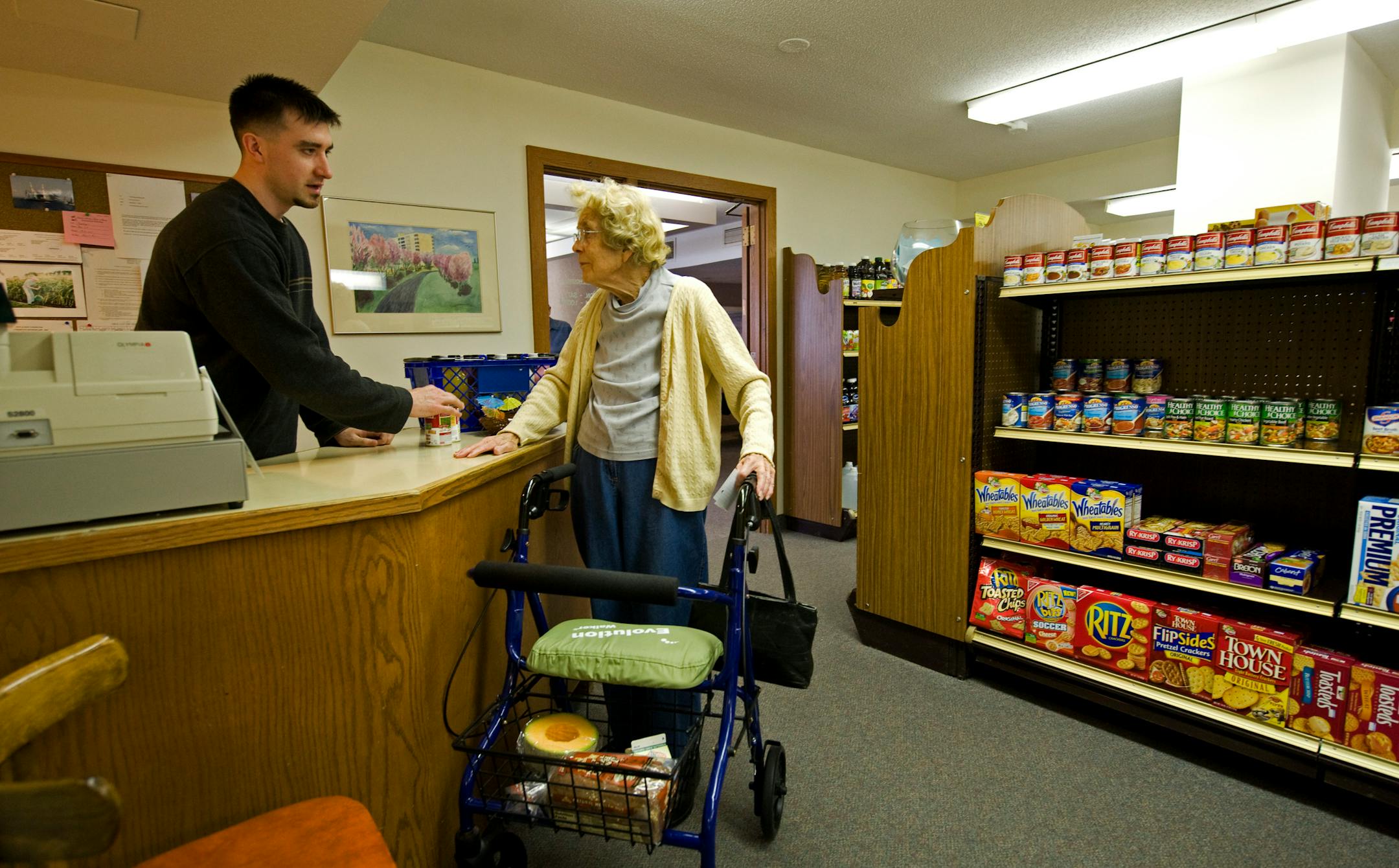
When Edina's 7500 York Cooperative for senior citizens was new, the residents who came down from their apartments to the first-floor restaurant for dinner wore suits and ties or dresses and high heels.
Almost no one used a cane. In a building designed for independent living, that was a sign of weakness. Walkers and wheelchairs were nowhere to be found.
Now, as the building marks its 30th anniversary as one of the nation's first senior co-ops, diners in the restaurant fight traffic jams created by walkers that must be cleared from the aisles, yet must be nearby for their owners.
While one resident jogs down the lobby stairway and out the door for a quick walk in the cold, another resident sits sightless in an armchair facing the windows, clutching a cane.
7500 York is an extreme example of aging in place. It is populated by 423 highly educated seniors who were teachers, bankers, nurses, business owners and ministers. As a co-op, each resident owns a piece of the 337-unit building, and they and their elected board govern what happens there. Many love the place for its community spirit.
Yet keeping to its original intent -- a residence for people ages 55 and older who can live on their own -- has become a challenge as residents cling to their homes even though they inevitably need more assistance. In the past decade, in the face of some resistance, the co-op has welcomed in-home health care and is now looking to build an assisted living, memory care and short-term care facility next door.
"One thing you learn here is to face the reality of aging," said Hulda Gieschen, 89, who a few winters ago greeted a heavy snowfall by making snow angels. "We help each other."
A radical idea back then


