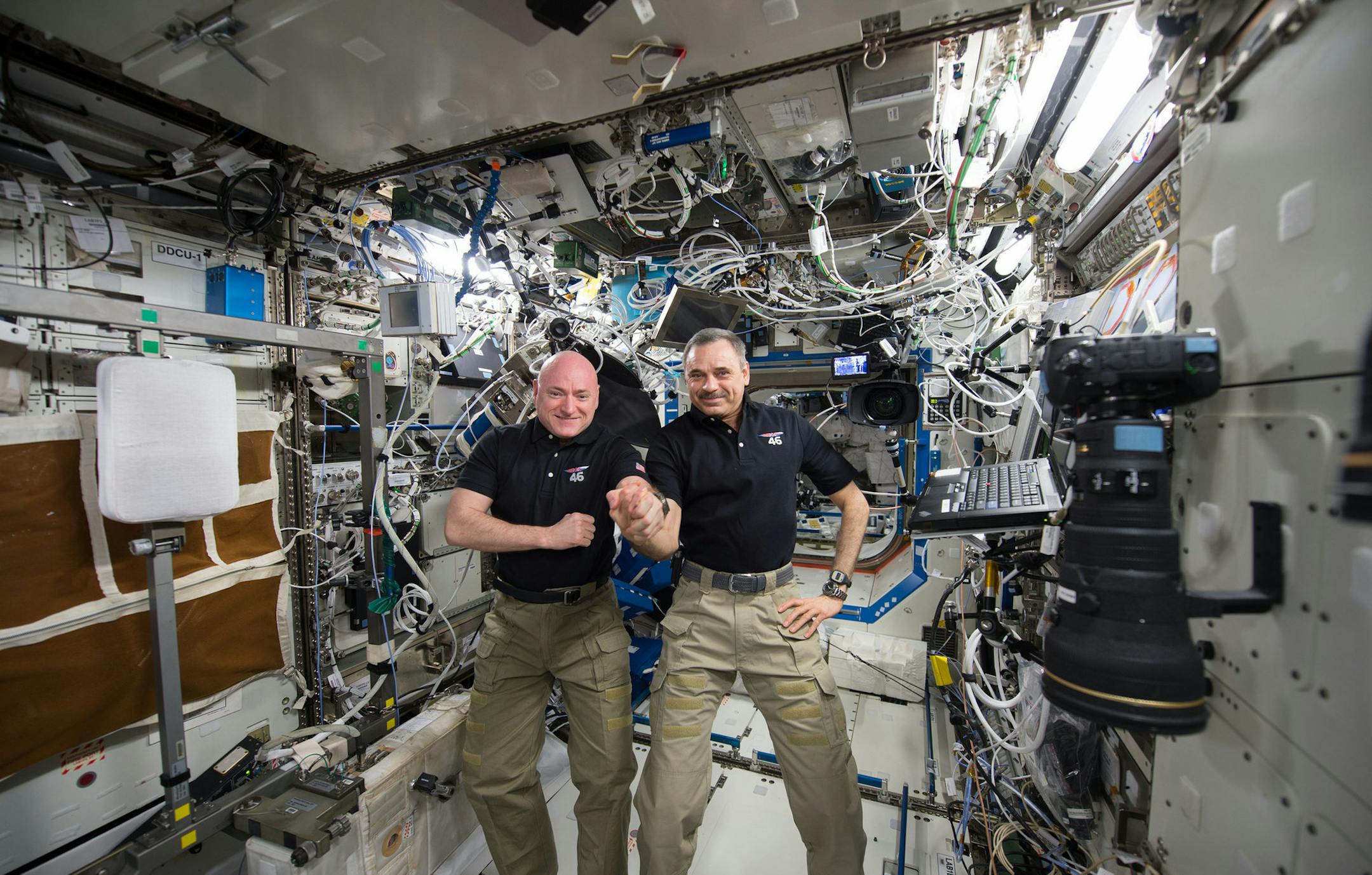
Scott Kelly and Russian cosmonaut Mikhail Kornienko came blazing into Earth's atmosphere in the Soyuz spacecraft at more than 17,000 miles per hour before landing on Kazakhstan soil late Tuesday, a familiar trip for the veteran U.S. astronaut.
Mission Control in Houston reported the module "is back down on planet Earth," landing upright.
After he was pulled from the craft, Kelly, with a smile, quipped: "The air feels great out here." Then, he said to the crowd of journalists, "I can't imagine why you guys are so bundled up."
Kelly's safe return home — he is expected at Ellington Field in Houston by Wednesday — is one for the record books. After 340 days aboard the International Space Station this go-round, Kelly has become the first American astronaut to have spent nearly a year in space.
And with four trips to the space station under his belt, Kelly now has the most cumulative hours in space among U.S. astronauts, beating the old record held by Mike Fincke.
More important, Kelly's mission could represent a major step toward NASA's ambition to send humans to Mars by the 2030s, providing new evidence about how the body holds up to the stresses of long-duration space travel. Until now, U.S. scientists have had data from only six-month trips; while useful, the information doesn't show them much beyond the immediate effects of microgravity and radiation.
In the weeks and months ahead, Kelly will continue to be poked, bled and probed at Johnson Space Center before traveling to Russia for more of the same. Likewise, Kornienko will visit Johnson, where scientists will learn more about the mission's effects on the astronauts' cardiovascular system, bones and vision.
"This is a significant step for us," said Dan Huot, a NASA spokesman. "It's what a lot of people have hoped for."