

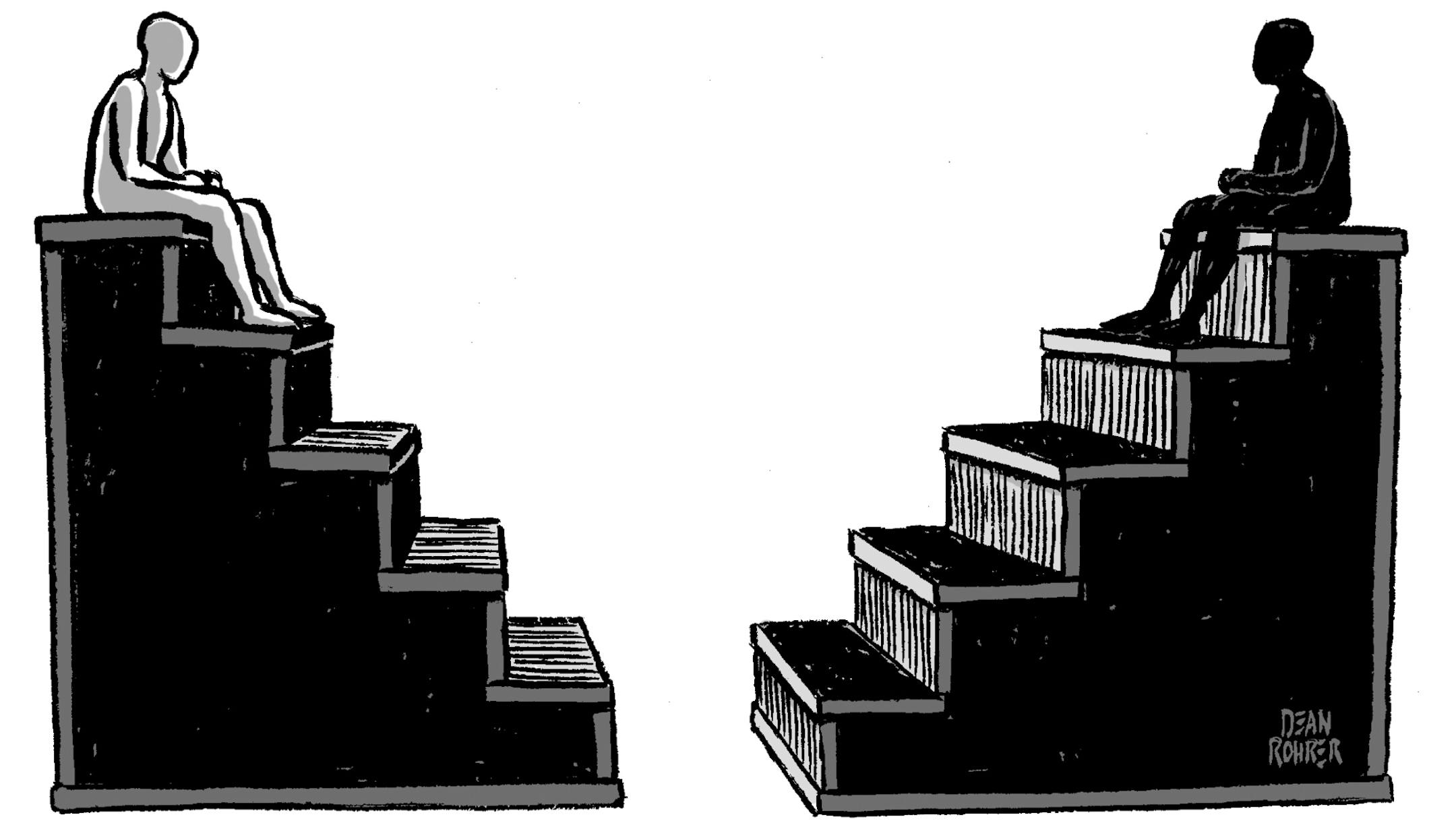
Trayvon Martin is dead, George Zimmerman has been acquitted and millions of people are outraged. Some politicians are demanding a second prosecution of Zimmerman, this time for hate crimes. Others are blaming the tragedy on "stand your ground" laws, which they insist must be repealed. Many who saw the case as proof of racism in the criminal-justice system see the verdict as further confirmation. Everywhere you look, people feel vindicated in their bitter assumptions. They want action.
But that's how Martin ended up dead. It's how Zimmerman ended up with a bulletproof vest he might have to wear for the rest of his life. It's how activists and the media embarrassed themselves with bogus reports. The problem at the core of this case wasn't race or guns. The problem was assumption, misperception and overreaction. And that cycle hasn't ended with the verdict. It has escalated.
I almost joined the frenzy. This week I was going to write that Zimmerman pursued Martin against police instructions and illustrated the perils of racial profiling. But I hadn't followed the case in detail. So I sat down and watched the closing arguments: nearly seven hours of video in which the prosecution and defense went point by point through the evidence as it had been hashed out at the trial. Based on what I learned from the videos, I did some further reading.
It turned out I had been wrong about many things. The initial portrait of Zimmerman as a racist wasn't just exaggerated. It was completely unsubstantiated. It's a case study in how the same kind of bias that causes racism can cause unwarranted allegations of racism. Some of the people Zimmerman had reported as suspicious were black men, so he was a racist. Members of his family seemed racist, so he was a racist. Everybody knew he was a racist, so his recorded words were misheard as racial slurs, proving again that he was a racist.
The 911 dispatcher who spoke to Zimmerman on the fatal night didn't tell him to stay in his car. Zimmerman said he was following a suspicious person, and the dispatcher told him, "We don't need you to do that." Chief prosecutor Bernie de la Rionda conceded in his closing argument that these words were ambiguous. De la Rionda also acknowledged, based on witness and forensic evidence, that both men "were scraping and rolling and fighting out there." He pointed out that the wounds, blood evidence and DNA didn't match Zimmerman's story of being thoroughly restrained and pummeled throughout the fight. But the evidence didn't fit the portrait of Martin as a sweet-tempered child, either. And the notion that Zimmerman hunted down Martin to accost him made no sense. Zimmerman knew the police were on the way. They arrived only a minute or so after the gunshot. The fight happened in a public area surrounded by townhouses at close range. It was hardly the place or time to start shooting.
That doesn't make Zimmerman a hero. It just makes him a reckless fool instead of a murderer. In a postverdict news conference, his lawyer, Mark O'Mara, claimed that "the evidence supported that George Zimmerman did nothing wrong," that "the jury decided that he acted properly in self-defense" and that Zimmerman "was never guilty of anything except protecting himself in self-defense. I'm glad that the jury saw it that way."
That's completely wrong. The only thing the jury decided was that there was reasonable doubt as to whether Zimmerman had committed second-degree murder or manslaughter.
Zimmerman is guilty, morally if not legally, of precipitating the confrontation that led to Martin's death. He did many things wrong. Mistake No. 1 was inferring that Martin was a burglar. In his 911 call, Zimmerman cited Martin's behavior. "It's raining, and he's just walking around" looking at houses, Zimmerman said. He warned the dispatcher, "He's got his hand in his waistband." He described Martin's race and clothing only after the dispatcher asked about them. Whatever its basis, the inference was false.


