

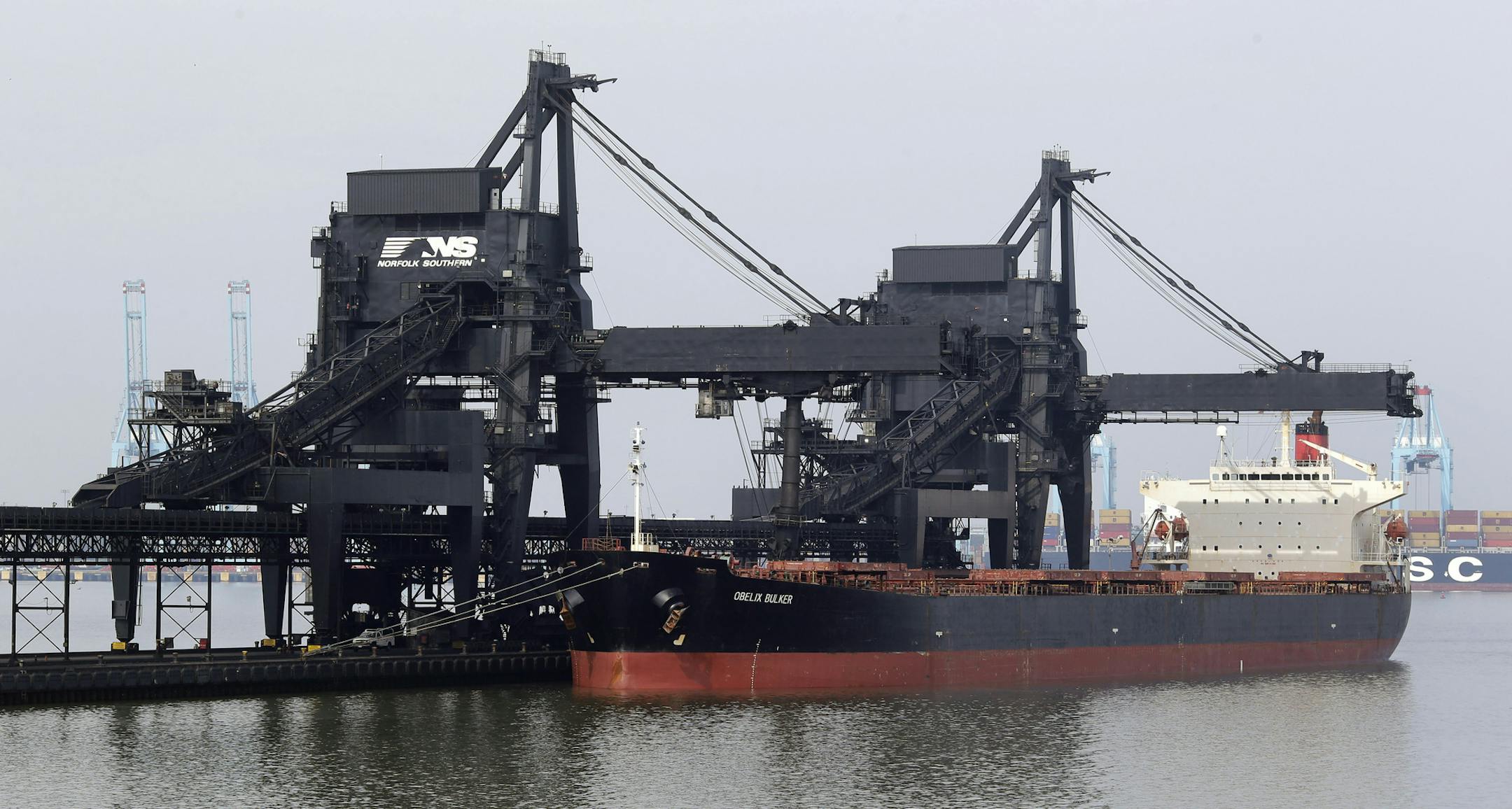
NEWPORT NEWS, Va. – Coal from Appalachia rumbles into this port city, 150 railroad cars at a time, bound for the belly of the massive cargo ship Prime Lily. The ship soon sets sail for South America, its 80,000 tons of coal destined for power plants and factories, an export of U.S. energy — and pollution.
In the United States, this coal and the carbon dioxide it will release are some of the unwanted leftovers of a plan to go greener. With the country moving to cleaner natural gas, the Obama administration wants to reduce power plant pollution to make good on its promise to the world to cut emissions.
Yet the estimated 228,800 tons of carbon dioxide contained in the coal aboard the Prime Lily equals the annual emissions of a small U.S. power plant. It's leaving this nation's shores, but not the planet.
'Shifting the responsibility'
"This is the single biggest flaw in U.S. climate policy," said Roger Martella, the former general counsel at the Environmental Protection Agency under President George W. Bush. "Although the administration is moving forward with climate change regulations at home, we don't consider how policy decisions in the United States impact greenhouse gas emissions in other parts of the world."
This fossil fuel trade, which has soared under President Obama, threatens to undermine his strategy to reduce the gases blamed for global warming. It also reveals a little-discussed side effect of countries acting alone on a global issue.
As the United States tries to set a global example by reducing demand for fossil fuels at home, U.S. energy companies are sending more dirty fuels than ever to other parts of the world, exports worth billions of dollars every year. In some cases, these castoffs of the United States' clean energy push are ending up in places with more lax environmental standards, or where governments are resistant to tackling the emissions responsible for global warming.
It's a global shell game on fossil fuels that at the very least makes the United States appear to be making more progress on global warming than it is because it shifts some of the pollution — and the burden for cleaning it up — onto another country's balance sheet.
"It's not taking responsibility," said Prof. Thomas Power, a researcher at the University of Montana who has worked for environmental groups and clean energy foundations and has pushed for a more honest accounting of emissions. "It's shifting the responsibility to someone else."


