

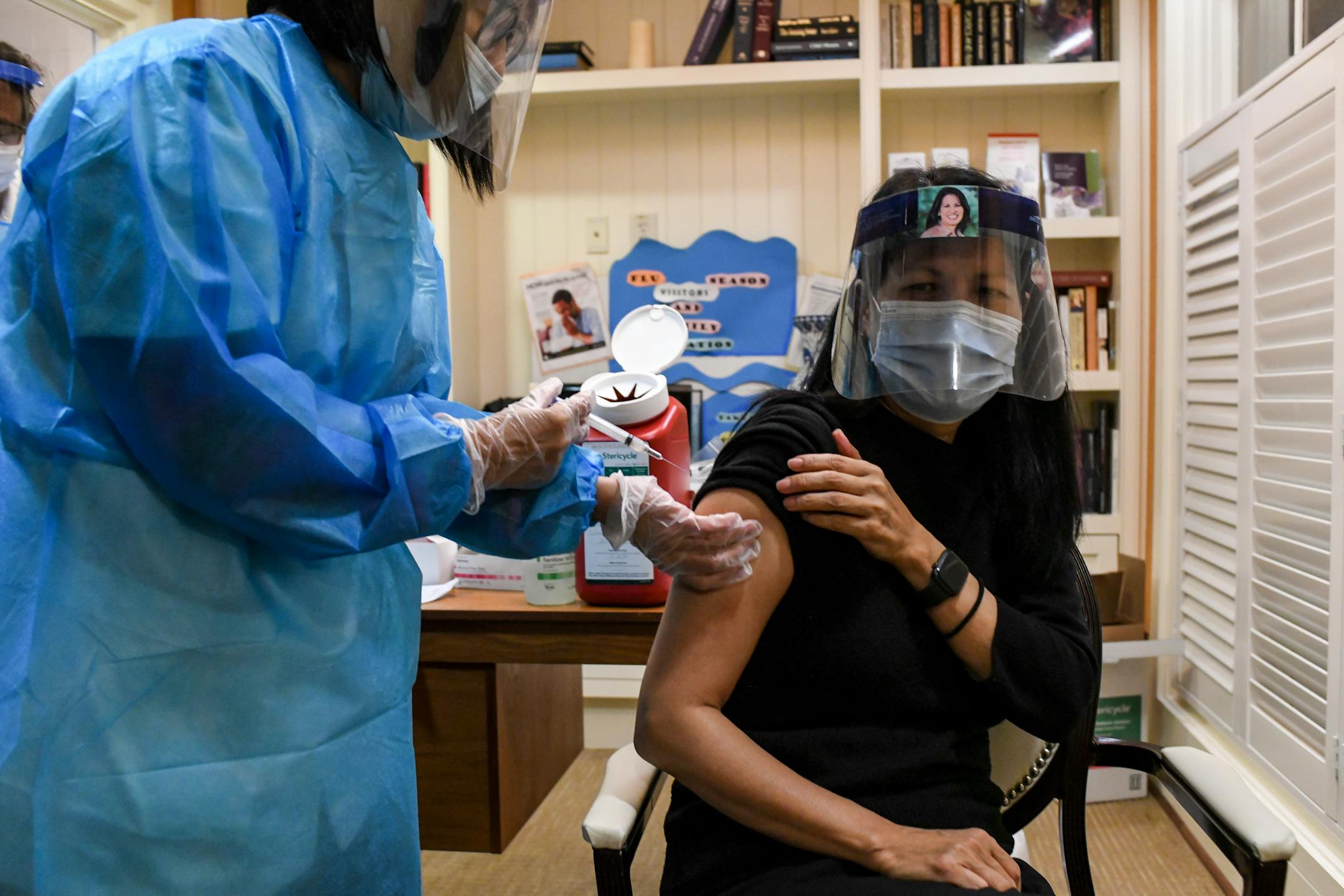
"COVID is not pretty in a nursing home," said Deb Wityk, a 70-year-old retired massage therapist who lives in one called Spurgeon Manor, in rural Iowa. She has contracted the disease twice and is eager to get the newly approved vaccine because she has chronic leukemia, which weakens her immune system.
The Centers for Disease Control and Prevention approved the latest vaccine two weeks ago, and the new shots became available to the general public within the last week or so. But many nursing homes will not begin inoculations until well into October or even November, though infections among this vulnerable population are rising, to nearly 1%, or 9.7 per 1,000 residents, in mid-September from a low of 2.2 per 1,000 residents in mid-June.
"The distribution of the new COVID-19 vaccine is not going well," said Chad Worz, the CEO of the American Society of Consultant Pharmacists. "Older adults in those settings are certainly the most vulnerable and should have been prioritized."
With the end of the formal public health emergency in May, the federal government stopped purchasing and distributing COVID vaccines. That has added new complications for operators of nursing homes, who have encountered resistance throughout the pandemic in persuading people, especially employees, to receive yet another round of shots.
The coronavirus decimated nursing homes during the first two years of the pandemic, killing more than 200,000 residents and staff members. Elizabeth Sobczyk, the project director of Moving Needles, a CDC-funded initiative to improve adult immunization rates in long-term care facilities, said that without a government agreement to purchase the shots, vaccine manufacturers would make large quantities only once CDC experts recommended approval.
"Then they need to be FDA-inspected — we want safe vaccines — then there is contracting and rollout," Sobczyk said. "So I completely understand the frustration, but also why the availability wasn't immediate."
Even once the shots are available, nursing homes face continuing resistance to the vaccines among nurses and aides. Without state mandates for workers to be vaccinated, most nursing homes are relying on persuasion, and that is often proving difficult.
"People want COVID-19 to be in the rearview mirror," said Leslie Eber, medical director of Orchard Park Health Care Center in Centennial, Colorado. "We're going to have to remind people more this year that COVID-19 is not benign. Maybe it's a cold for some people, but it's not going to be a cold for the folks I care for."


