

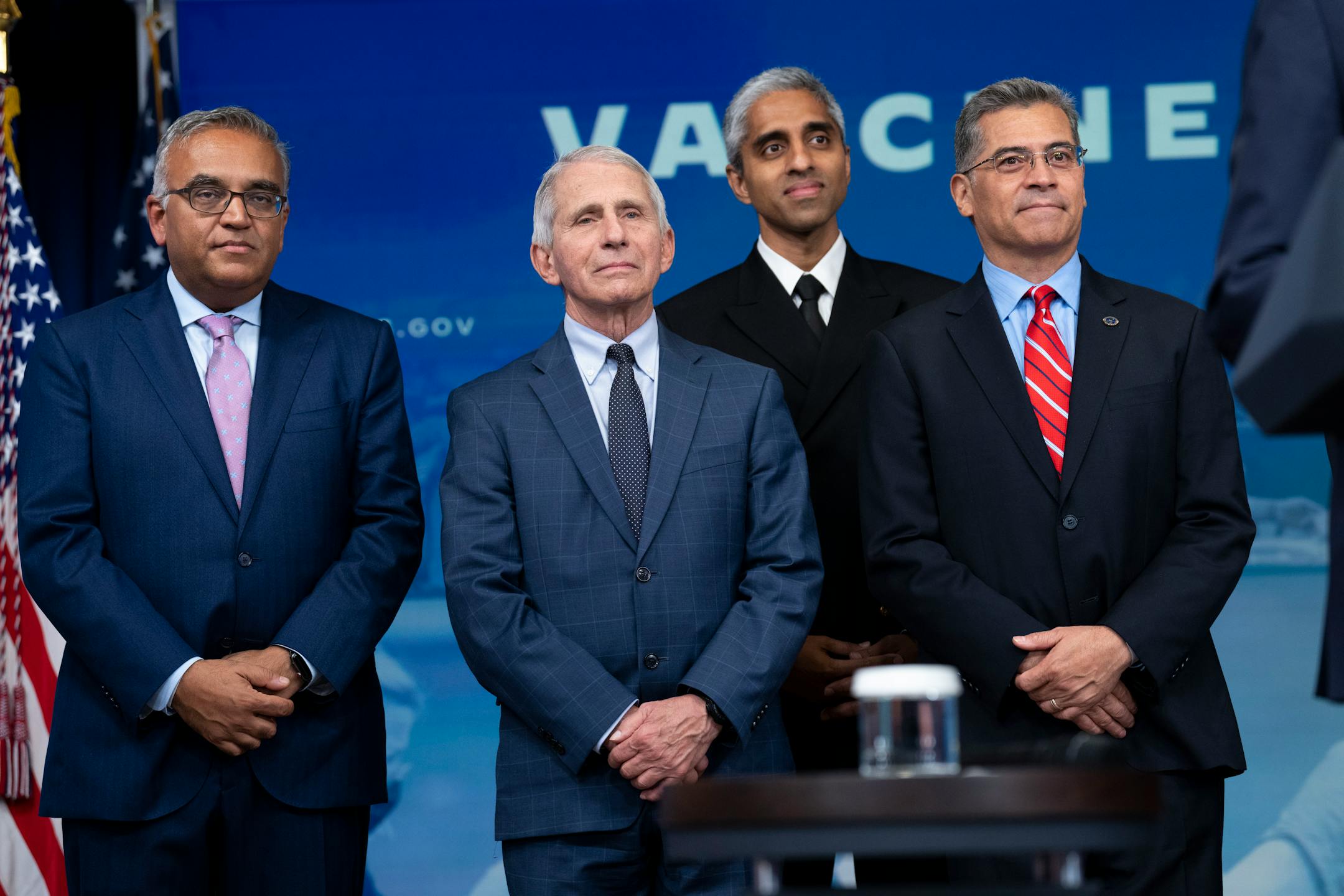
WASHINGTON — On Thursday, three years and 100 days after the Trump administration declared the coronavirus a public health emergency, the Biden administration will allow the emergency declaration to expire, ushering in a new era when the government will treat COVID-19 like any other respiratory ailment.
If the coronavirus pandemic was a war, the United States is about to officially enter peacetime.
But interviews with senior federal and state health officials — including the secretary of health and human services and the commissioner of the Food and Drug Administration — make clear that while the United States has greatly improved its capacity to fight COVID-19, it is not fully prepared for a radically different future variant or a new pandemic.
State health officials, tasked with tracking the coronavirus, are burned out, their departments understaffed. President Joe Biden's coronavirus response team will soon disband. The White House has yet to fulfill Congress' directive to set up a new pandemic preparedness office, and key officials, including Dr. Ashish K. Jha, the coronavirus response coordinator, and Dr. Rochelle P. Walensky, the director of the Centers for Disease Control and Prevention, are stepping down or intend to do so.
Jha and other federal health officials have spent months laying the groundwork for the end of the public health emergency, and the Biden administration has set up programs to keep vaccines free for the uninsured and to support medical research into new vaccines and therapies. But the officials say they are operating on a tight budget; Congress has refused to give the administration any new money for the pandemic response.
When asked if the country was prepared for a new pandemic, Dr. Francis Collins, the former director of the National Institutes of Health, simply replied, "No." Biden's secretary of health and human services, Xavier Becerra, paused for several seconds before answering the same question.
"It depends on the degree," Becerra finally said, adding: "We've learned a lot from COVID. We're prepared to deal with COVID — even some of the variants as they come. If it's something totally different, avian flu, I become a little bit more concerned. If it becomes some kind of biological weapon, you know, that's another issue altogether."
The emergency declaration, Jha said, has given the government and the nation's health care system the flexibility to take extraordinary measures during the crisis, such as setting up hospital beds in a parking lot. Jha, who has told colleagues he intends to return to his job as dean of the Brown University School of Public Health, said those kinds of steps were no longer necessary.


