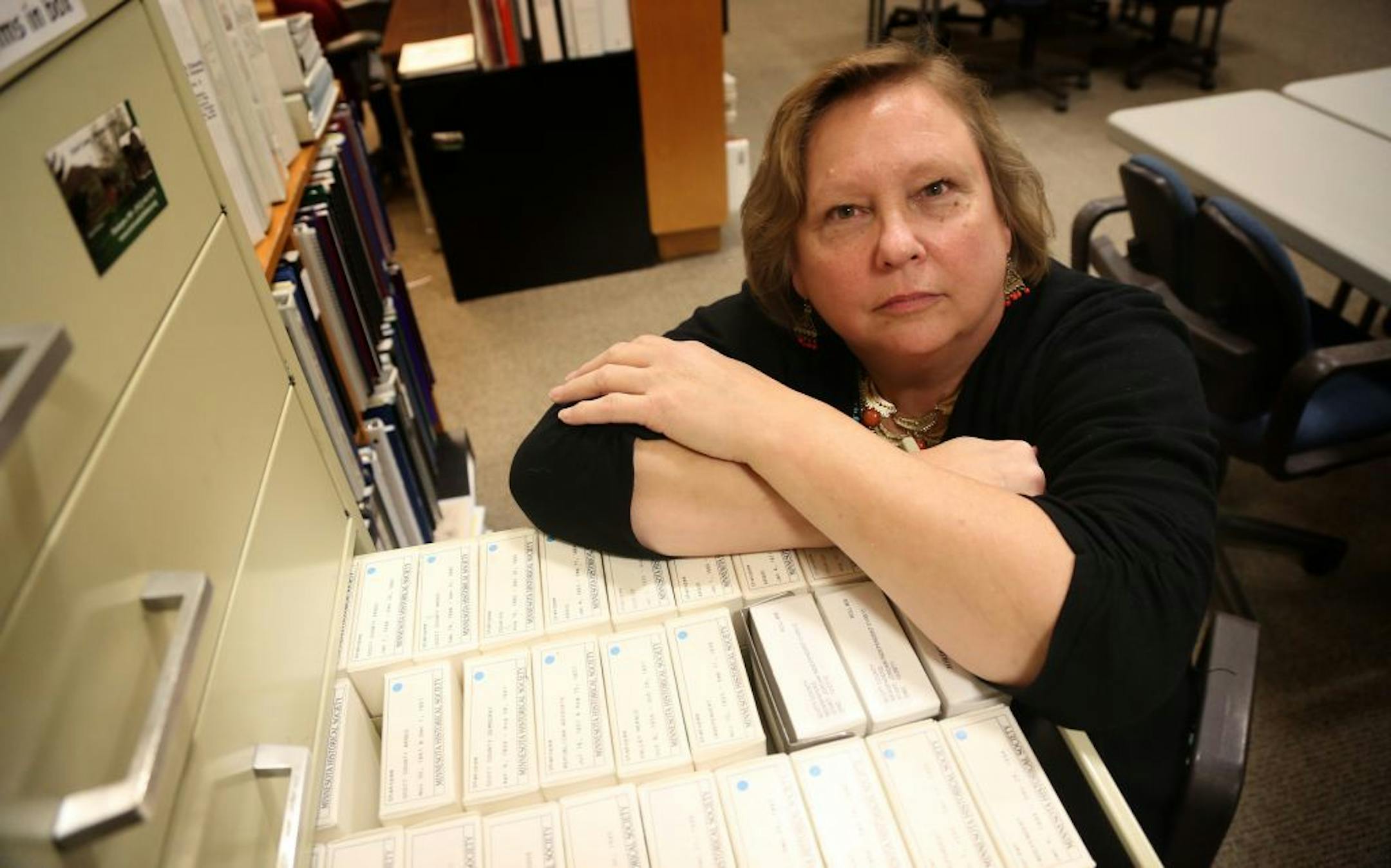
In 2009, the Scott County Historical Society lost $10,000 in county funding — a major blow that led to the loss of one of its three staff members. To make sure that didn't happen again, the remaining staff started looking for money elsewhere.
"We all were thinking, 'Oh, wow.' Because everybody was tightening up," said Executive Director Kathleen Klehr. "So we had to look at ways we could diversify our funding and make sure that we didn't change our services to the community."
County historical societies across the metro — many of which experienced cuts around the time of the recession — have tried to reduce their reliance on county funding, turning instead to grants and donations. But many still have budgets made up mostly of county money at a time when local governments are cutting back.
"Often the things that are viewed as most critical end up eating up a lot of the county's budget," said Julie Ring, executive director of the Association of Minnesota Counties. "And so things that might be seen as nice to have may not have as much money as they did at one time."
The Scott County Historical Society gets an annual county grant that in the mid-2000s made up nearly 90 percent of its budget. Despite an effort to reduce that, about 60 percent of the organization's budget of about $200,000 is still made up of county dollars. And with operational costs rising, staff members are hoping for more.
Pending County Board approval this month, the Historical Society could get $140,000 from the county in 2016 to help cover everything from salaries to outreach at local schools — a nearly 20 percent increase from its current allocation. Without that boost, Klehr said at a recent board meeting that "it's possible we might have to close the doors."
But some commissioners are hesitant to give the Historical Society more money. Commissioner Barbara Marschall, who said she would eventually like to eliminate county funding for the organization and others like it, said she thinks increasing funding in 2016 is "sending the wrong message."
County Administrator Gary Shelton said he expects the increase to pass. "But I also think it will spark a greater debate about, should we continue funding it?"