

BRAINERD, MINN. - This spring's summerlike weather may be embraced by Minnesotans, but it spells trouble for ciscoes, a cold-water fish that serves as food for gamefish such as walleyes, northerns, muskies and lake trout.
Large ciscoe dieoffs -- likely caused by higher water temperatures and surface runoff that robs lakes of oxygen -- have become more common in recent years, and their populations have declined sharply in some lakes, including popular Gull Lake near Brainerd.
Researcher Andy Carlson calls ciscoes the "canary in the coal mine," an indicator that Minnesota lakes are changing. Ciscoes -- also known as tullibees -- will be among the first fish to feel the impact if Minnesota's summer climate becomes more like that of present-day Kansas over the next 85 years, as some studies have predicted.
"They're getting squeezed," said Carlson, a Department of Natural Resources fisheries biologist. The trends mean dieoffs could become more common and their populations could "blink out" in some lakes. This year already is off to an ominous start: Many northern lakes set records for early-ice out, and air temperatures already have hit 90 degrees.
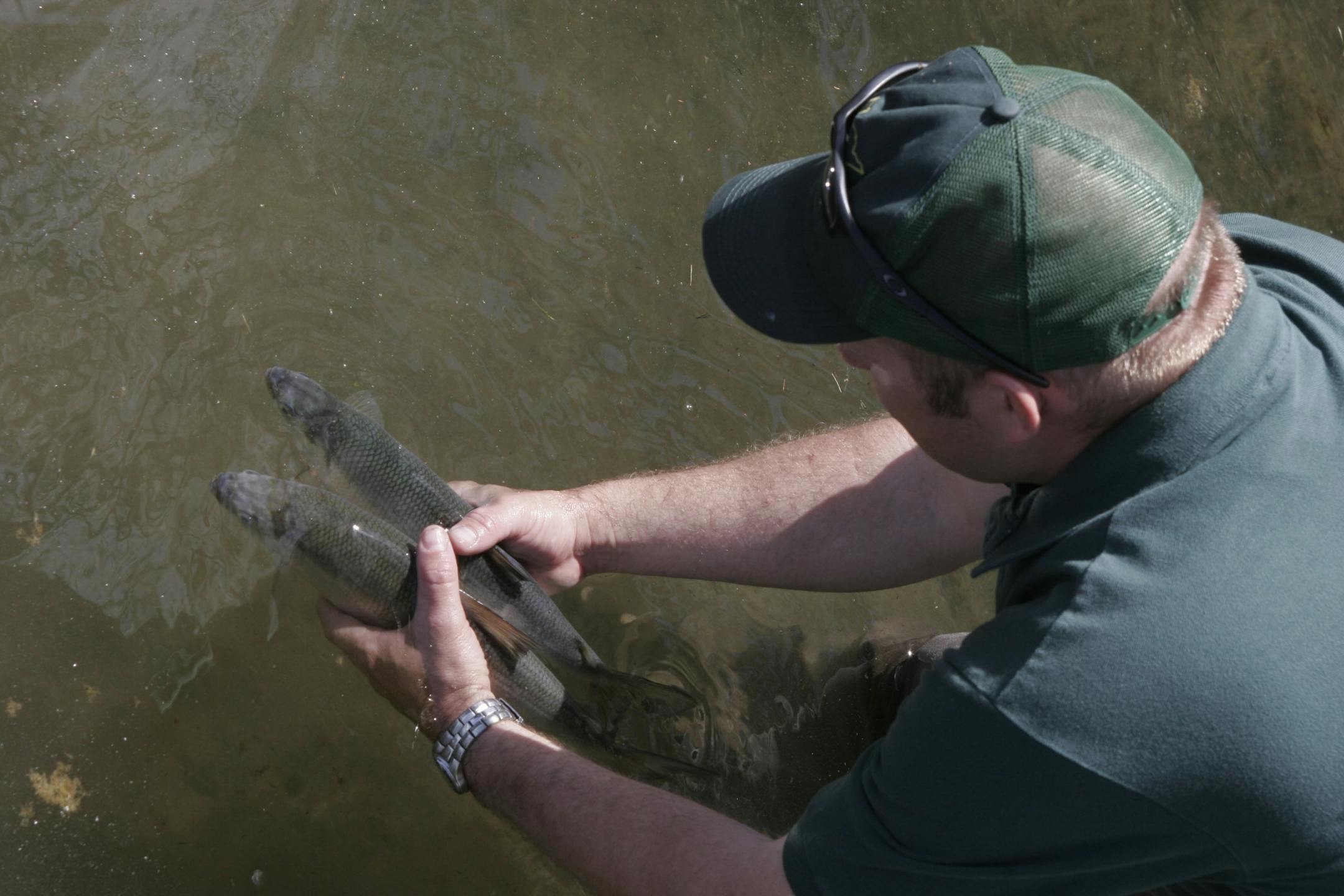
Carlson and two co-workers netted the silver fish last week on Pillager Lake near Brainerd and implanted some with tiny sonar transmitters to track their movement and measure water temperature, part of a study to help determine what the future holds.
"It could affect how we manage our walleye, northern and lake trout, over the next 10 to 20 years," he said.
Ping, ping, ping
The research is a fascinating blend of speed-surgery, 21st-century technology, biology -- and old-fashioned fishing.


