
As 2023 dawns, leave room for hope

There are plenty of reasons for optimism in the face of our nation's challenges.

January 1, 2023 at 12:10AM
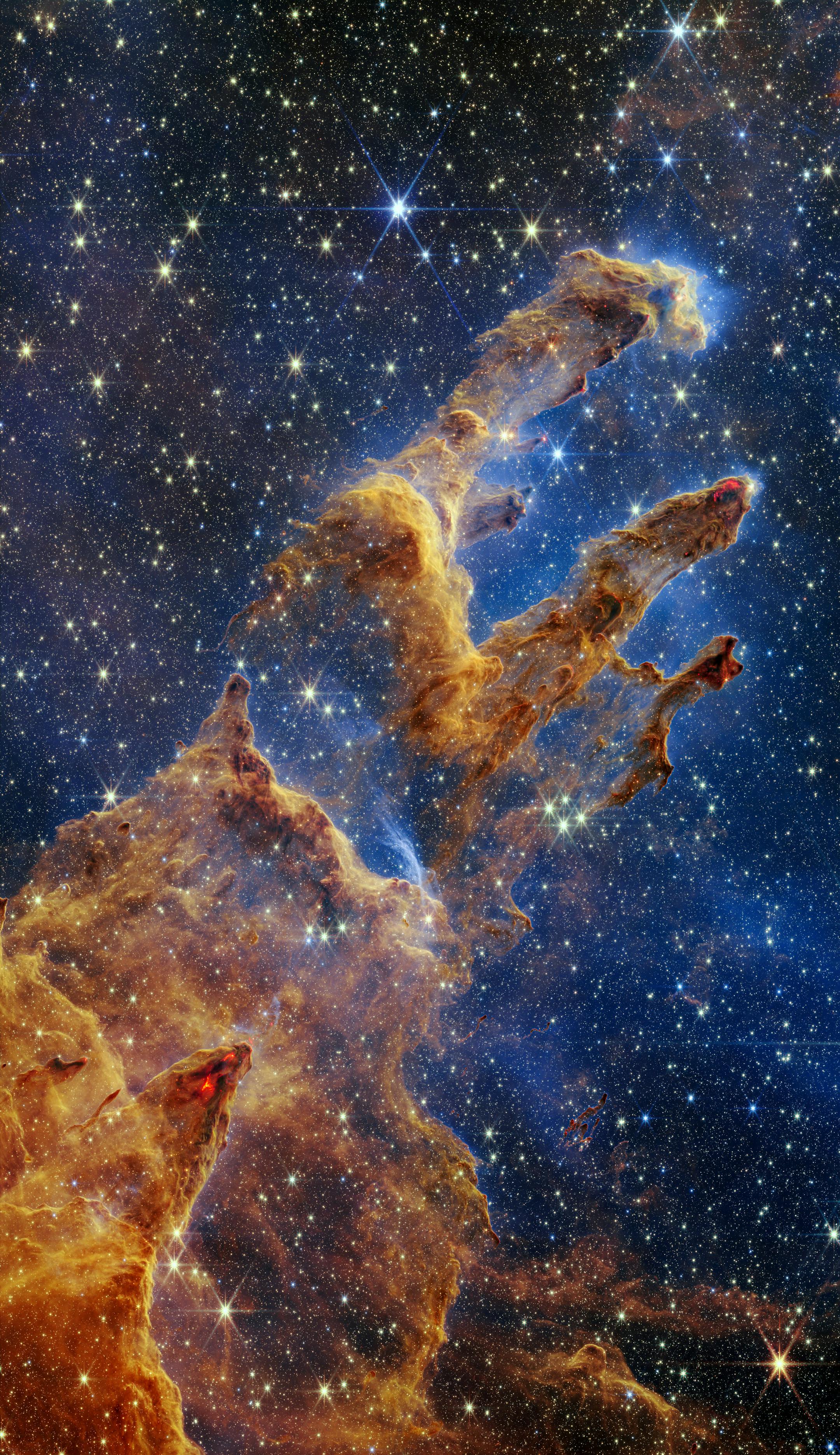
This image released by NASA on Oct. 19, 2022, shows the Pillars of Creation, captured by the James Webb Space Telescope in near-infrared-light view. (Associated Press/The Minnesota Star Tribune)

Opinion editor's note: Editorials represent the opinions of the Star Tribune Editorial Board, which operates independently from the newsroom.

•••

Welcome, 2023. A new year dawns, and even as we turn toward the future, the human instinct for nostalgia draws us toward the past. We tend to imagine the past as better than it was — a fact exploited by candidates of both parties over the years, who have repeatedly invited us to "make America great again."

That slogan presumes voters will share the perspective that America once was great and isn't so great anymore. It short-circuits the questions of what it means to be great, and what the U.S. was like in years gone by, and how it should face the challenges of the present and future. The slogan relies on what people think they know: that everything is getting worse.

On this New Year's Day, we'll swim against the tide and float the possibility that not everything is getting worse. Some aspects of American life are, in fact, getting better.

Optimism may seem in bad taste to those struggling to cope with homelessness, or severe illness, or a lack of immigration status, or racism, or the rising threat of antisemitism. And what about climate change? What about the tripledemic? What about fentanyl? To say nothing of mass shootings, inflation, the achievement gap, the hollowing out of our downtowns, the threat to our democracy and practically everything else you can think of?

"Hang on to your hat," advised the essayist E.B. White. "Hang on to your hope. And wind the clock, for tomorrow is another day." Our purpose is not to deny reality, but only to notice its redeeming features. It does have some.

For starters, consider fusion. Commercial plants to harness the power that drives the sun and the stars are a long way off. But the scientists who announced in the closing weeks of the old year that they had achieved a small but measurable net energy gain from fusion may have just changed the future. Their accomplishment allows us to at least envision a world in which energy is renewable, clean and available at any hour of the day or night.

In other words, we might now be able to begin planning for a day in which we can live our lives and run our economies without filling the atmosphere with carbon. That day will come too late to stave off the immediate effects of climate change, but it may play a crucial role in keeping our planet livable over the long term.

Which is a good thing, because we're not going anywhere anytime soon. NASA seems finally to be on track toward a Mars mission, and that's exciting — but progress can best be described as incremental. The agency's Artemis program has flown to the moon and back, and may be ready to land there with people aboard by 2025. NASA promises that the moon is but a steppingstone on the path to Mars, where it hopes to have boots on the dusty ground in the late 2030s or early 2040s.

Elon Musk has said he plans to have a SpaceX mission get there sooner, and it's possible he will go along on the trip. His many detractors may think, why wait? Go now.

While we're acknowledging our debts to science and technology, let's save some attention for the pioneers in gene therapy who are saving lives today. Doctors are using CRISPR gene-editing methods to treat cancer patients. They inject the patients with T cells that have been modified to attack cancer cells, and they are having considerable success. Patients who had seemed doomed are alive to welcome the new year.

So they are still around to join the rest of us in marveling at the latest images coming from the James Webb telescope. Launched into space just over a year ago, the instrument — a package of instruments, really — is penetrating farther into space and further back in time than ever before. It is a stunning achievement that will help illuminate the origins of just about everything.

One doesn't need sophisticated instruments like the Webb telescope to look back in time here on Earth. It seems like the day before yesterday that people were fighting to integrate schools and lunch counters; that polio was ravaging the population; that Japanese Americans were being herded into internment camps; that same-sex and interracial couples were judged guilty of criminal behavior; that Americans were living in fear of being denounced as Communists.

During any of those chapters, to express optimism about our country might have seemed naive. In retrospect, hope would have been justified. We think it's justified now.

Happy New Year. Wind the clock.

about the writer

about the writer

Editorial Board

See Moreicon