
Artificial cave a safe haven for bats

A disease that has killed millions of bats and confounded scientists led to this solution in Tennessee.

The Washington Post
October 31, 2012 at 1:55AM
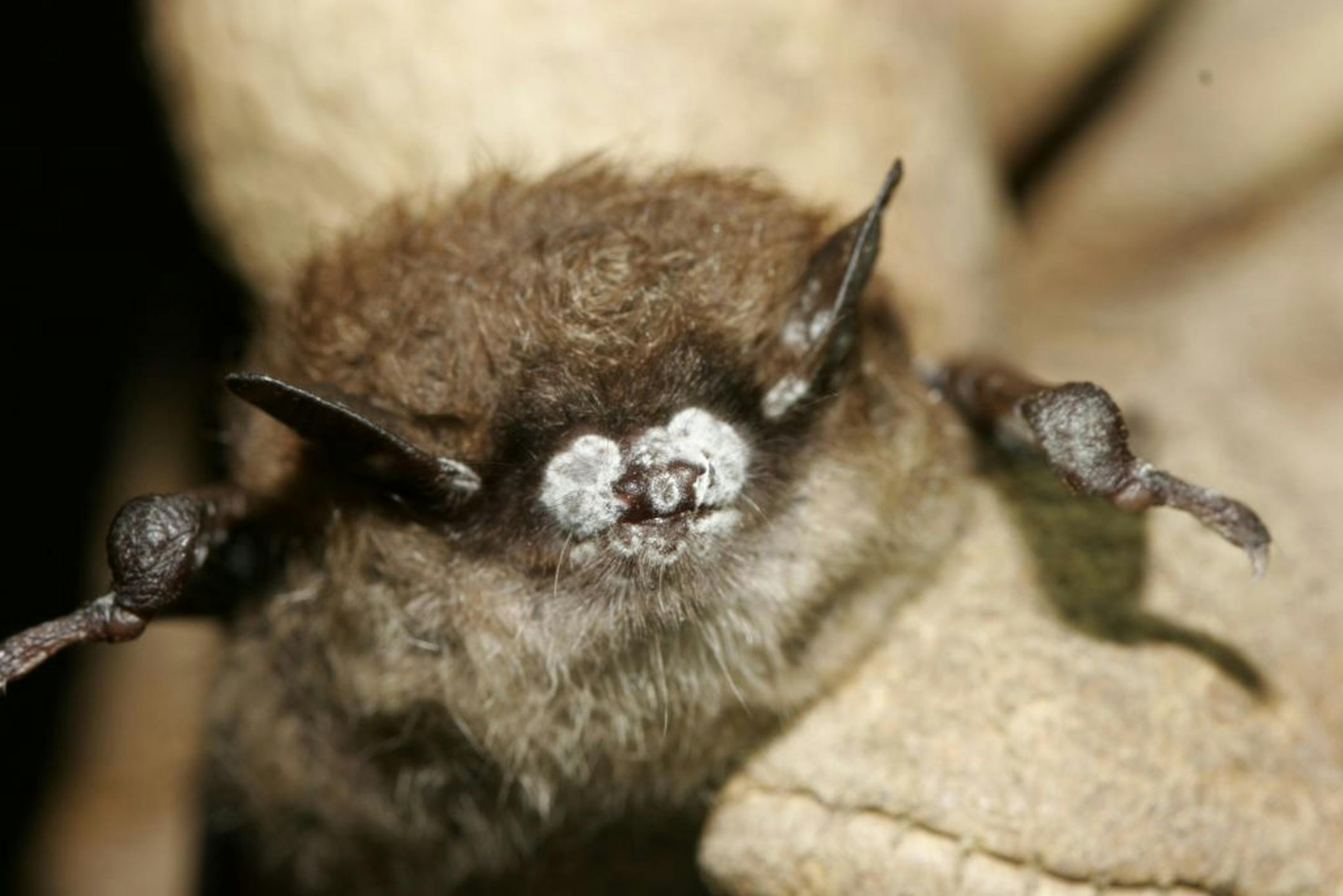
In this October 2008 photo provided by the New York Department of Environmental Conservation, a brown bat with white nose fungus is seen in New York. Scientists trying to stem the spread of the bat-killing disease known as white nose syndrome say it has now been definitely proven that the fungus that causes the disease came from Europe and is the latest of a long line of invasive species disrupting the environment in North America.
In this October 2008 photo provided by the New York Department of Environmental Conservation, a brown bat with white nose fungus is seen in New York. (Associated Press - Ap/The Minnesota Star Tribune)

MONTGOMERY COUNTY, TENN.

Just in time for Halloween, the world's first artificial bat cave is expecting the arrival of its first winged visitors.

The nearly 80-foot-long concrete chamber was built to protect bats against white nose syndrome, a disease named for a white fungus that infects the skin of the muzzle, ears and wings of hibernating bats.

In the six years since bats with the syndrome were discovered dead or dying in a cave near Albany, N.Y., more than 5 million infected animals from seven species have died, according to the U.S. Fish and Wildlife Service.

In the northeastern United States, 85 percent of hibernating bats have died from the disease, which has spread rapidly through Canada and New England into the Mid-Atlantic and through most of Appalachia.

White nose syndrome is "unlike anything we've ever seen," said Ann Froschauer, a spokeswoman for the Wildlife Service. Scientists have been confounded by the rapid spread of the disease and its mortality rate. This fungus is particularly hard to treat because it invades deeper layers of the skin than most other fungi that attack mammals. Such a novel affliction, Froschauer said, requires novel strategies for blocking it without harming other cave life.

"Natural caves have lots of good fungi, amphibians and reptiles, insects and arthropods and isopods that live inside, so you can't go in and hose them down with bleach to kill everything in there," Froschauer said.

'Crazy' idea embraced

In Tennessee, conservationists reason that if they can't rid the caves of the disease, maybe they can coax the bats out and lure them into a safer haven.

Gina Hancock, state director for the Nature Conservancy in Tennessee, said the idea of building a bat cave seemed "crazy" to her and others at the organization -- until scientists and donors gave it their approval.

Construction of the winter cave cost about $300,000. (It was paid for through private donations to the Nature Conservancy.) Buried beneath a hill in north-central Tennessee, the cavern was outfitted with cameras to allow scientists to observe the animals and with air conditioners to help cool it to a bat-attracting temperature of 45 to 48 degrees.

The cave's ceilings and textured walls offer bats a wide choice of nooks to explore; netting and metal ridges offer other places to roost. The animals will enter through a rectangular opening above ground and descend through a wide shaft to the main chamber, about twice as long and twice as wide as a large school bus. When the bats are away in the summer, the human caretakers can enter through a doorway built into the side of the hill and will disinfect the room to get rid of any stray spores of the disease. The fungus does not pose any threat to humans.

about the writer

about the writer

STEPHEN ORNES

More from No Section

See More
FILE -- A rent deposit slot at an apartment complex in Tucker, Ga., on July 21, 2020. As an eviction crisis has seemed increasingly likely this summer, everyone in the housing market has made the same plea to Washington: Send money — lots of it — that would keep renters in their homes and landlords afloat. (Melissa Golden/The New York Times) ORG XMIT: XNYT58
Melissa Golden/The New York Times

It’s too soon to tell how much the immigration crackdown is to blame.