

Listen and subscribe to our podcast: Apple Podcasts | Spotify
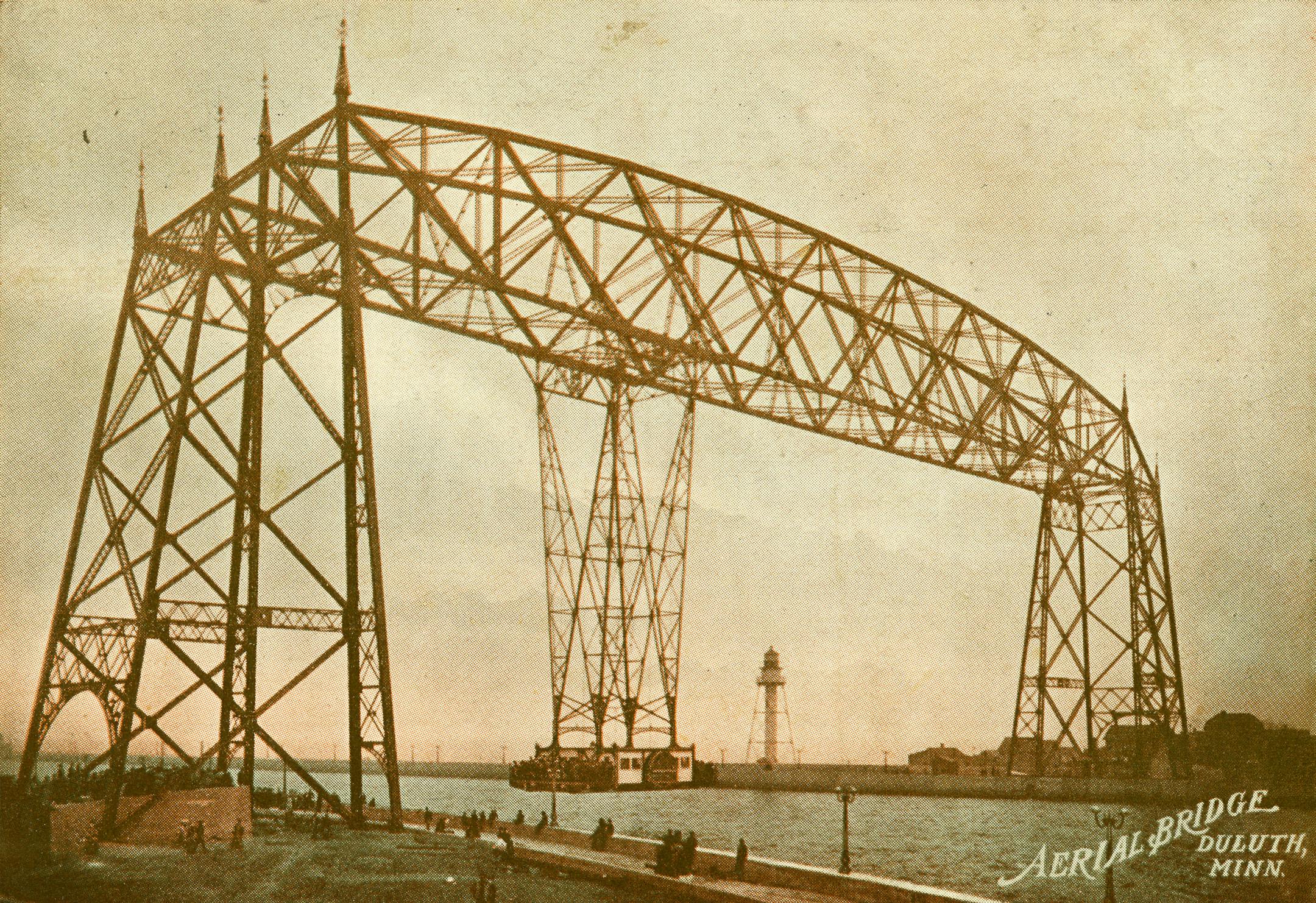
DULUTH — Duluth’s Aerial Lift Bridge is a fitting symbol for a city built on the steel industry.
The massive mechanical steel structure has provided a shortcut to Duluth Harbor for more than a century, allowing shipments of iron ore to reach steel mills around the country. Its distinct shape is a favorite backdrop for local photographers, and has been emblazoned on key chains, T-shirts, wall hangings and many other souvenirs of Duluth.
Its moving deck has inspired its own colloquialism. Locals know they’ve been “bridged” when nearby traffic is stopped by a ship or sailboat passing under the bridge. (It’s perfectly acceptable to briefly abandon one’s vehicle for a closer look.)
A few readers have wondered about the bridge’s origin story. One reader’s great-grandparents owned a few cows on the Minnesota Point peninsula before the bridge was built there. Another former Duluthian remembered enjoying the bridge and ships passing beneath it when she was a child. They turned to Curious Minnesota, the Star Tribune’s reader-generated reporting project, for the story of this unique structure.
The short history is that the need for the bridge arose in the 1870s after Duluthians dredged a channel into the Minnesota Point peninsula to improve access between Lake Superior and Duluth’s port. That canal spurred the growth of the city’s commercial and industrial shipping industry, but turned Minnesota Point into an island. The bridge reconnected the popular peninsula with the rest of the city.
Carving a canal
A natural sandbar known as Minnesota Point or Park Point extends 7 miles from the Duluth neighborhood now known as Canal Park. Wisconsin has its own adjacent 3-mile sandbar, known as Wisconsin Point. Historically, vessels trying to reach the Duluth-Superior Harbor from Lake Superior had to travel through Superior Entry — a break between the two sandbars.
This was good for Superior, according to Duluth historian Tony Dierckins. “[T]he Superior Entry kept the majority of fledgling [shipping] industry on the Wisconsin side of the bay,” he wrote in his book, “Crossing the Canal: An Illustrated History of Duluth’s Aerial Bridge.”


