

Listen and subscribe to our podcast: Via Apple Podcasts | Spotify | Stitcher
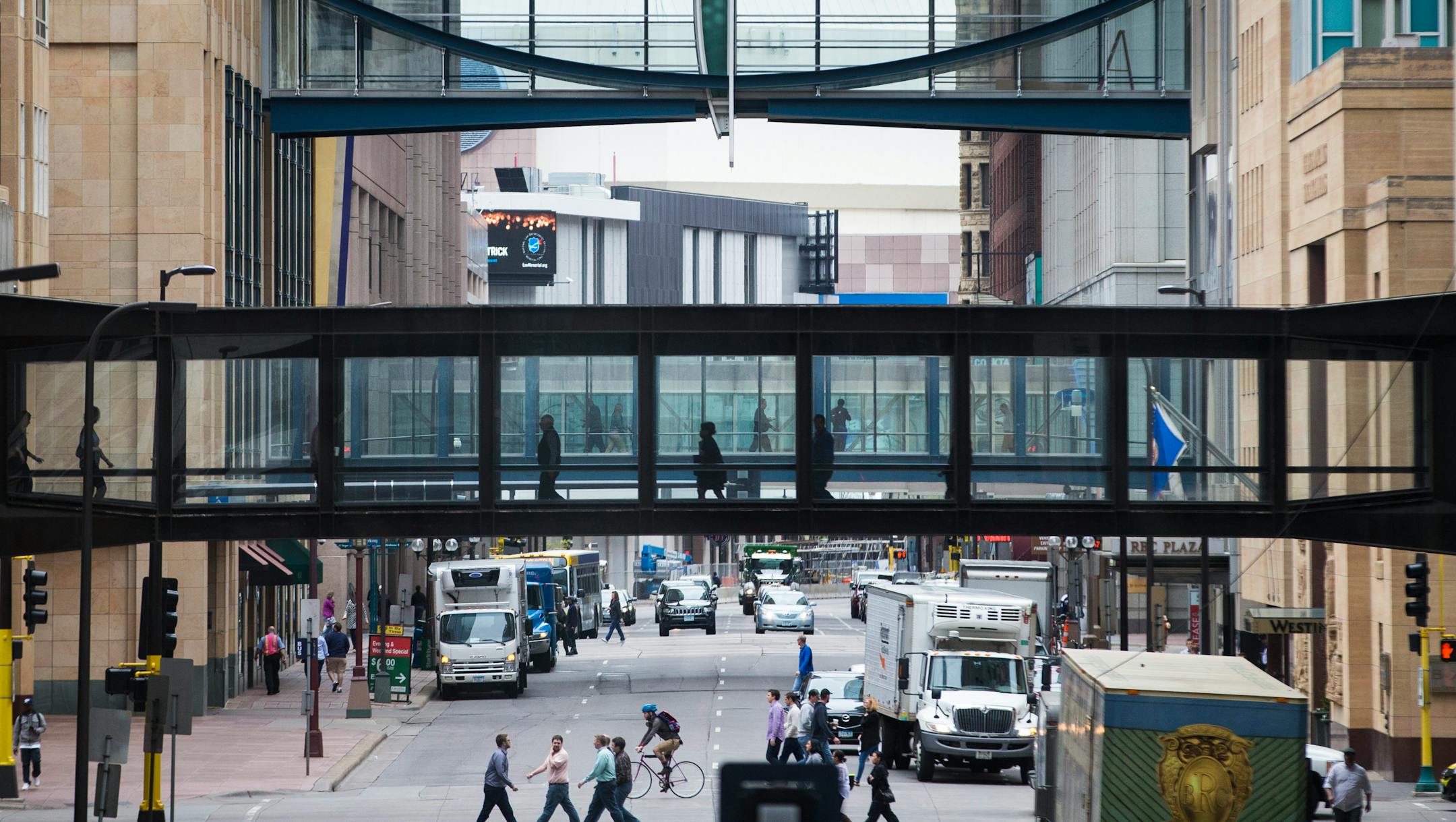
It's hard to imagine downtown Minneapolis without its skyways. They have become, after all, as distinctly Minnesotan as hockey and hot dish.
But where did the idea for the skyway system come from?
It turns out the skyways were not a reaction to Minnesota's frigid climate.
Some attribute the skyways to Leslie Park, a Minneapolis developer who proposed them to keep businesses downtown. General Mills left downtown in 1955 for Golden Valley, and the next year, Southdale Center opened in Edina.
"Southdale was the first climate-controlled, enclosed shopping center in the country," said Iric Nathanson, a local historian. "Park felt that Southdale was going to suck all of the economic and financial energy out of downtown Minneapolis."
When Park's company developed the Northstar Center in 1959, he designed an enclosed walkway to link the building with Northwestern Bank. The link was built in 1962. As new skyscrapers developed, many included skyways. "[They] spread out like an octopus," Nathanson said. "It turned out to be a big hit."
This skyway question is a part of Curious Minnesota, our community-driven reporting project that invites Star Tribune readers into the newsroom. To get us rolling, we're answering this question from a curious staff member.
And here's a twist. During our research we learned of a competing skyway origin story. Did city planners actually develop skyways to reduce the number of pedestrians hit by cars?


