

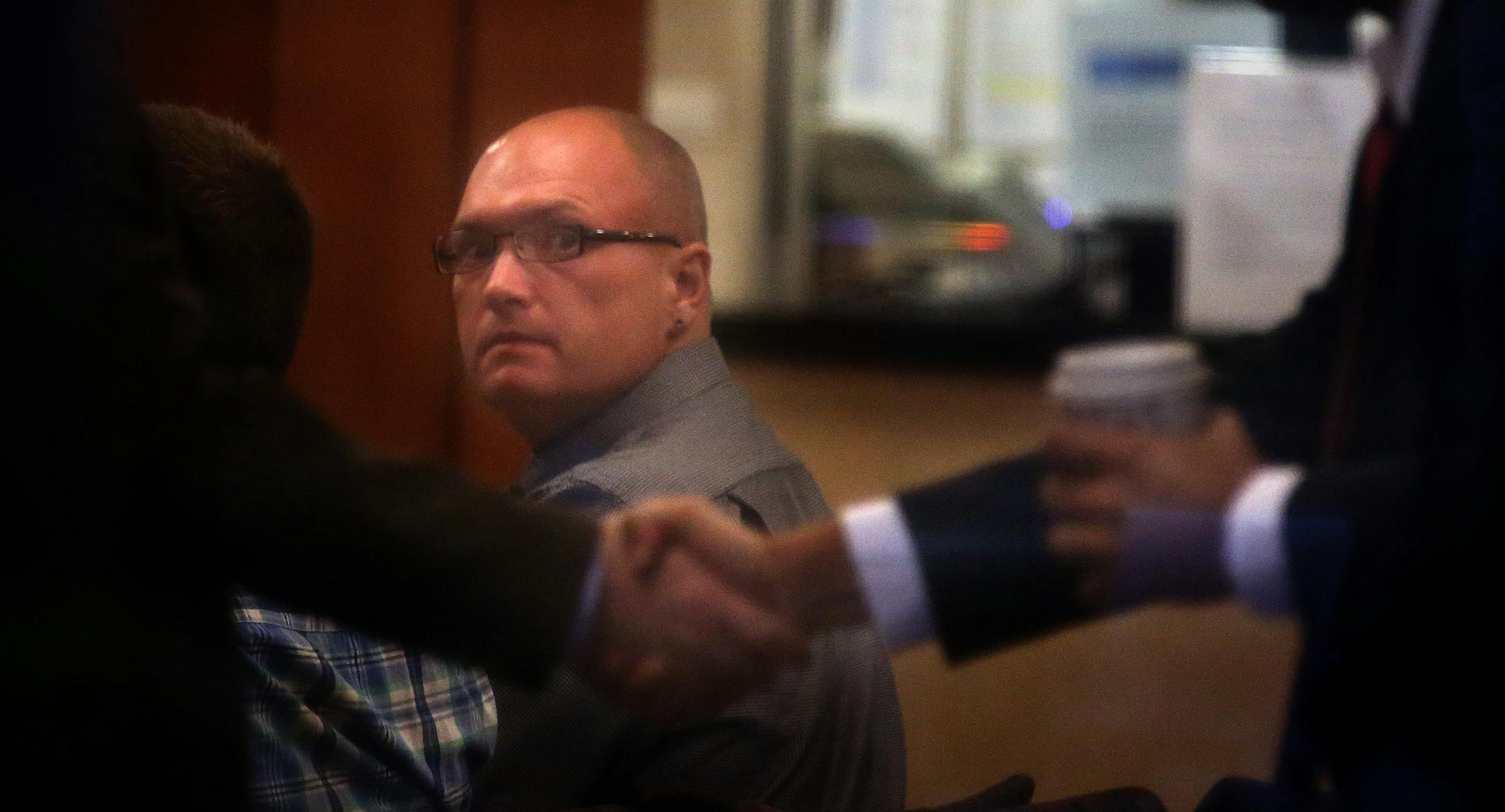
Richard Happ's relatives had worried for years that he would get out again, and two weeks ago their fears were confirmed.
Happ had fatally stabbed his parents with a butcher knife in their Waconia home in 1999, and he also tried to kill his brother David. He spent more than 15 years under indefinite civil commitment as mentally unstable and dangerous at the Minnesota Security Hospital in St. Peter.
In 2015, Happ was granted a provisional discharge from the hospital and sent to state-operated, four-bed group home in West St. Paul. But Happ, now 49, left the group home on St. Patrick's Day and didn't return, sending his relatives into a panic that he would target them for opposing his release from the hospital.
Police tracked Happ to a small motel outside Chicago a few days later. It most likely will be his last taste of freedom.
Happ is now charged with two counts of felony escape of custody for violating the conditions of release. He had approval to leave the group home for a day, but didn't return. He also had to take prescribed medication, which would have run out several days after he absconded, the charges said.
"The relatives were very, very relieved that he was found and that he didn't hurt anybody or himself," said Dean Stuewe, a first cousin who has stayed in touch with Happ, but was against his release. "Richard had a tendency to ... act as a model patient, only to have it unravel. We take no comfort that our warnings weren't heeded."
Immediately after Happ was apprehended in Illinois, a Carver County district judge ordered a hold in connection with his civil commitment. The order requires that he be arrested and returned to St. Peter for revocation of his provisional discharge, the charges said.
As a health care provider for Happ, the Minnesota Department of Human Services (DHS) said it can't share information about specific patients. In general, when people are civilly committed and then return to the community under a provisional discharge, they are required to follow a set of conditions, such as where they live, what medications they must take and limits on where they can go, according to DHS.


