

Parks being what they are, they tend to announce themselves in quiet ways not immediately apparent to everyone.
Such is the challenge of the St. Croix National Scenic Riverway, a 250-mile-long unit of the National Park Service (NPS) that sometimes isn't recognized as such by people driving over the river or even along it.
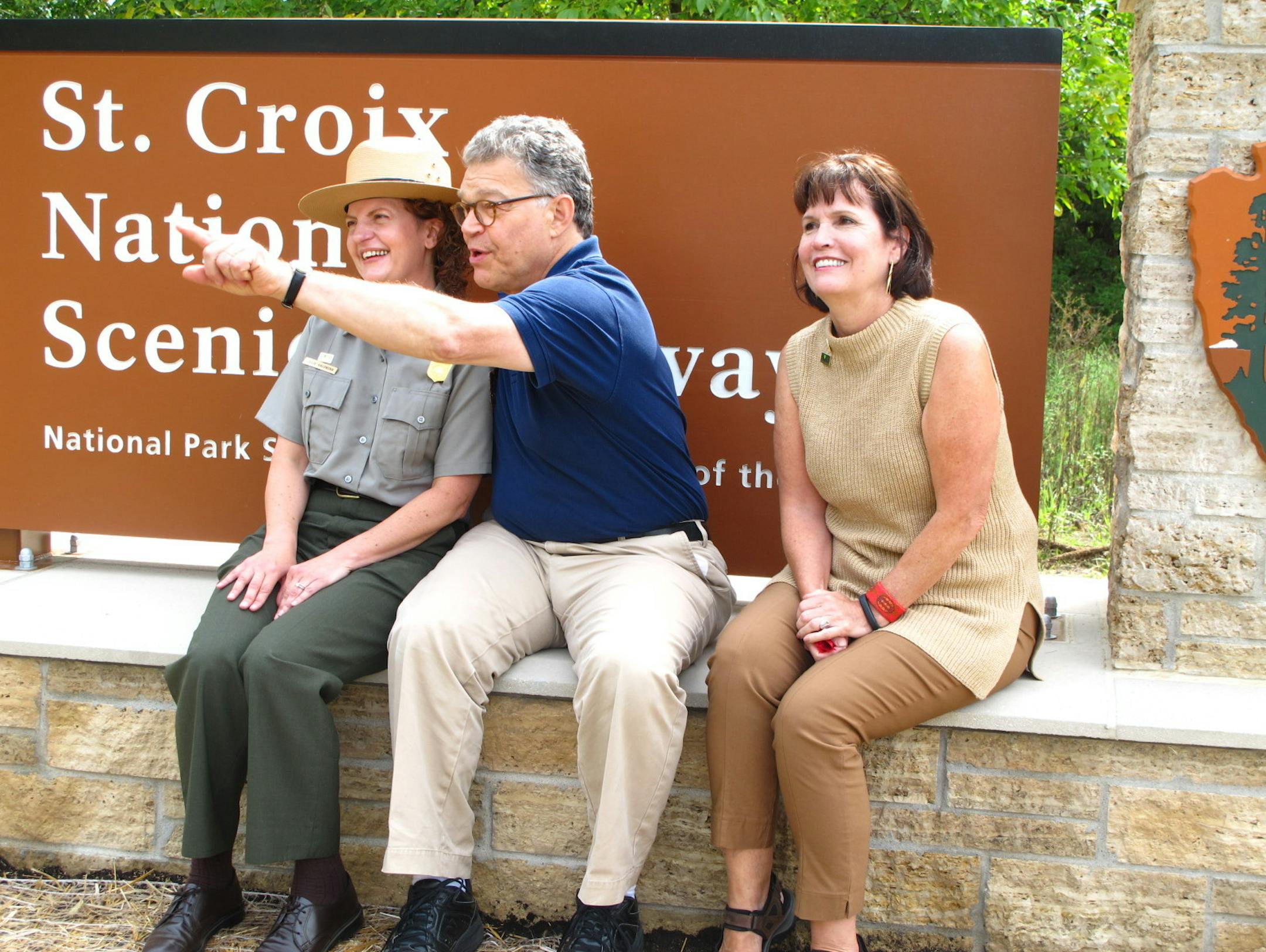
"How many people know of two metro-area national parks? Not very many, and that means we have a lot of work to do here," said U.S. Rep. Betty McCollum, speaking Aug. 25 at a rededication of the historic St. Croix Boom Site just north of Stillwater.
She was referring to both the St. Croix Riverway and the Mississippi National River and Recreation Area, two parks that are a bit mystifying to many because the water is their hallmark — and unlike traditional national parks like Yellowstone, there are no archways to greet visitors.
The ceremonial event was intended to show off the refurbished boom site, the place where millions of white pine logs cut upstream were sorted and floated to various sawmills during the lumber heyday of the early 1900s.
But the boom site has another significance as well. It's the St. Croix Riverway's southern boundary, and the history remembered there hews closely to the ages-old, starkly beautiful river.
"Our national parks tell the story of America," said Julie Galonska, the St. Croix Riverway's interim superintendent. "We can't take the future of these parks for granted."
Her remarks came on the 100th birthday of the National Park Service, which has 413 park units across the country that draw more than 307 million visitors a year.


