

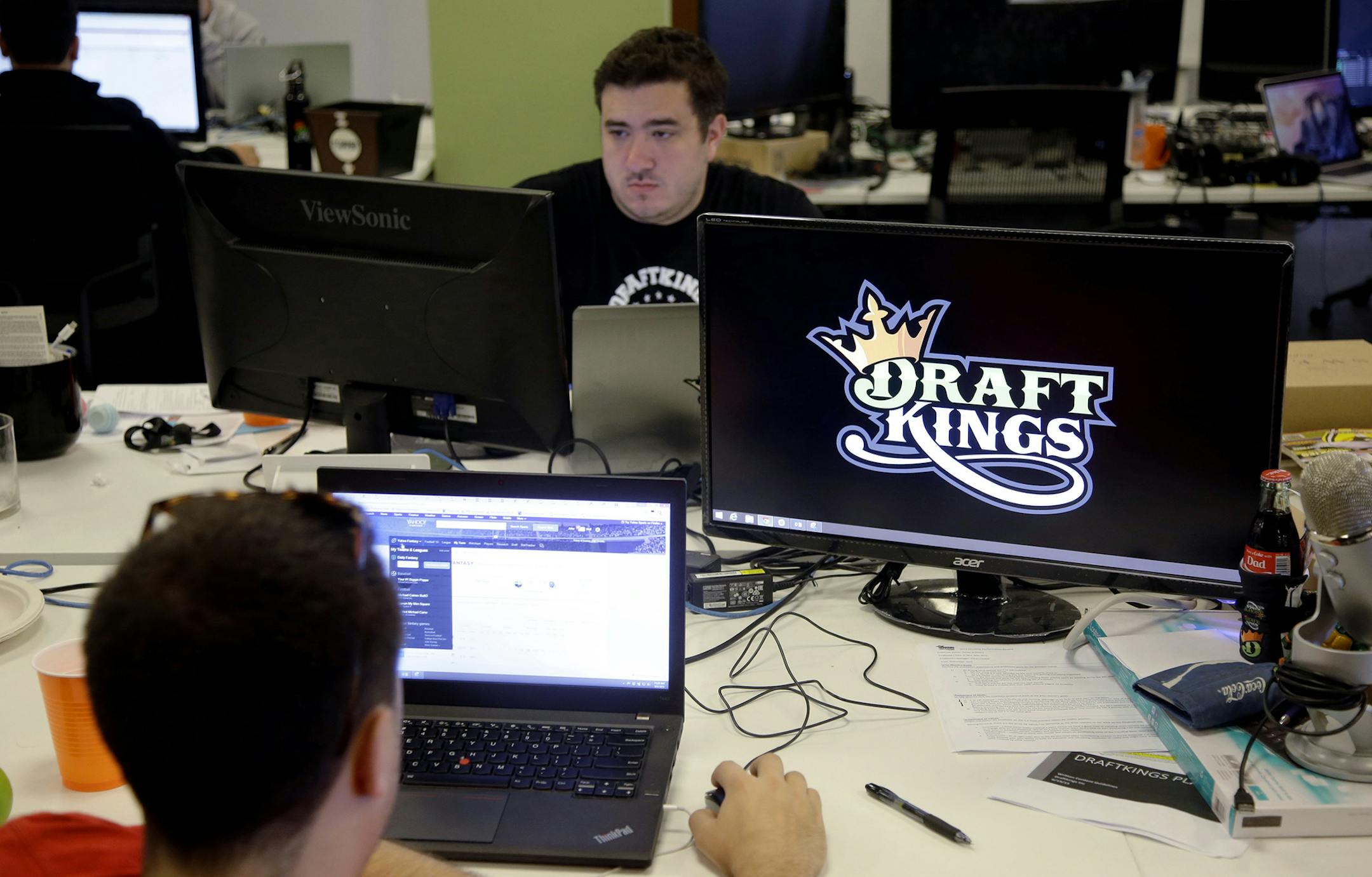
Minnesota gambling regulators are not considering changes to fantasy sports betting rules even as sports sites FanDuel and DraftKings face increasing scrutiny across the country, with regulators questioning whether the companies are soliciting illegal sports bets.
"There is currently no prohibition in Minnesota regarding fantasy sports," Bruce Gordon, a spokesman for the Minnesota Department of Public Safety, said in a statement. "Minnesota currently follows federal law, which permits fantasy sports."
New York Attorney General Eric Schneiderman has ordered FanDuel and DraftKings to stop accepting bets in the state, calling them illegal gambling sites. His decision follows the Nevada Gaming Control Board, which also said fantasy play constitutes gambling and thus requires licensing in the nation's only state with legal sports betting, and one that is an influential venue on gambling regulatory issues.
The debate has erupted as fantasy sports betting has quickly blossomed into a controversial billion-dollar industry across the country. In recent months, the sites have been advertising nonstop in the Twin Cities and in other sports markets around the country.
Minnesota Attorney General Lori Swanson's office said that state gambling regulation is not under her office's control, but that her office "has been in touch with state and federal officials elsewhere on the subject." A spokesman declined to elaborate.
A 2006 federal law, the Unlawful Internet Gambling Enforcement Act, made online gambling illegal but specifically exempted fantasy sports as games of skill, not chance.
Fantasy players try to predict the performance of athletes and are rewarded based on the quality of their prediction — most Minnesotans are familiar with the hobby because they have co-workers, family and friends who obsessively check their player rosters and stats. The big companies allow customers, who now number in the millions, to play every day and with the touch of a smartphone.
The question of whether this is skill or luck has become hugely important as regulators and state attorneys general and possibly the federal government determine whether the business model of the big online daily fantasy companies is in fact legal.


