

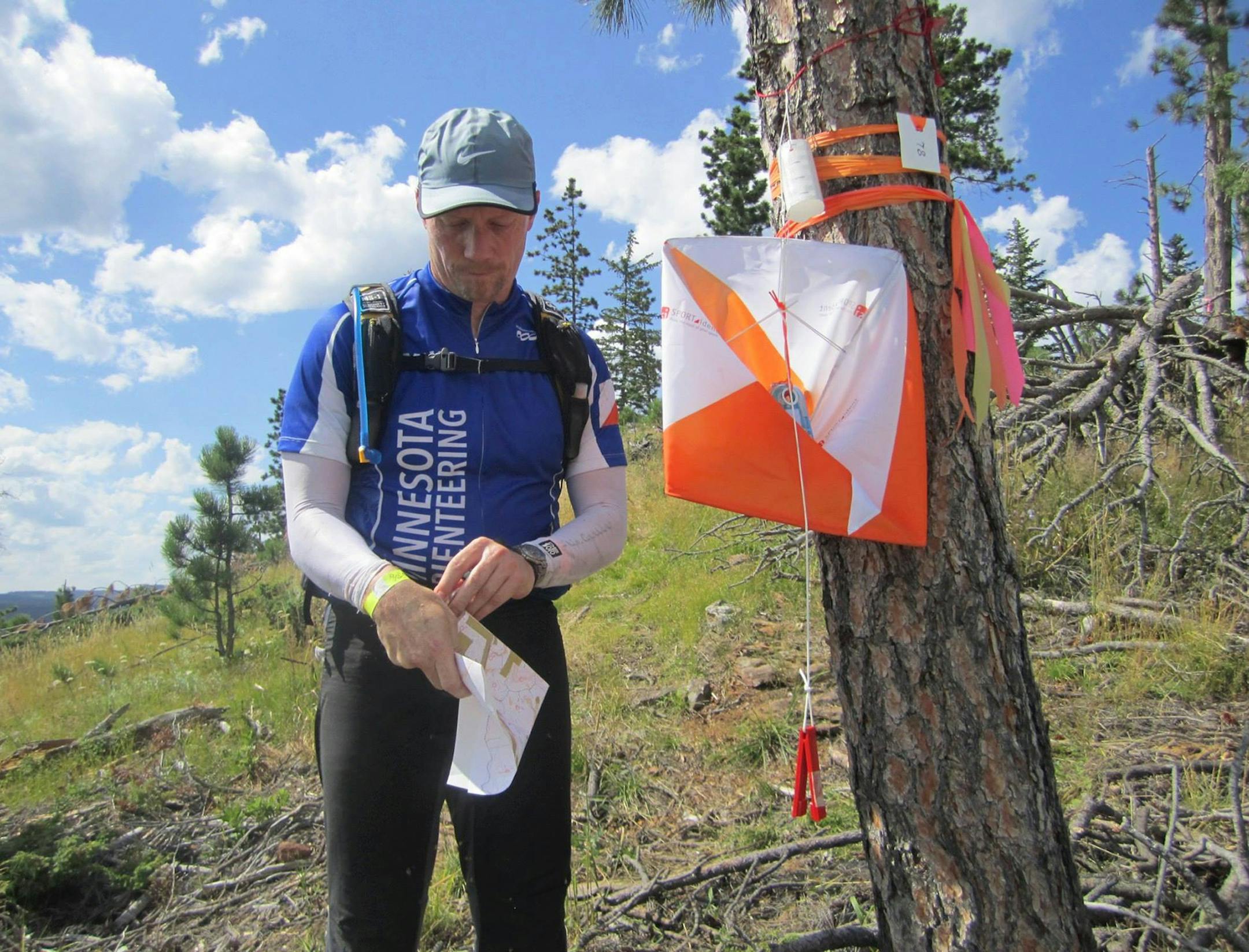
Peter Wentzel was first introduced to orienteering in ROTC in college, but it wasn't until many years later when his employer, Seagate Technology, sent him to New Zealand for a team-building adventure race that he got hooked. Taking to the map-and-compass sport, the former soccer player was drawn to the athleticism and intellect that orienteering requires.
Now president of the Minnesota Orienteering Club, Wentzel, 48, of Minneapolis regularly heads off into the woods around the state to design courses. He works to organize meets and bring people of all skill levels into the orienteering community. Requiring both mental and physical muscle, the sport attracts just about anyone who enjoys spending time in nature, Wentzel said.
In a recent interview, Wentzel spoke about the ins and outs of orienteering, as well as what he finds so rewarding.
Orienteering's transferable skills
Orienteering lends itself to a lot of other activities, such as hiking and other sports that require some basic map knowledge. It also helps with decisionmaking because it requires you to think as you exercise, which a lot of people find is a great equalizer in the sport. Triathlons and other sports of that nature demand more brute physical fitness, whereas in orienteering, the fast rabbit doesn't always win the race.
Getting lost
Having a bit of confidence that no matter how lost you feel, you aren't ever truly lost is important. A lot of people think that if they get lost, they'll be in the middle of some wilderness, but all our meets are conducted in parks, so it's pretty easy to find your way back.
The club's season
We have 15 regular meets (mnoc.org) with something for everyone in terms of skill level. We also conduct two adventure races each year, which accommodate all skill levels, but are a bit longer. We have some winter meets, too, that are time-based vs. course-based, so you go out and find as many controls within a certain time limit, rather than completing a course in however long it takes.
Determining locales
We look for parks with varied terrain that can accommodated both the easier courses, which require a good trail network, but also difficult courses, which involve more off-trail running. In general, we choose fairly large parks that have a little bit of everything.
His favorite parks
Interstate State Park is a local favorite, as well as Mille Lacs Kathio State Park because of its challenging terrain. I'm getting old and slow, so if I can think through the map a bit better, I have a greater chance of placing well. I've been doing this a long time, so if we go to a park with a large number of trails, it takes some of the decisions out of it and it becomes more of a fitness test.


