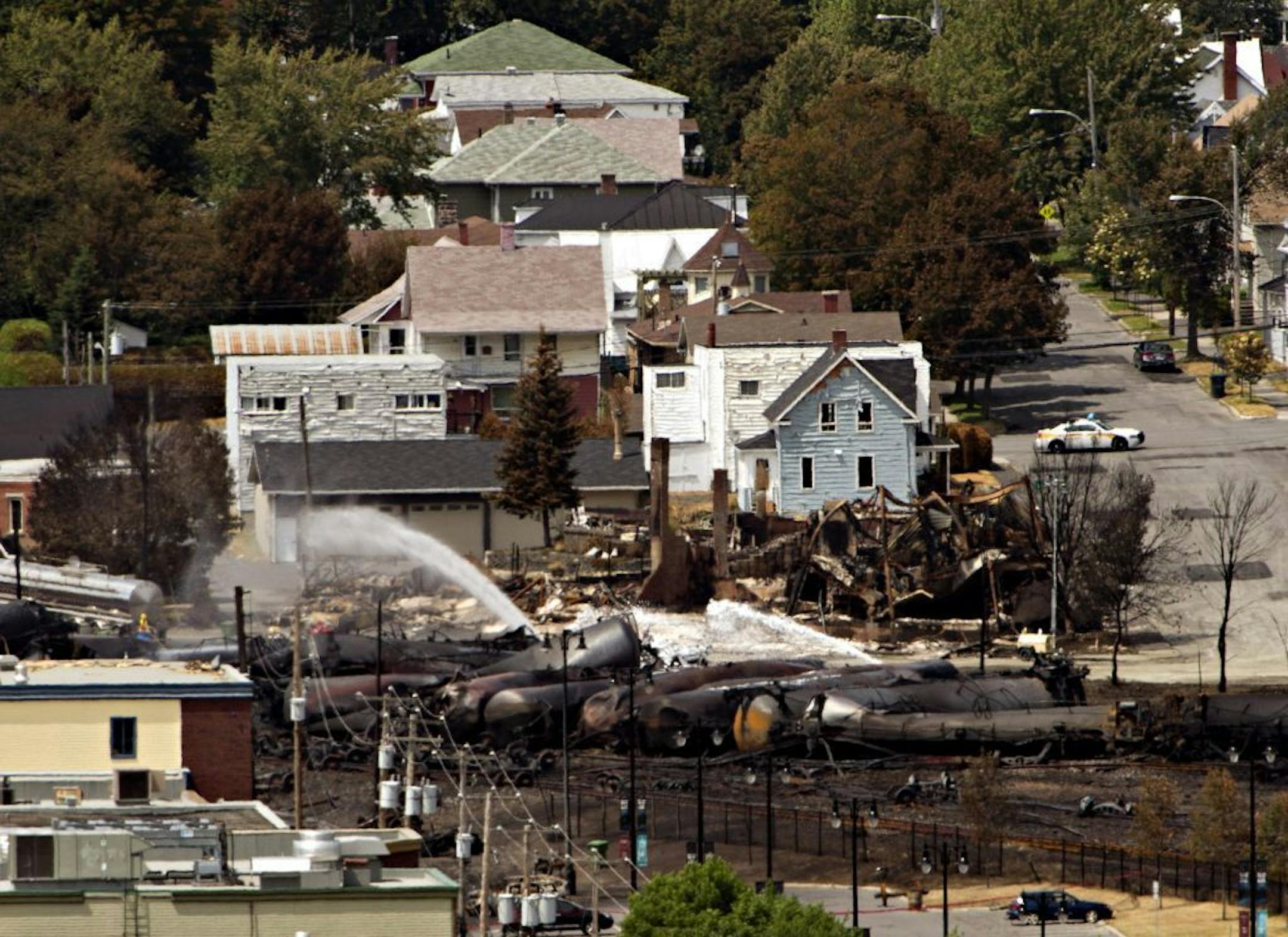
LAC-MEGANTIC, Quebec — Traumatized survivors of an oil train derailment that wiped out the heart of a small town braced for more bad news as inspectors were finally cleared to enter the charred site's epicenter and look for remains late Monday, more than two days after the disaster that killed at least 13 people. A total of 50 were missing and the death toll was sure to rise.
Quebec provincial police Sgt. Benoit Richard said eight more bodies had been found in the wreckage after firefighters doused the flames and cooled down some of the oil tankers that were in danger of exploding. Five bodies were found over the weekend, and police would not say where the newly discovered ones were, for fear of upsetting families.
All but one of the train's 73 tanker cars were carrying oil when they came loose early Saturday, sped downhill nearly seven miles (11 kilometers) into the town of Lac-Megantic, near the Maine border, and derailed. At least five of the cars exploded.
Maude Verrault, a waitress at downtown's Musi-Cafe, was outside smoking when she spotted the blazing train barreling toward her.
"I've never seen a train moving so fast in my life, and I saw flames ... Then someone screamed 'the train is going to derail!' and that's when I ran," Verrault said. She said she felt the heat scorch her back as she ran from the explosion, but was too terrified to look back.
The rail tankers involved in the derailment are known as DOT-111 and have a history of puncturing during accidents, the lead Transportation Safety Board investigator told The Associated Press in a telephone interview late Monday.
TSB investigator Donald Ross said Canada's TSB has gone on record saying that it would like to see improvements on these tankers, though he acknowledged it's too early to say whether a different or modified tanker would have avoided this weekend's tragedy.
The DOT-111 is a staple of the American freight rail fleet. But its flaws have been noted as far back as a 1991 safety study. Among other things, its steel shell is too thin to resist puncture in accidents, which almost guarantees the car will tear open in an accident, potentially spilling cargo that could catch fire, explode or contaminate the environment.