

For some, it's 30. For others, it doesn't happen until 50. But at some point, everyone hits an age that triggers a momentous stock-taking of one's professional output.
For illustrator Keegan Wenkman, it was 26.
The publicity material for Wenkman's upcoming show at the XYandZ gallery, titled "My Life as a Number," is so rife with signs of a quarter-life crisis it's almost morose. Wenkman comes off as perversely preoccupied by his age. The exhibition, we're told, showcases illustrations that obsessively chart the number 26's recurrence in popular culture.
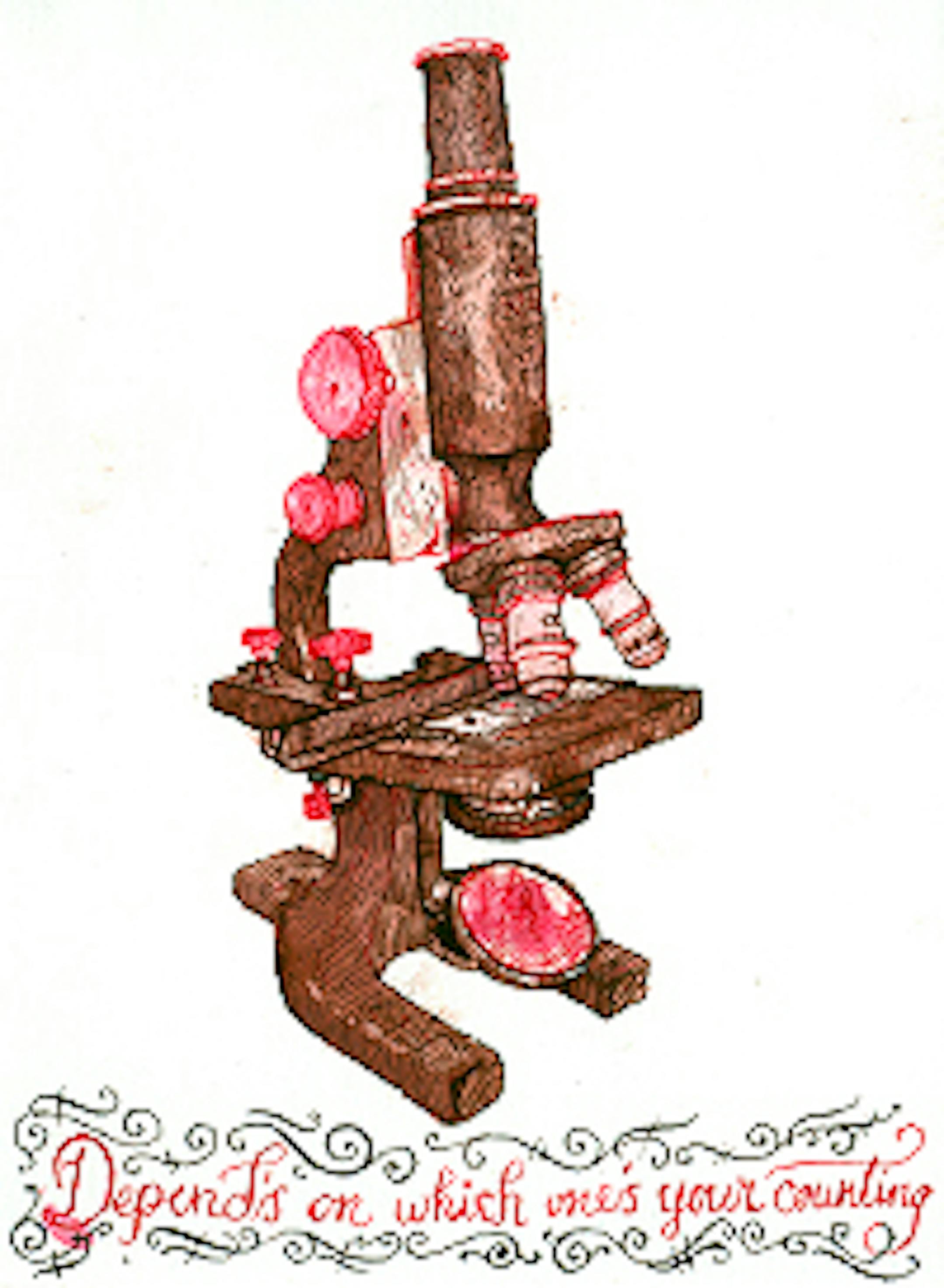
It coincides with the release of a hand-bound, letterpress book -- carrying the brooding Latin title "Codex Viginti Sex" -- which Wenkman self-published in a limited run of 26 copies, each containing 26 prints. And the book is the first in a collection of 26 books that Wenkman plans to self-publish, one per year, beginning with 26 and working his way, somewhat morbidly, backward toward zero.
You'd be forgiven for mistaking Wenkman -- who's actually 27 now -- for an emo navel-gazer, absorbed with the sadness of his own aging. Perhaps even more so when you see his illustrations, romantic ink-pen sketches of hand-worn objects, each paired with a slogan of regret ("I just couldn't make it happen last night," "I would have liked to see more whimsy").
But you'd be wrong.
Wenkman says he just "wanted to start an artistic and technical record" of his growth as an illustrator and bookmaker. The 26 thing? "It was just convenient to use as a concept for the first book," he said. In other words, he needed a motivation to do a big project every year. Age, the one thing in life guaranteed to evolve, is a pretty good reminder.
Wenkman, who spent seven years in Minneapolis before moving to Portland, Ore., in 2007 to start a book press and bindery with his girlfriend, shrugs off the emo association.


