

Today's economic woes pale in comparison with the trauma that sparked the New Deal. In 1933, the national unemployment rate hit 25 percent. Factories stood idle, shipyards empty, farms bankrupt after years of drought, insect plagues and falling crop prices. Rabble-rousers preached revolution.
Strange as it may seem today, President Franklin Roosevelt figured that paintings were just the ticket. Launched in December 1933, the Public Works of Art Project (PWAP) lasted seven months, but in that short time 3,750 artists turned out 15,600 artworks that went to libraries, schools and public offices.
More than 50 of the pictures are on view in "1934: A New Deal for Artists" at the Minnesota History Center through Sept. 30. They're all on loan from the Smithsonian American Art Museum in Washington, D.C., which organized the show and published its catalog ($34).
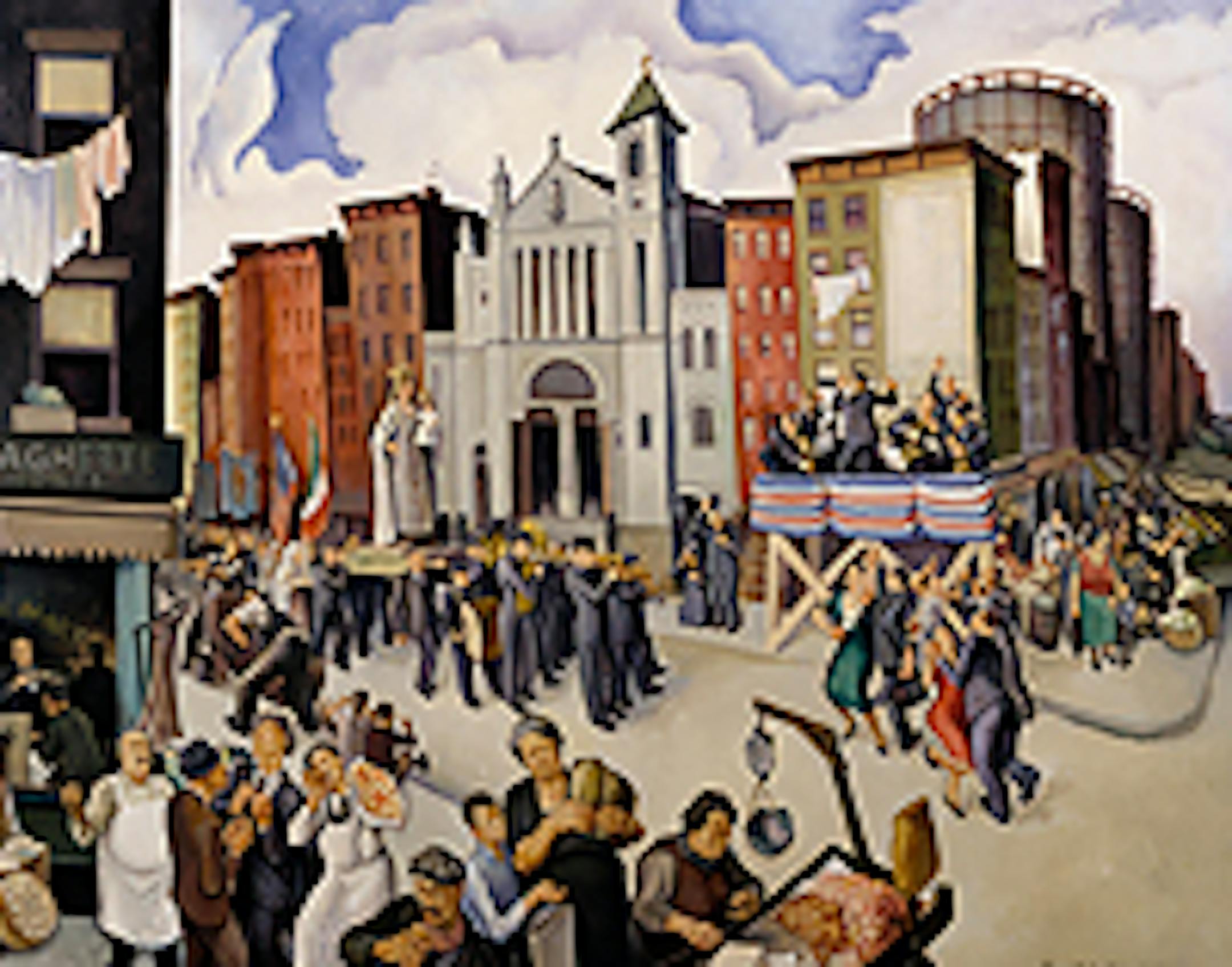
As snapshots of their time, the paintings present a surprisingly rich and varied landscape that includes One Percenters at play, as well as the 99 percent at work (or not). Artists were urged to document the "American scene" and help reknit the nation's badly frayed social fabric. They depicted street festivals, tenements and workers where they found them. There are vistas of country roads, small towns, freshly plowed fields and even a pair of mountain lions.
In her loosely cubistic style, Colorado artist Ila McAfee Turner shows the lions gazing down from a rocky ledge at the magnificent forests of Colorado's Black Canyon of the Gunnison. Just the sight of them -- sleek, powerful, contented -- lifts the spirits.
Hard work and tough times are more typical, however.
Minnesota artist Arnold Ness Klagstad's "Archer Daniels Midland Elevator" records grain storage facilities looming over a shabby Minneapolis street under a sky whose midday darkness seems to echo the troubled times.
Avant garde European art ideas creep in. Douglass Crockwell appears to have channeled Fernand Léger's mechanized men into his "Paper Workers," a dour scene in which clay-colored Lego-like workers tend enormous rolls of paper generated by a monstrous machine.


