

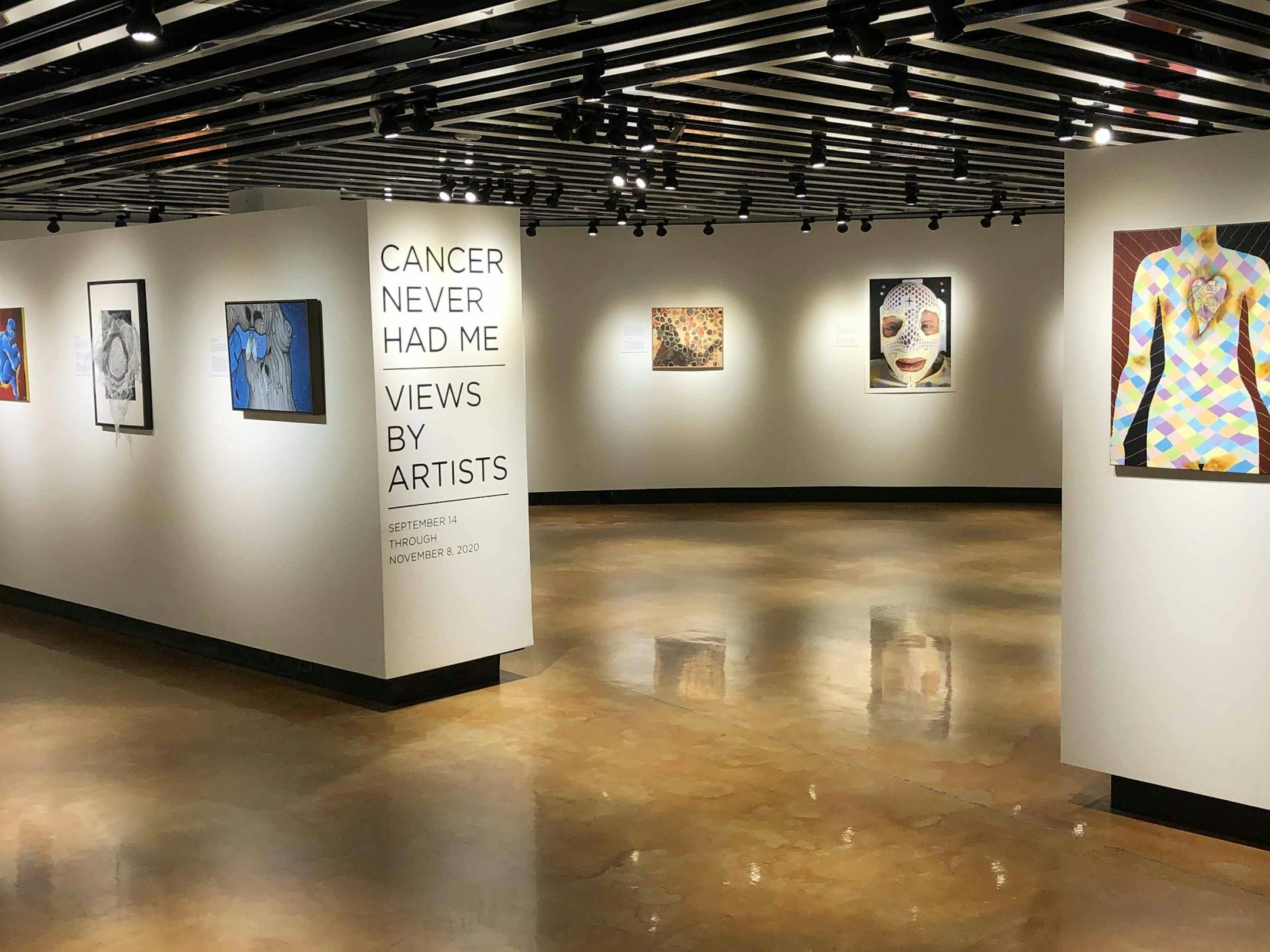
ST. PETER, MINN. – If there's one thing people want less than COVID-19, it's cancer — the subject of a two-part exhibition at Gustavus Adolphus College's Hillstrom Museum of Art.
When visitors enter the basement-level museum in the college's student center, they'll first encounter "Cancer Never Had Me: Views by Artists," a juried show including 33 artists who have been affected by cancer.
The second show, "Artists Who Had Cancer: Works From the Hillstrom and Shogren-Meyer Collections," features 32 paintings, drawings, photographs and prints by 16 artists. Each died of cancer, but their artwork doesn't reflect that journey.
The two shows run in conjunction with the Nobel Conference held each year at Gustavus. (This year's, titled "Cancer in the Age of Biotechnology," is happening online Oct. 6-7 and it's free of charge.)
Cancer is all around us, in daily life and in popular culture. Just last weekend Supreme Court Justice Ruth Bader Ginsburg, a three-time survivor, finally succumbed to pancreatic cancer.
That doesn't mean it's easy to talk about. The raw honesty and emotion of the 45 works in "Cancer Never Had Me" could help facilitate difficult conversations. They include visceral photographs of cancer treatment, fantastical paintings about what it's like to beat cancer, colorfully patterned mirrors representing different chakras (energy centers in the body) and dreamy depictions of loss.
Gina Dabrowski's 2018 photograph "Three Friends" shows Kathy, Joni and Gale standing in front of a pop-up camper during the Savanna Moon Celebration in Pepin, Wis. Kathy is a four-time cancer survivor; she is topless and has no breasts, suggesting mastectomies.
Humor is hard to come by with such a solemn topic, but one dark exception is Brenda Gill's "Setting the Hook" (2020), a watercolor painting of seven cartoonish fishing hooks, each named after types of cancer — leukemia is an orange-and-black striped fish with two hooks dangling from its body — that the federal Department of Veterans Affairs has linked to Agent Orange.


