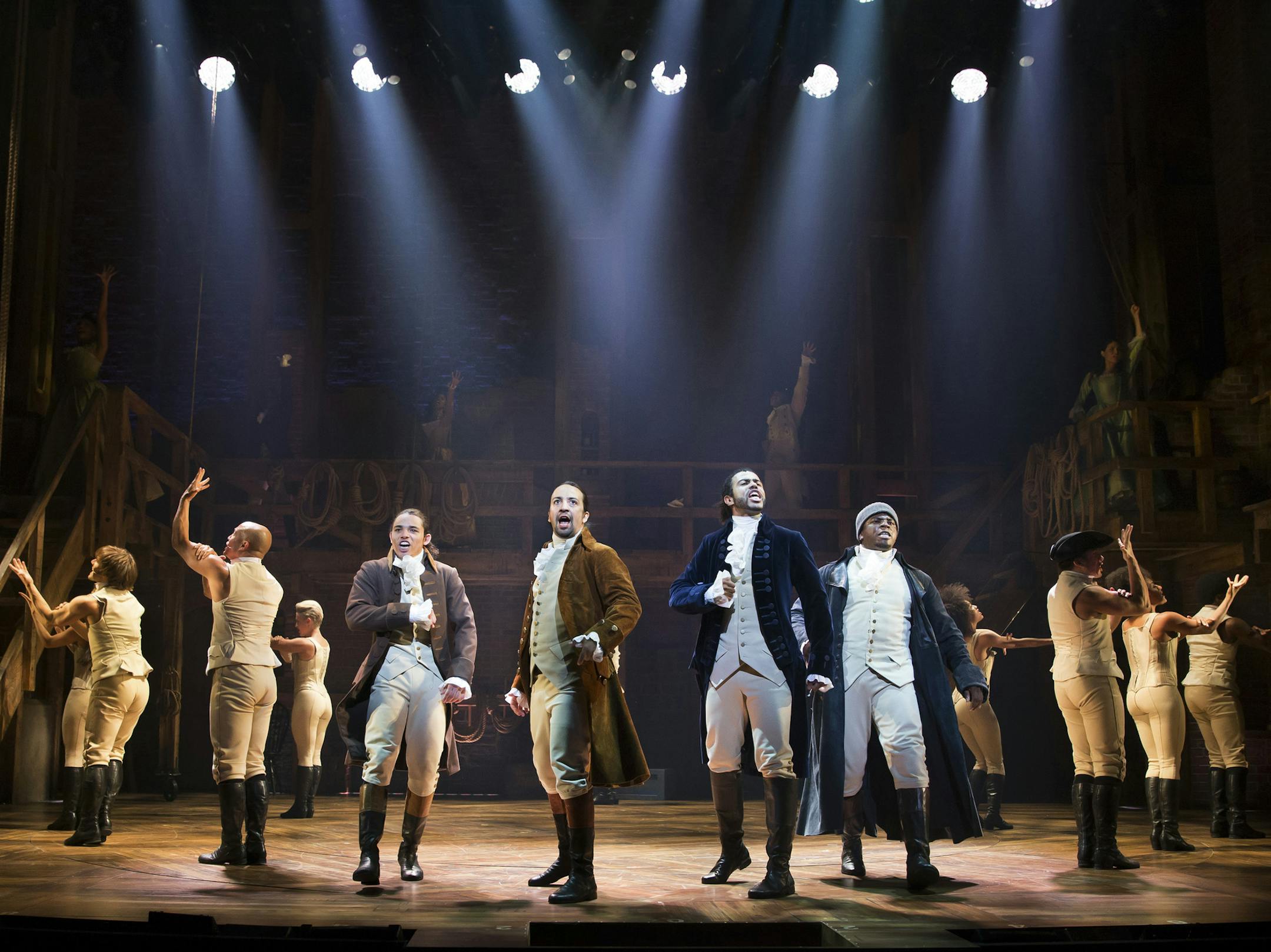
Bartlett Sher was skeptically incredulous when it was suggested that "Hamilton," the epoch-shaking masterwork, could strike someone as being so substantial as to be an opera.
"Based on what?" asked Sher, the highly lauded director of work on Broadway and in opera.
The defense rose and made its case: "Hamilton" is "through-composed" (no spoken dialogue) and has a weighty libretto, serious narrative discipline, a steady musical motif that undergirds the recitative and many beautiful songs that erupt like arias.
Sher, whose production of "The Bridges of Madison County" comes to the Orpheum in Minneapolis June 21-26, was unmoved. He would concede only that "Hamilton" has "a continuous and complete rhythm that is controlled by the music." It's historic and a great piece of work, but opera is more than simply a form.
"The cultures are totally different," he said. "Completely different in history and sensibility, traditions, the training, the hierarchy of where the power is."
Well, that settles that, right?
"In the broadest sense, if a piece is sung through, then it is an opera of some kind," said Conrad Osborne, a New York-based opera critic, singer and actor.
However, he emphatically added, "compared to opera as we know it," musicals such as "Hamilton" or "Caroline, or Change" or "Next to Normal" are very different in aesthetic, style and vocal usages that "do not allow for the exploration with such depth, emotional range and richness as classical music."