

My job requires me to be open to all kinds of movies, but if asked about my favorites I will not hesitate to say the paranoid thrillers of the 1970s.
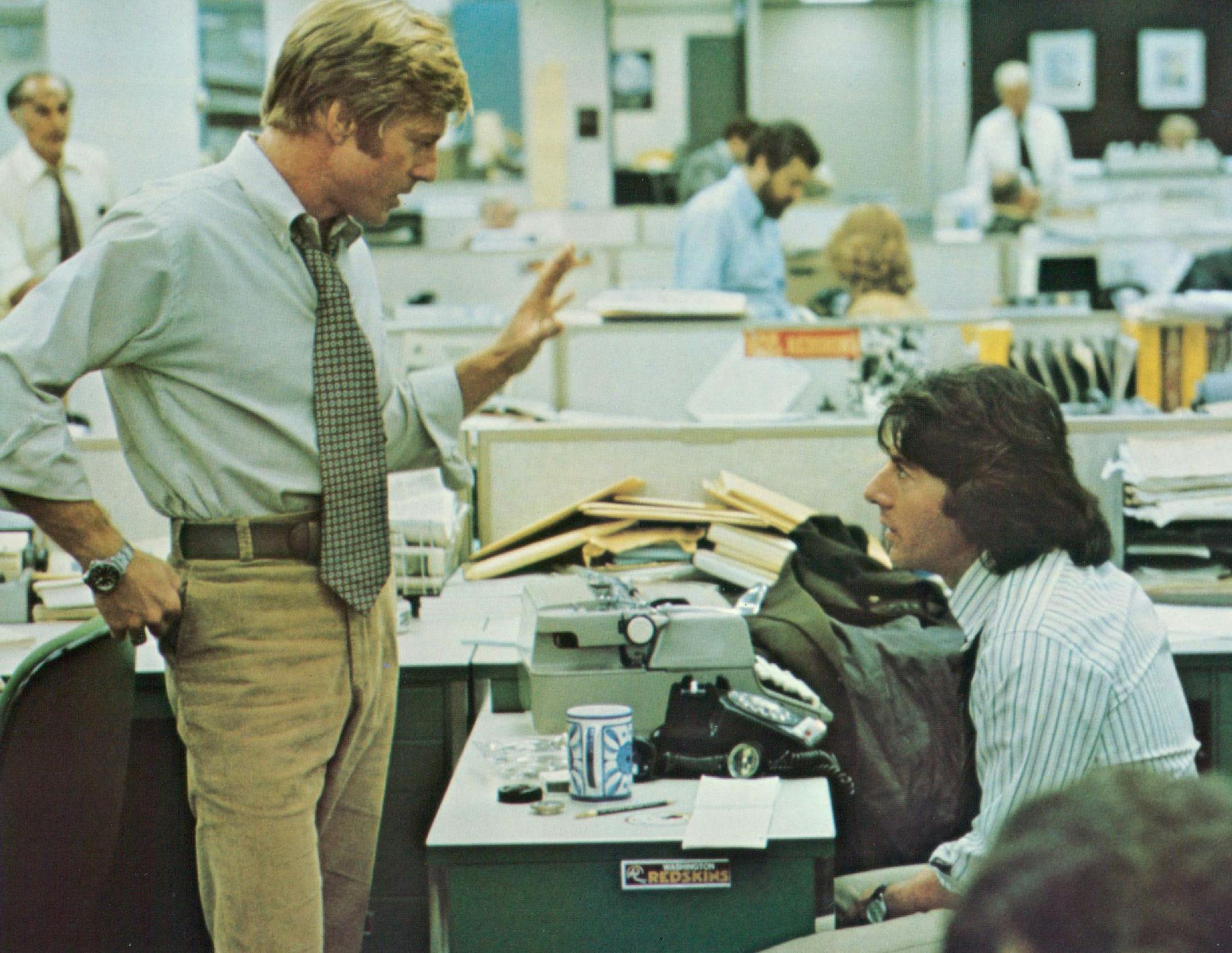
The implosion of Richard Nixon's presidency looms in '70s films. It's even depicted in one of them, Alan J. Pakula's "All the President's Men." The loss of faith in government, cynicism about the presidency, fear of the impact a few powerful people can have on public policy and suspicion that the official version of events isn't true — these are all legacies of an era in which Americans saw a disgraced president resign and his henchmen go to the slammer.
The most trusted people in our country were lying to us. Of course we were paranoid, and the movies are always best when they tie into something audiences already feel.
This explains why so many '70s movies feature a protagonist who stumbles on a secret that leads to a vast government conspiracy. Besides reflecting the times, these stories offer freedom for a director to reshape material according to his style and interests. But the key is how closely the hero's journey mirrors our own as moviegoers.
Just like the guy who finds a secret file or overhears a clandestine phone call, we begin a movie knowing little about what we will encounter, and soon (if the movie is good) it engulfs us completely. These films make us part of the conspiracy; we're safe in our seats while the heroes risk their lives to get at the truth. Like the shadowy government figures who tap their phones or pull their children aside on the playground to issue warnings, we are always watching. Even more than other kinds of movies, paranoid thrillers make us aware that we're voyeurs, dying to find out what happens to Gene Hackman or Warren Beatty.
For this list, I would stretch the definition of "the 1970s" to include 1981's "Blow Out." It belongs to the '70s, culturally, because of its connection to earlier movies, its government conspiracy theme and its origin in events such as Watergate (and the Chappaquiddick incident in 1969). The voyeuristic "Chinatown" (1974), while not set in the post-Watergate years, is also clearly a product of them.
"Chinatown" establishes a link to earlier movies, too. I won't go so far as to push the extended dates for this list back to the 1940s, but paranoid conspiracy thrillers are the answer to the film noir of the '40s, equally dark tales that also focused on lone wolves attempting to solve mysteries that were bigger than they realized.
No medium does suspense and danger better than the movies, so I'm surprised paranoid thrillers are not more common. "The Lives of Others" (2006), the electrifying "Tinker Tailor Soldier Spy" (2011) and Will Smith's "Enemy of the State" (1998) are more recent versions, but I still return to these classics often.


