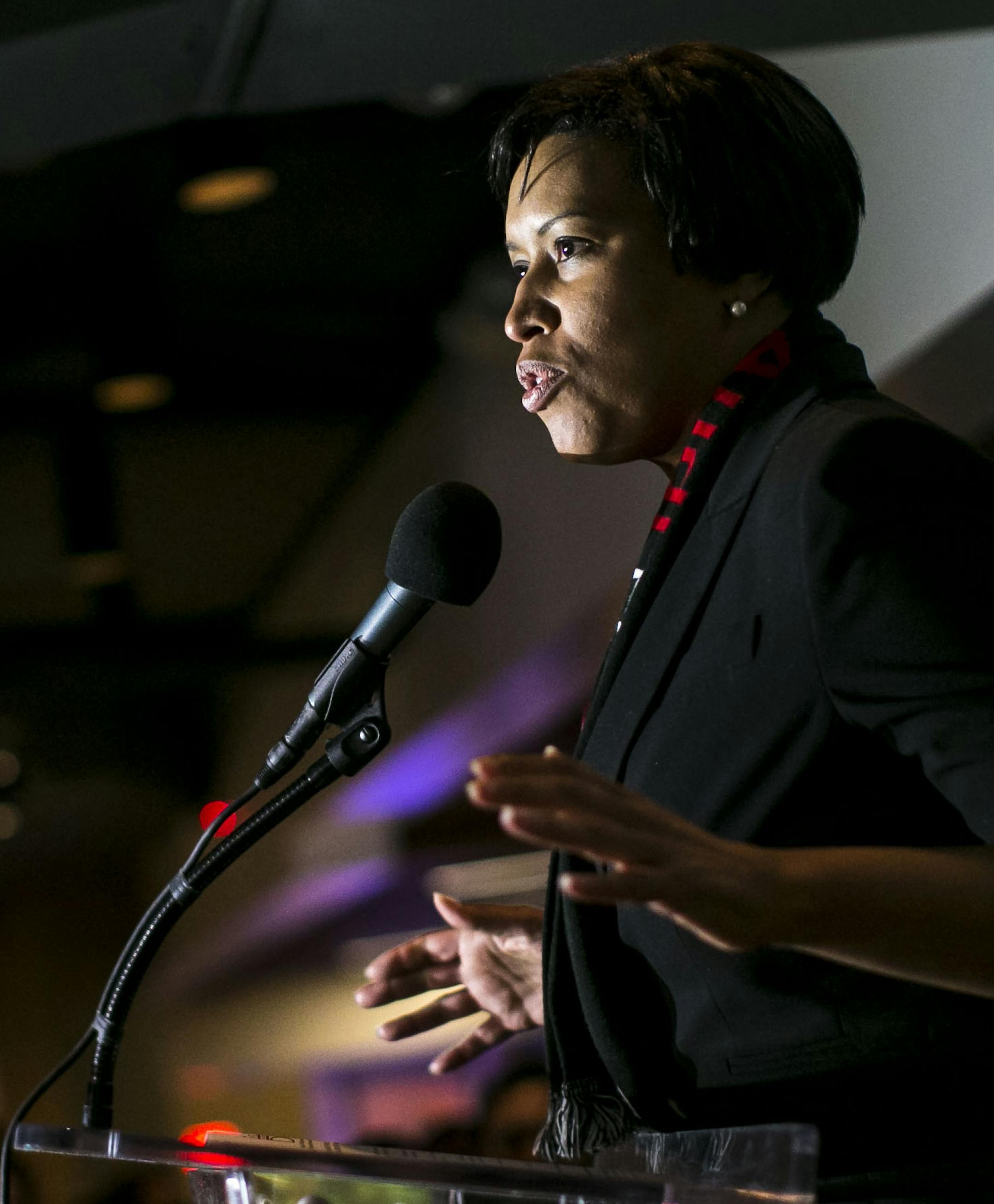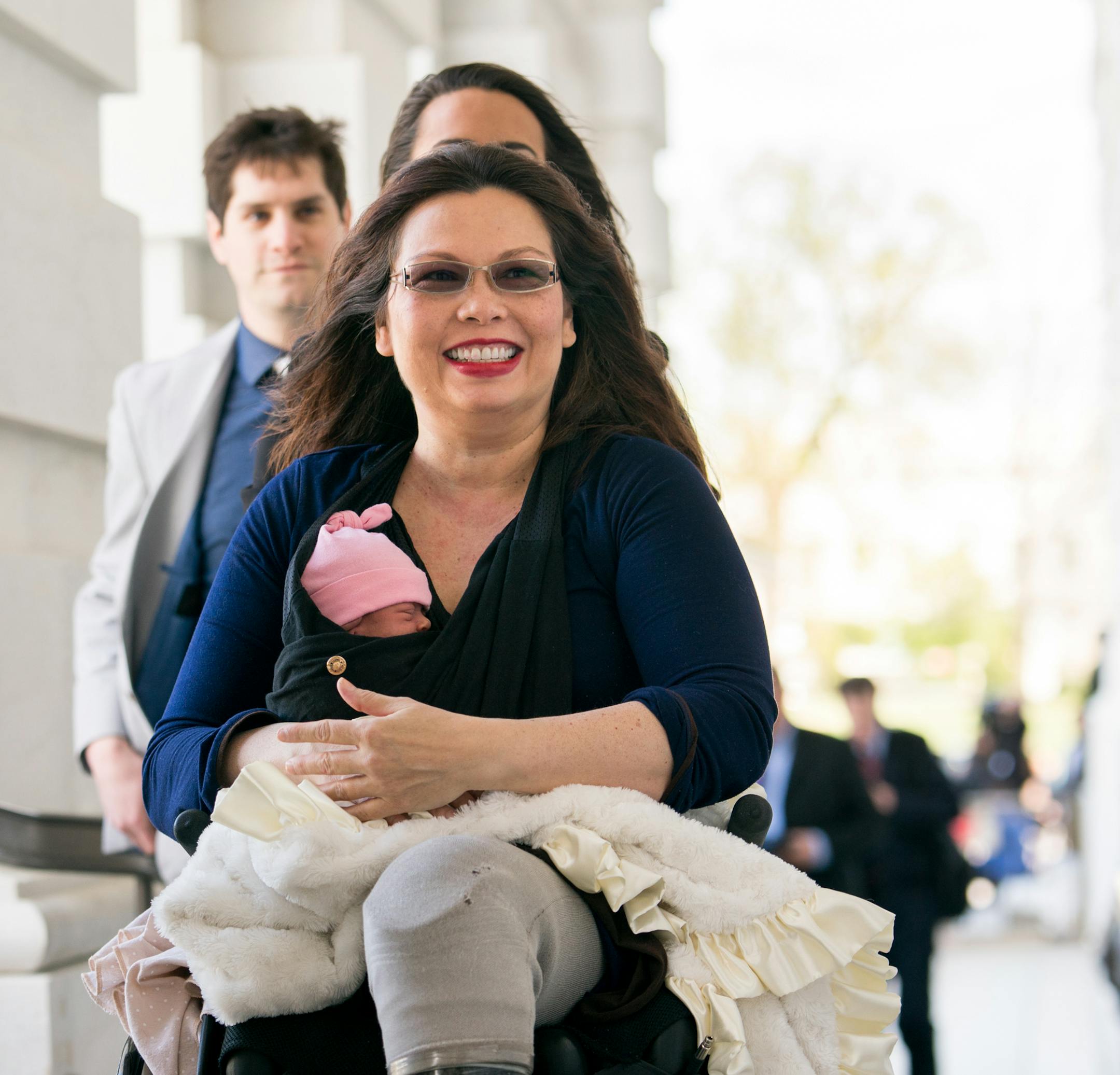
A week after announcing she'd adopted a baby, Washington, D.C., Mayor Muriel Bowser was back at work, addressing the media at a news conference.
She's not the first high-profile mother to make a swift return to work following the arrival of a baby. In 2012, Marissa Mayer, then Yahoo's CEO, took just two weeks off following the birth of her twins. And in 2008, vice presidential candidate Sarah Palin worked the campaign trail in the months after her son was born.
At a time when family-leave policies in the United States still lag behind those of other developed nations, experts say that when mothers return to work soon after having a baby, it sends a mixed message. While it may empower mothers trying to juggle work and family life, it also can end up making new mothers feel guilty if they don't rush back to the office and then end up feeling even more guilty about ignoring their babies.
Barbara Risman, a sociology professor at the University of Illinois at Chicago and senior scholar at the Council on Contemporary Families, said there are positive and negative takeaways from powerful women taking short maternity leaves.
"One thing is the notion that jobs are so inflexible — that we shouldn't, as a society, decide that reproduction of the species and attention to the next generation deserves three months, or even six months, of parental care," Risman said.
Working women, especially those in male-dominated fields, are afraid of the consequences of taking the time to bond with their children, Risman added. And men often believe there's a stigma to taking on more of a caregiver role, Risman said. "They think they'll be considered less serious."
Risman added that many families can't afford for one or both parents to take unpaid leave, and paid maternity and paternity leave policies at many companies aren't sufficient. There needs to be a shift in thinking in our society, she said, and that would likely take a government mandate requiring companies to have such policies.
"As a society we want to support people who have families," said Risman, who thinks little support for working parents is part of the reason the U.S. birthrate has fallen. "Working parents should have paid parental leave, and it should be enough that the parent feels comfortable that the child is developing normally and ready for some kind of paid care."