

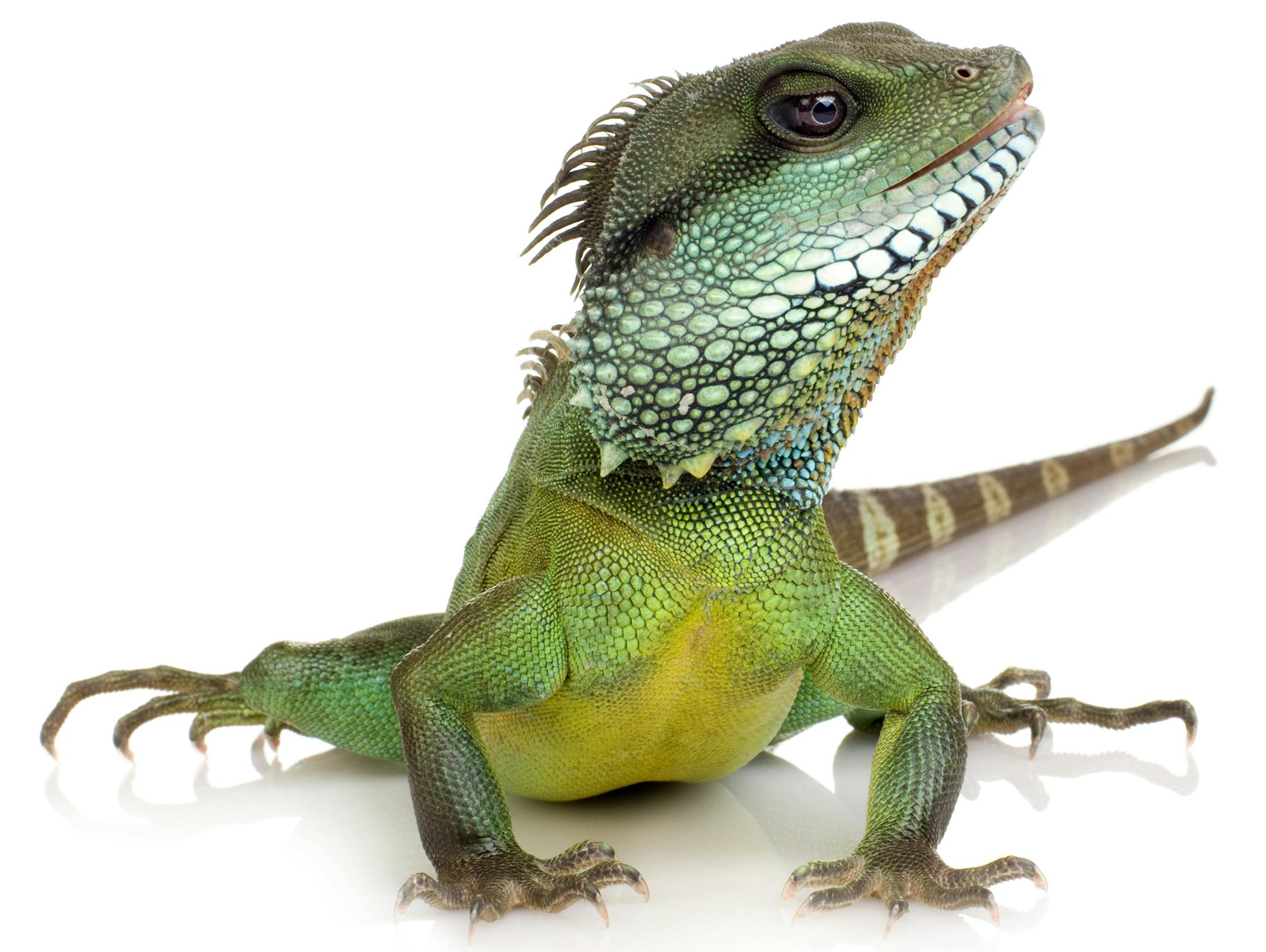
Reptiles have found a home in 6 million households, according to the 2023-2024 national pet owners survey by the American Pet Product Association.
Snakes, lizards and chelonians (turtles and tortoises) make appealing pets for a number of reasons.
They're much less likely to be allergenic than dogs, cats, bunnies and birds. In a suitable enclosure, they require less intensive management than mammals. And they're interesting biologically, says Dr. Stephen Divers, a professor of small animal medicine and surgery at the University of Georgia College of Veterinary Medicine.
If you're considering adding one of these fascinating creatures to your family, here's what to know about choosing one and setting up a habitat.
Consider your time commitment. "If you're someone who's very busy, then maybe a snake you need to feed and clean once a week may be easier than a small lizard or chelonian that needs more intensive care," Divers says. Popular snake species are ball pythons, small constrictors that grow to 4 or 5 feet; corn snakes; and king snakes.
If lizards are more your style, consider leopard geckos and bearded dragons. Bearded dragons are more popular, but leopard geckos are less demanding when it comes to broad-spectrum lighting. They benefit from it, but for bearded dragons, radiant UV broad-spectrum lighting is an essential — and more expensive — requirement, which typically must be replaced annually.
Chelonians are more challenging because they tend to be active. Terrestrial tortoises in particular do best if they are kept outdoors or have easy access to the outdoors. "As long as the temperature gets into the 80s during the day, they will do well outside," Divers says. "During winter, they need an indoor enclosure because you can't hibernate most of these animals."
Bigger is better when it comes to habitat. When you are budgeting for a reptile, at least half of the cost should be for the enclosure, lighting, heating, a thermostat and other environmental must-haves. A 20-gallon glass aquarium is not only too small but also provides little privacy. The animal is exposed on all sides, which is stressful. Divers recommends a wood, fiberglass or plastic enclosure with some opacity on more than one side. "That provides the animal more opportunity to seek refuge if it chooses to do so."

