

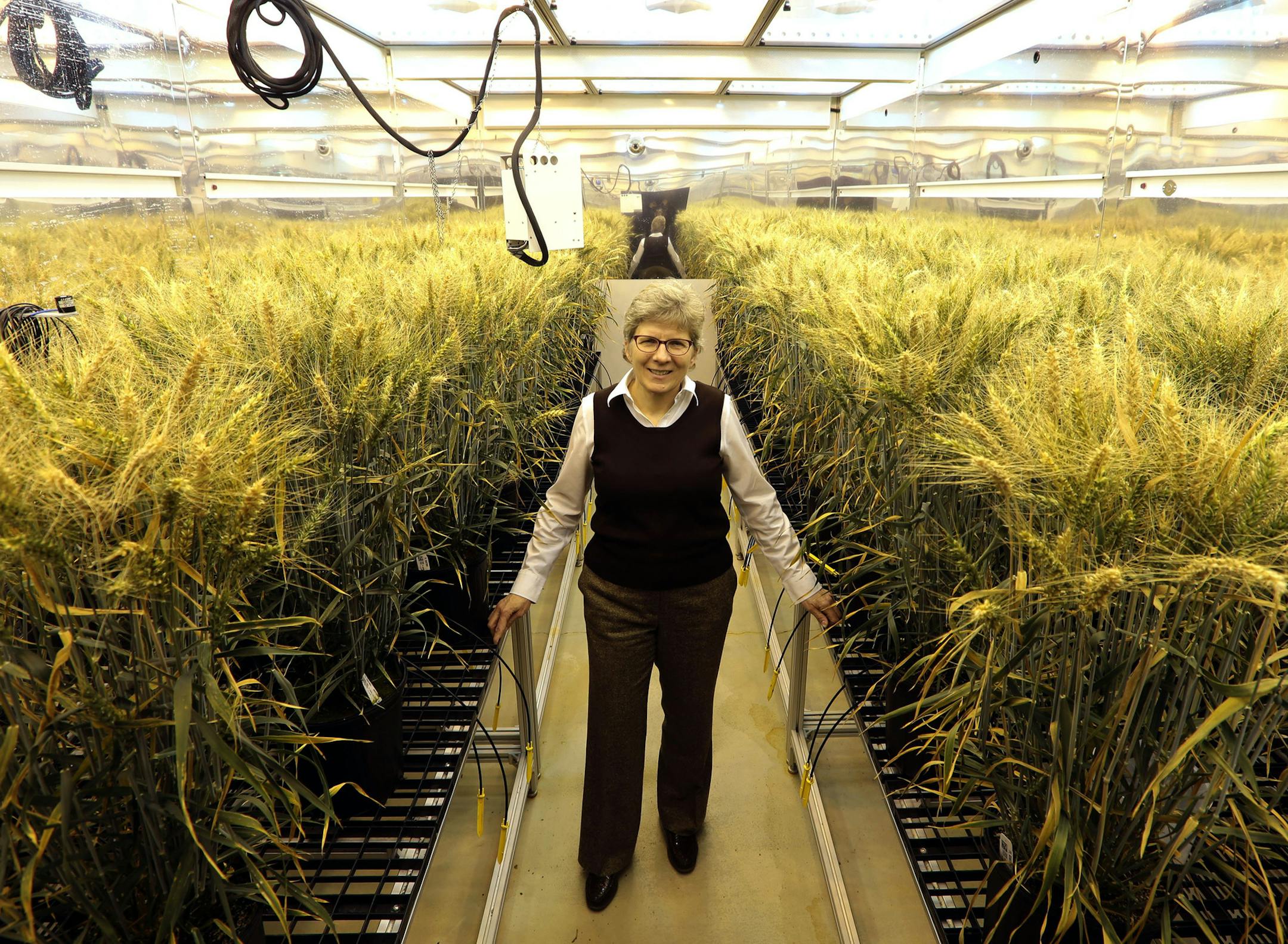
CHESTERFIELD, Mo. – At the heart of Monsanto's global research operation is a structure with a rather ordinary name. But on the fourth floor of Building GG is a room where the future of wheat may be changing.
The facility has dozens of rooms just like it. But inside this particular 10-foot by 20-foot growth chamber — whose mirrored walls and sun-bright lamps can imitate the weather of any U.S. field — is a batch of young wheat plants.
They're part of an intensive effort to use breeding and gene manipulation to make a new kind of wheat. The plants represent several years' worth of work aimed at creating a plant that's resistant to a trio of herbicides. The research has the attention of supporters and critics alike.
The supporters tout the work being done at the Chesterfield Village Research Center as critical to feeding a growing global population, while the critics say the world isn't ready for the genetic modification of a dinner table staple.
For Creve Coeur-based Monsanto, it is an expensive and time-consuming quest. It costs $150 million or more to add just one new genetic trait to a seed. Add a long development timeline — including field trials and regulatory approvals — and it could be another decade before the company is ready to put its new wheat seeds in farmers' hands.
"People think we're being coy about it. But we really don't know," said Claire Cajacob, director of the company's wheat research.
It takes a combination of traditional breeding and genetic enhancement to mate the ideal plant with the right genetic sequences to arm it with the ability to shrug off the herbicides dicamba, glufosinate and glyphosate — Monsanto's signature weedkiller sold as Roundup.
To get there, researchers will sift through hundreds of thousands of plants. "You have to find the one plant that's going to be the parent of every other seed out there," Cajacob said.


