
Are Americans doing fitness wrong?

In other cultures, people work exercise into their daily routines.

New York Times
January 28, 2025 at 9:21PM
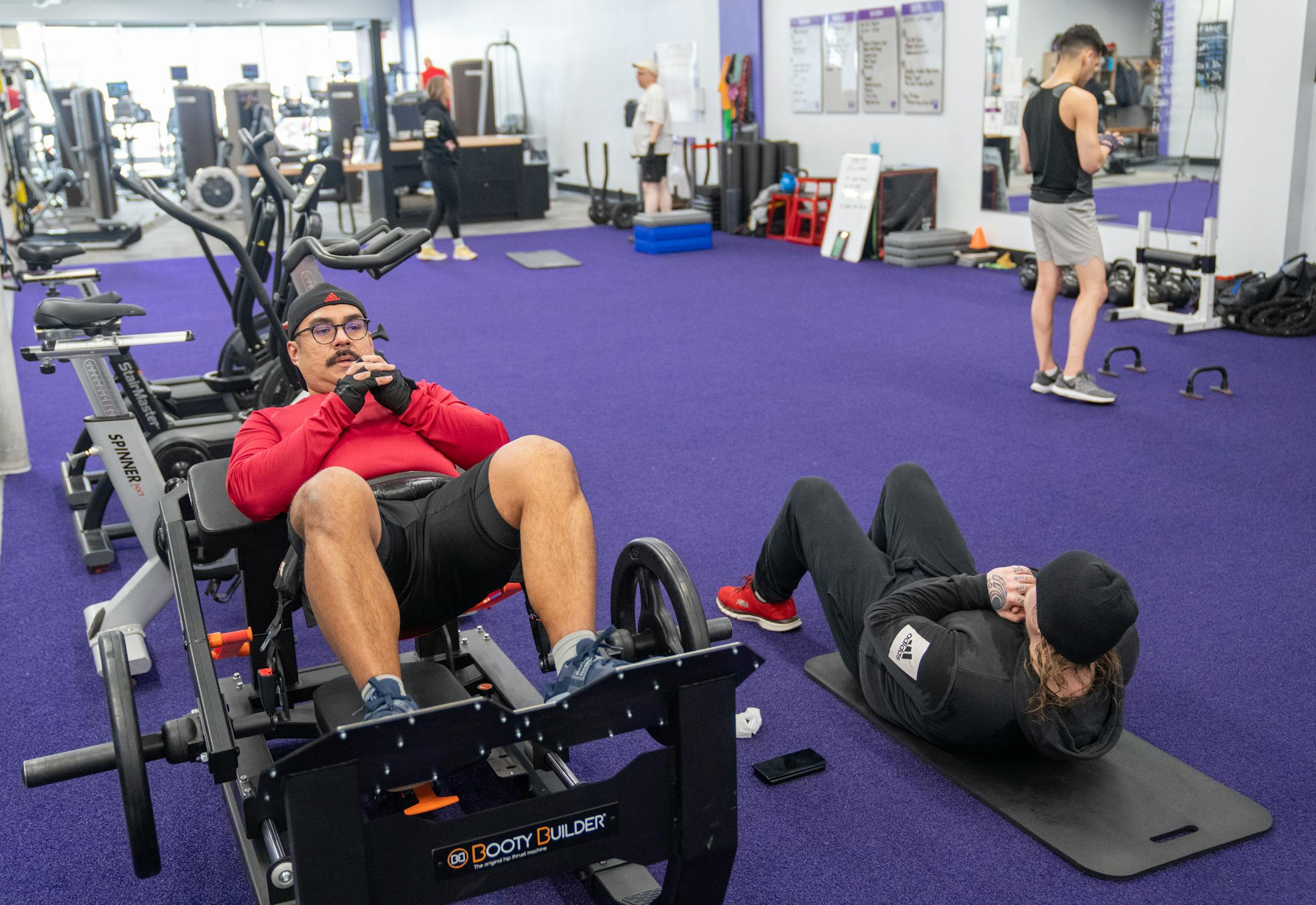
Fazdlee Isa works out at Anytime Fitness in Roseville, Minn., in 2023. (Alex Kormann/The Minnesota Star Tribune)

For many people in the United States, staying in shape means getting in your car and driving to the gym. Movement is something on a to-do list, siloed off from the rest of daily life.

That mentality is quintessentially American, according to Natalia Mehlman Petrzela, the author of “Fit Nation.”

“There’s this crazy paradox where America is, in many ways, the center of the commercial fitness industry, but it’s also a place where by pretty much every measure people are extraordinarily unfit,” she said.

Only about a quarter of American adults get the recommended amount of physical activity, according to the Centers for Disease Control and Prevention, and inactivity contributes to 1 in 10 premature deaths.

Part of the problem, Dr. Mehlman Petrzela said, is the “pay-to-play experience” embedded in American fitness culture. There are endless gyms, classes and products that promise to make you fitter, as long as you hand over your credit card.

But there are other ways of approaching exercise. In many nations, movement is baked into everyday life. Here are some lessons Americans might learn from those cultures.
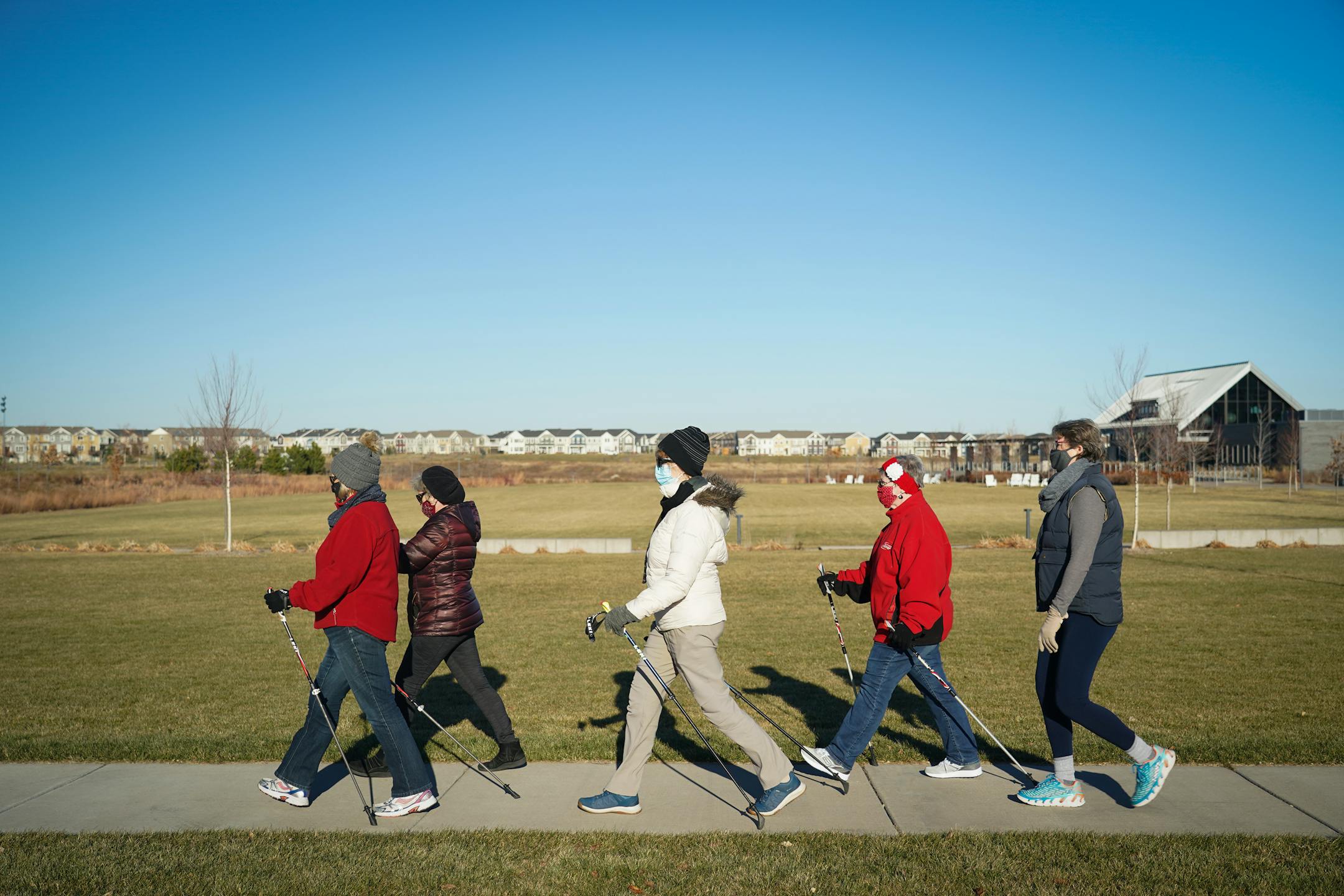
A group of Nordic walkers take a stroll in Maple Grove, Minn., in 2020. (Shari L. Gross/The Minnesota Star Tribune)

Finland: Walking is a form of transportation.

“We are used to using our legs — not the car,” said Tiina Arrankoski, the president of the International Council of Nordic Walking.
Nordic walking, or walking with specialized poles, is a proud Finnish tradition. It’s an accessible sport that encourages people to get outside and enjoy the public parks. The poles can turn an ordinary walk into a full-body workout.

The question many Americans ask is, what do you do if it’s too cold for walking outdoors? Many Finns have no idea what we’re talking about.

In a place where daylight lasts for only six hours in the dead of winter, you learn to embrace extremes. So it’s no wonder that the Finnish have a “no bad weather, only bad clothes” mentality, said Mika Venojärvi, a professor of exercise medicine at the University of Eastern Finland.

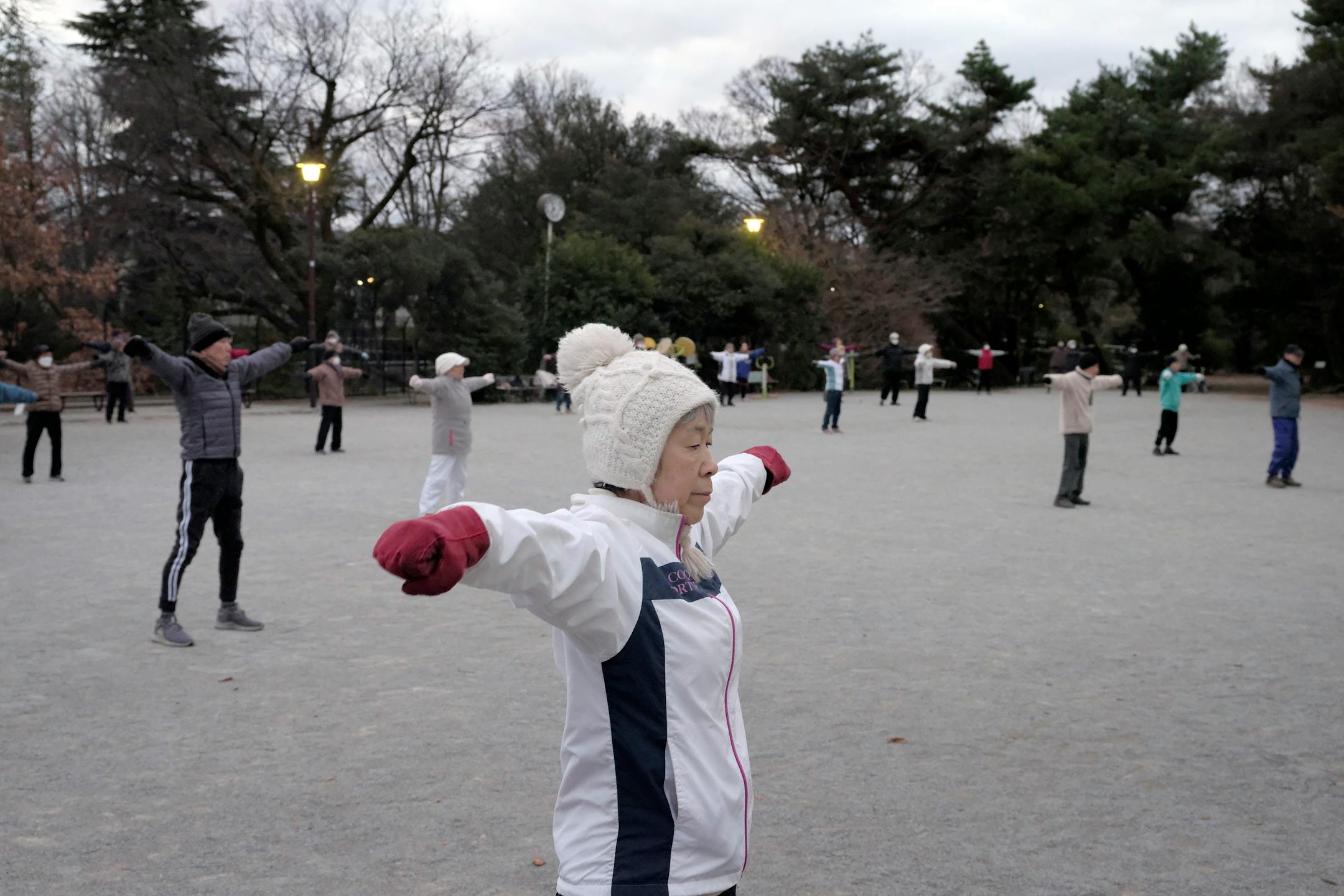
People gather in the early morning to do the short exercise routine known as Radio Taiso together in Tokyo on Jan. 16. In parks, office buildings and schoolyards, groups of people join together throughout the day in a three-minute, 13-move calisthenic routine. (Kosuke Okahara/The New York Times)

Japan: Embrace short bursts of exercise.

Every day, a short exercise routine known as radio-taiso is broadcast across Japan on YouTube and Japan’s national radio station. Groups of people join together in a three-minute, 13-move calisthenic routine — no equipment required. Movements include arm circles, forward bends, backward bends and star jumps, which are similar to jumping jacks.

While ideally you should work out for longer than a few minutes at a time, there are clear benefits to routinely elevating your heart rate even for short periods, said Dr. Jeremy Swisher, a sports medicine physician at UCLA Health.

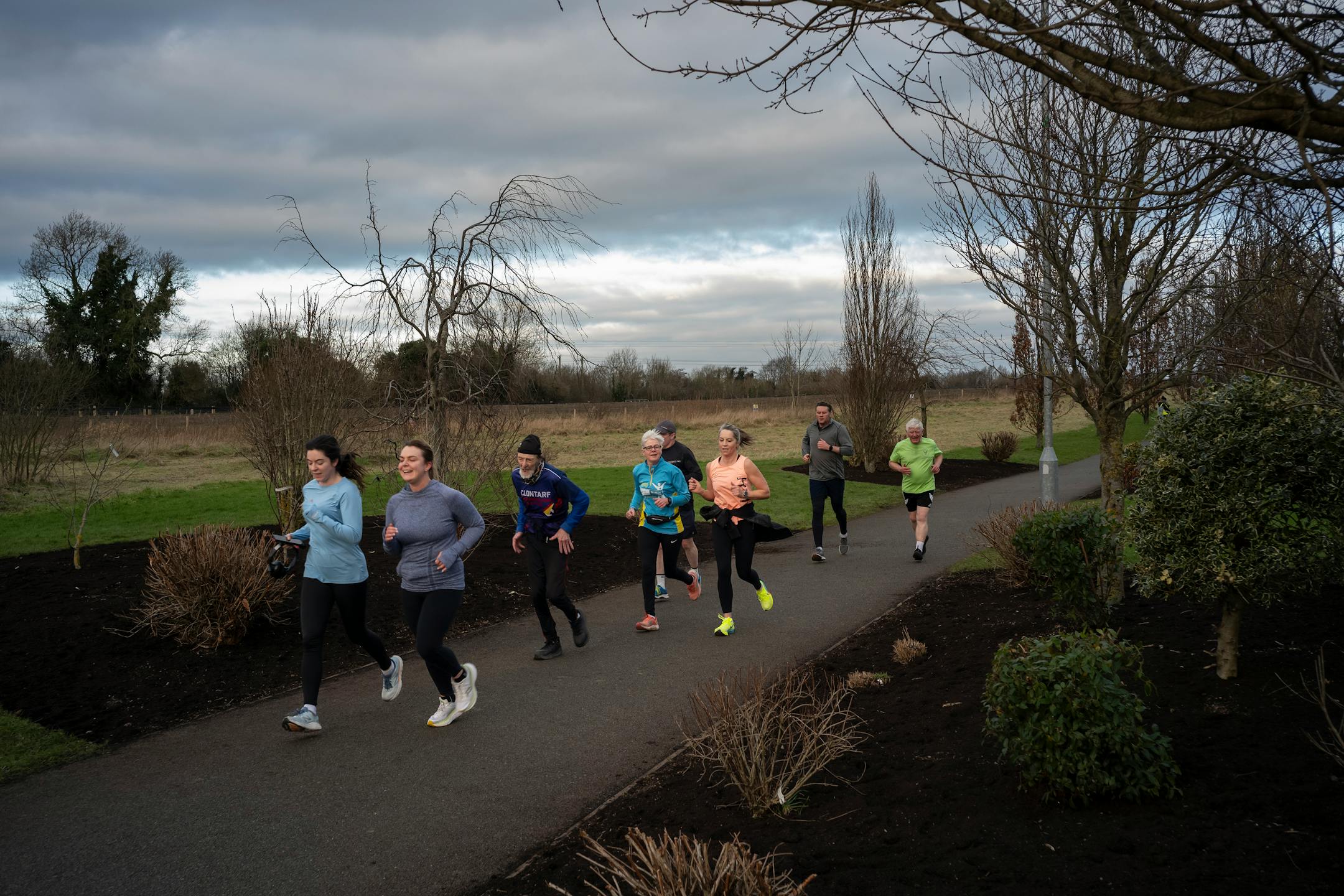
People run by a section of the Blackwater Park Loop in Navan, Ireland, during a weekly Parkrun event on Jan. 18. (Paulo Nunes dos Santos/The New York Times)

The United Kingdom: A workout can be a community event.

Twenty years ago, Paul Sinton-Hewitt invited a small group of friends to what he called the Bushy Park Time Trial: a 5-kilometer run with the promise of coffee afterward. They had a great time, and Sinton-Hewitt decided to keep doing it.

That event gradually grew into Parkrun, an organization that now hosts roughly 2,500 free running events every weekend in public spaces across 23 countries, including Ireland, Malaysia and Namibia.

Crucially, it’s always free. It’s a world away from the road races in the United States, where the average 5K race costs about $30.

Brazil: Make fitness feel like a party.

Brazil’s beaches are routinely packed with people jumping, sprinting, squatting and skating.

“Brazilians are more prone to do things together than by themselves,” said Victor Matsudo, the chairman of Agita São Paulo, a government initiative that created new green areas, sports facilities and improved walkways.

The program, which was launched in 1996, also hosts fitness “mega-events” that are reminiscent of festivals, with activities like dancing, volleyball and seminars on the importance of an active lifestyle.

about the writer

about the writer

Talya Minsberg

New York Times

More from Lifestyle

See More
card image
SARAH RICE/The New York Times

Also, expect multiple celebrations and ceremonies to be held at unconventional venues.

card image
card image