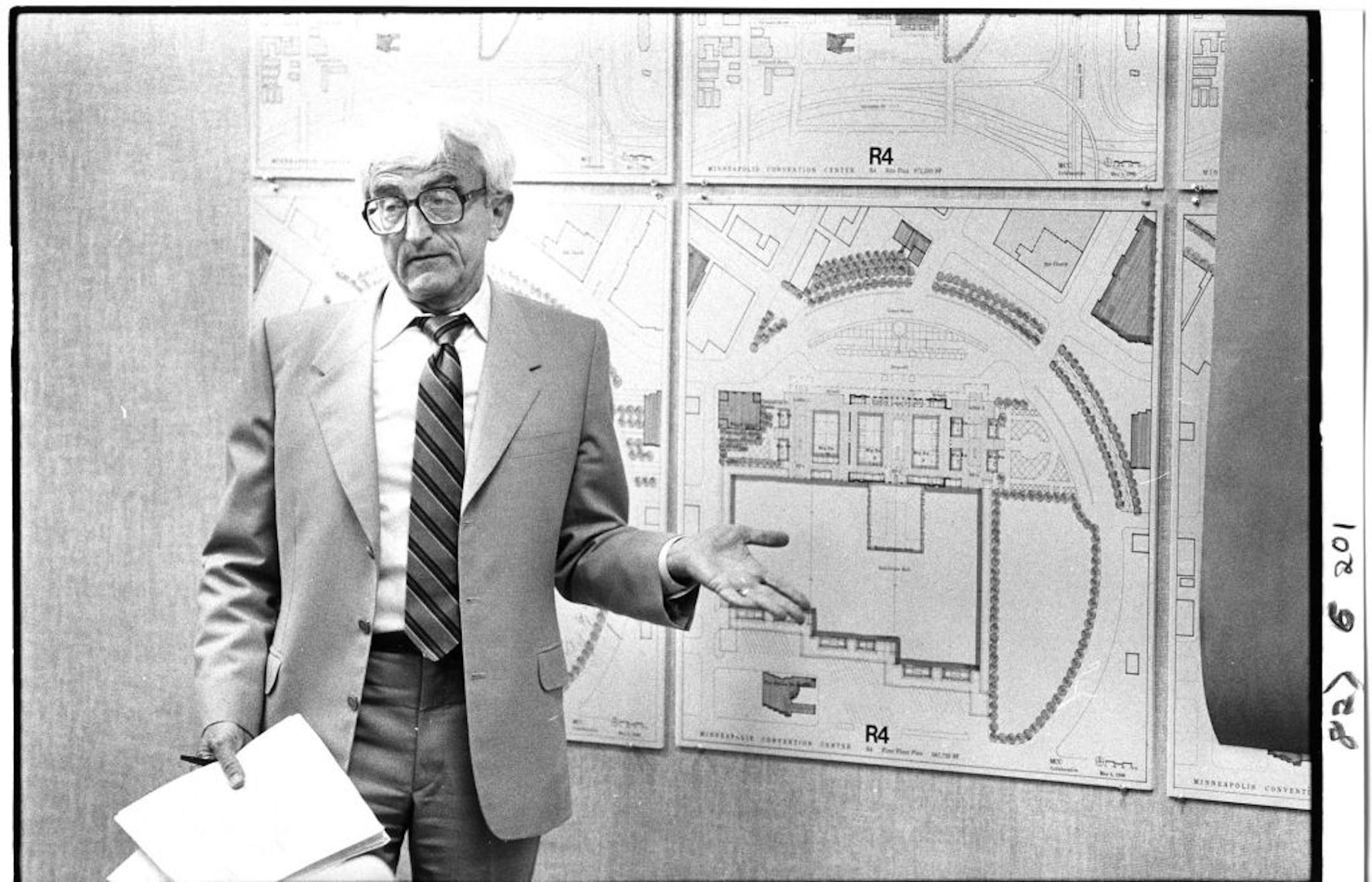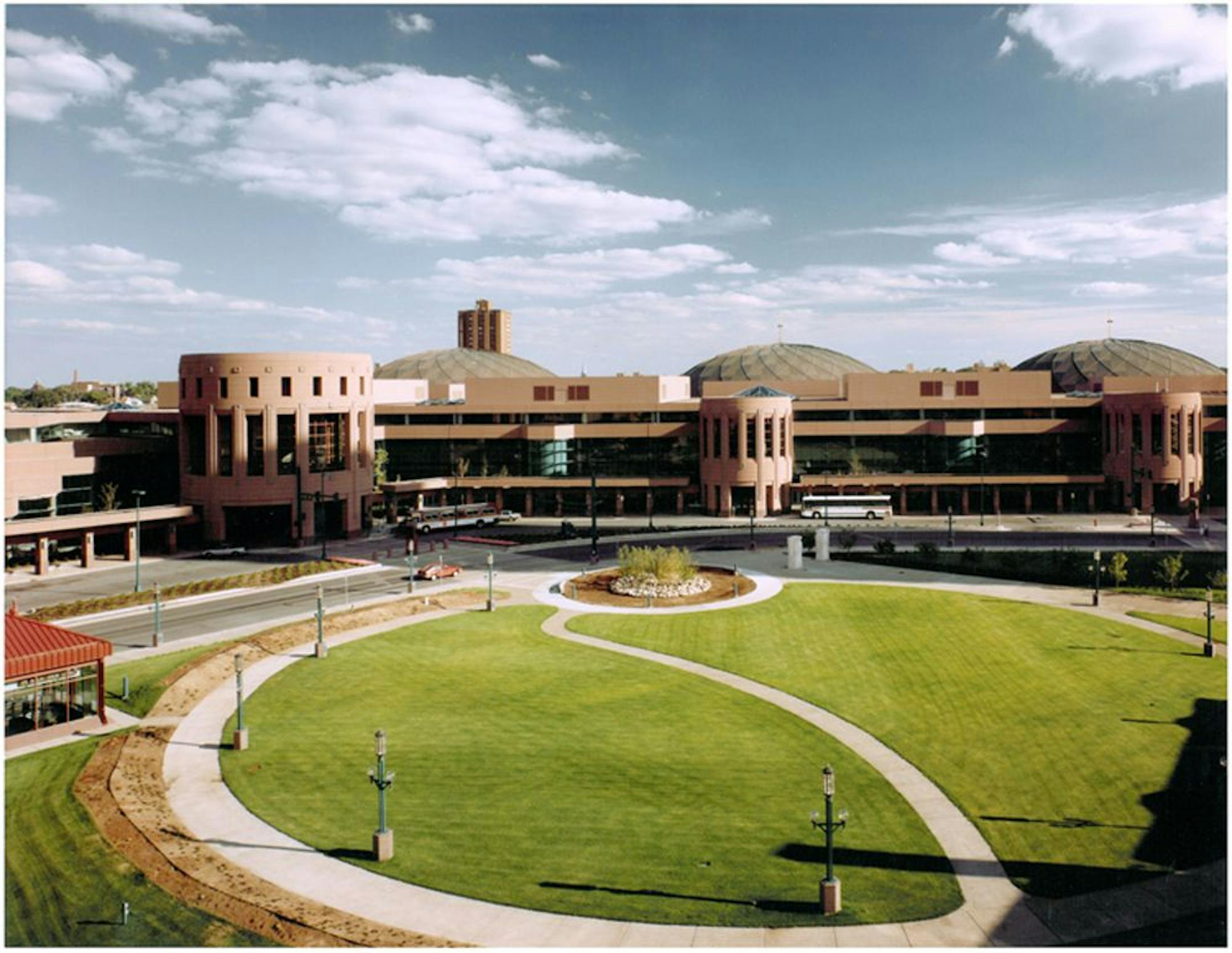
The Guthrie Theater is often referred to as Jean Nouvel's Guthrie. Why isn't the Minneapolis Convention Center known as Leonard Parker's Convention Center?
Because Leonard Parker, who died Monday at 88, wasn't that kind of architect.
That's not to say that Parker wasn't first-rate. After graduating from the University of Minnesota and MIT, he worked with Eero Saarinen, the renowned Finnish architect of the St. Louis Gateway Arch, and then established one of Minnesota's preeminent firms, the Leonard Parker Associates (TLPA), in 1958.
With Parker at the helm, the firm designed landmarks we take for granted. The University of Minnesota Law School (1978) and the Hubert Humphrey Institute (1986) elevated the architectural quality of the bleak West Bank campus. Minnesota Public Radio (1979) brought a snappy but sensitive modernism to historic St. Paul. The Minneapolis Convention Center (1989 and 2002) created a handsome and highly functional district on the south end of downtown. The Minnesota Judicial Center (1998) expanded the old Historical Society headquarters with an addition both sensitive and strong in its own right.
But Parker didn't indulge in the "signature architecture" that has made Frenchman Nouvel or Californian Frank Gehry worldwide brands. His idea of a successful building was one that met the needs of the client. His signature: buildings that work and are handsome additions to the landscape.
(It's not that he didn't have a healthy ego. As his son Andy noted at last week's memorial service, his father's office was covered with quotes -- from himself. Front and center on his drawing board: "Find out what you're here to do. Do the best you possibly can. And do it all the time.")
Rivals and friends
Parker's death signals the end of an era. He was one of the young Modernists who shaped postwar Minnesota. Along with his peers James Stageberg, Bruce Abrahamson and John Rauma and their mentor Ralph Rapson (all deceased), he studied with the European giants who brought the International Style to America. Form follows function was their mantra. Architecture was their love.