

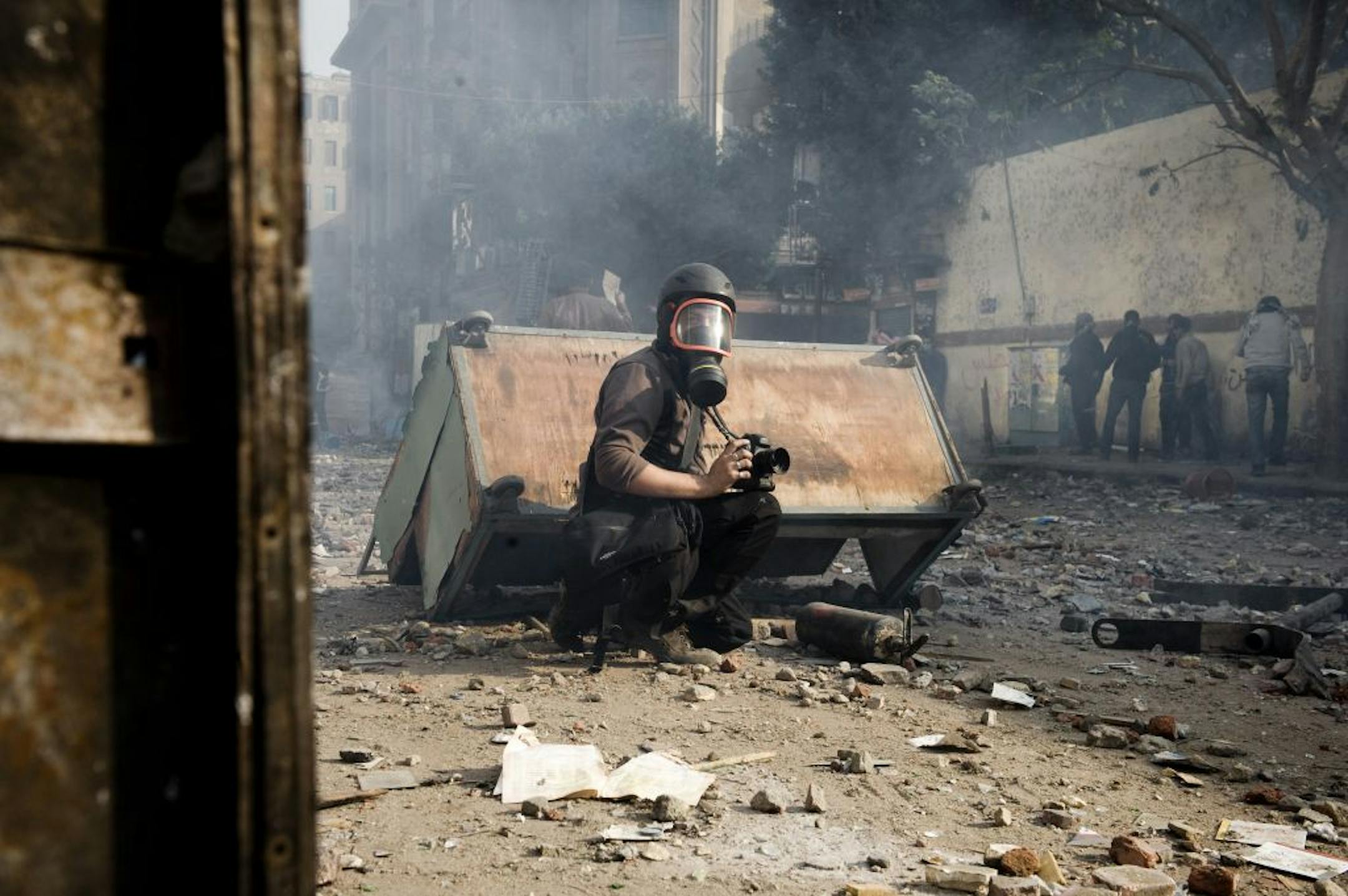
Two years into the Arab Spring, a free press has yet to blossom. In fact, it's winter for many journalists in the Middle East and North Africa, the region with the world's lowest level of press freedom, according to the recently released "World Press Freedom Index."
The index, an annual analysis of press freedoms, is issued by the Parisian-based Reporters Without Borders. Headlined "Dashed Hopes Follow Spring," it chronicles the way many Mideast nations are still appalling places for journalists.
Of course, the Arab Spring has yet to topple all the region's bad actors. The Assad regime still runs war-torn Syria, which ranked 176th out of 179 (only totalitarian nations Turkmenistan, North Korea and Eritrea were lower-ranked). In Iran (174th), the theocracy makes life hell for journalists -- and, sometimes, their families. Relatives of some journalists working abroad or for foreign news organizations have been imprisoned in a country the report calls "one of the five biggest prisons for news and information providers."
But it's not just America's adversaries who are harassing journalists. An ally, Bahrain (165th), has fallen 66 places in four years, which should be a bitter embarrassment to an Obama administration that quickly condemned countries like Libya, Yemen and Egypt when they were repressing the press.
Those three nations' nascent governments have hardly improved, either. Tunisia, where the Arab Spring first flowered, fell four places to 138th. Libya leapt past 23 countries, but still ranks 131st, and the report warns that the improvement needs to be constitutionally codified. And two years after Tahrir Square, Egypt still only ranks 158th, in part due to an unclear constitution, as well as heavy-handed editors installed by the ruling Muslim Brotherhood.
Surveying the still-repressive region, Delphine Halgand, Washington, D.C., director of Reporters without Borders, said in an interview that "there are various situations in the Arab Spring countries. In most of them we find a lot of difficulties. We're hoping that this newfound freedom will be translated into [press freedom] realities."
Halgand found some solace east of the Mideast, in Myanmar (also called Burma). Long led by the military, Myanmar languished in the bottom 15 for a decade. But internal reforms and international outreach have also meant media freedoms have increased, so it's up 18 places to rank 151st.
This doesn't mean Myanmar is a press freedom beacon. Nor does it mean repressive regimes don't need to be replaced. But notably, the improvement was the result of the government's evolution -- not a societal revolution -- proving that even oppressive states can open up.


