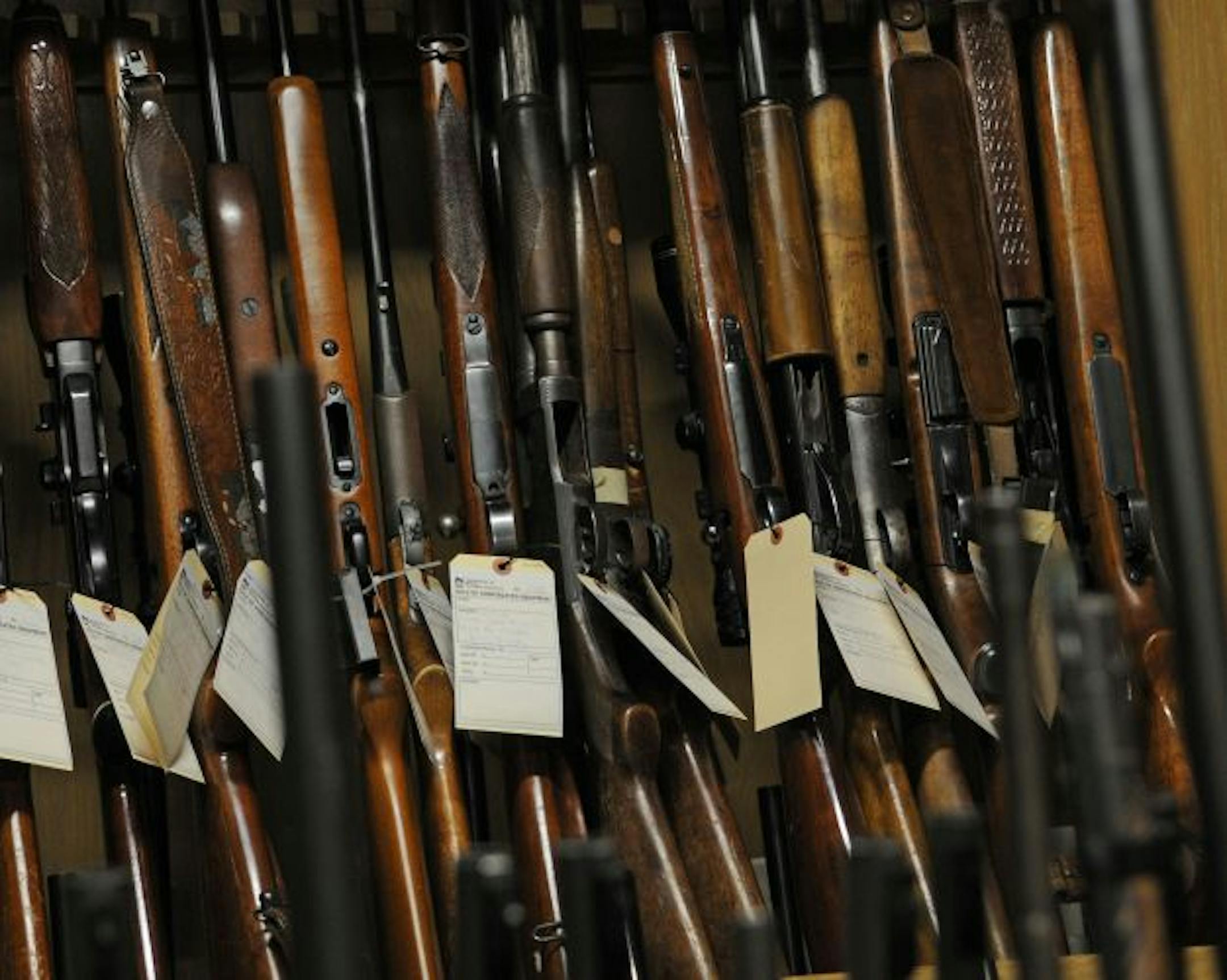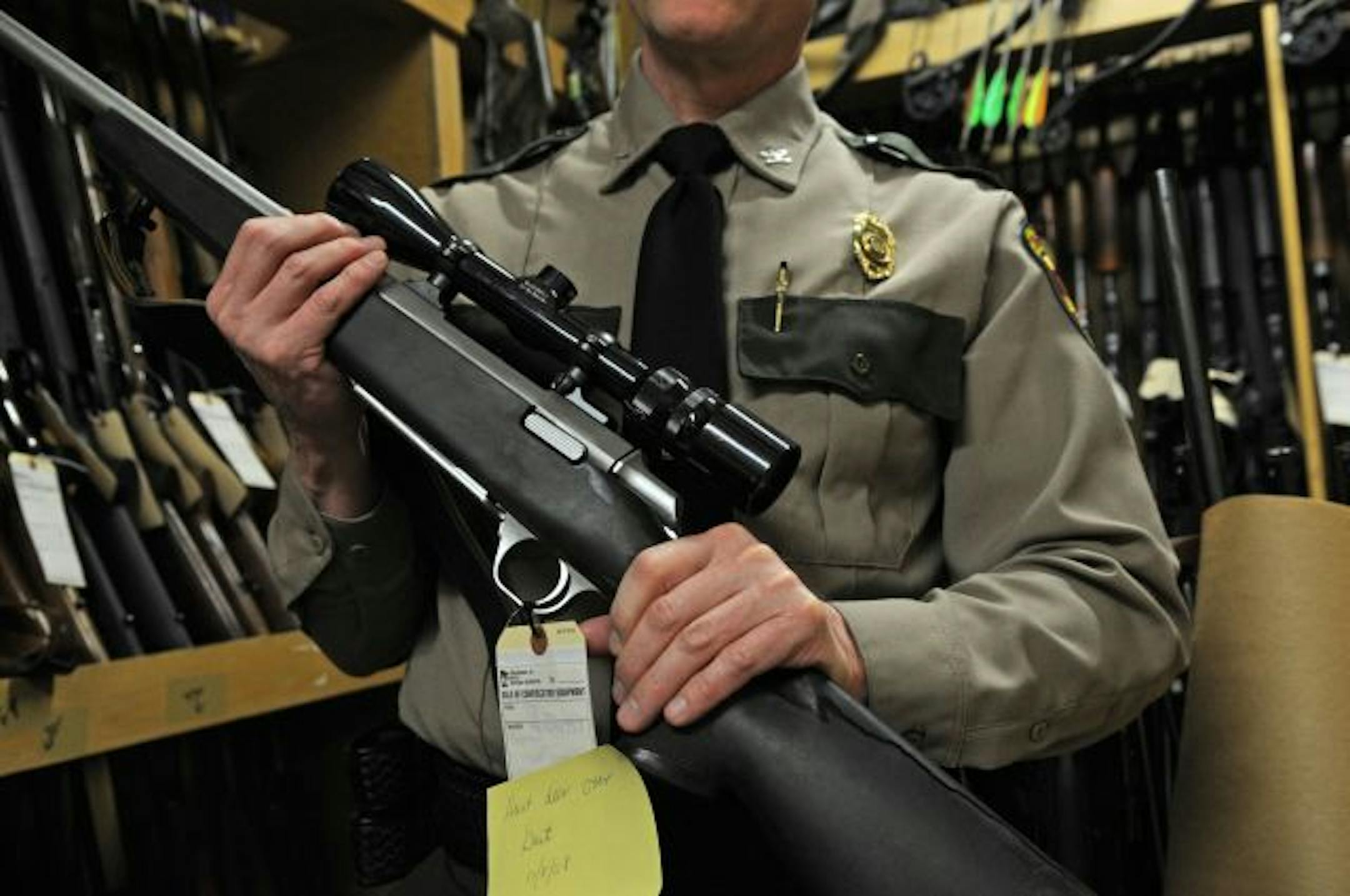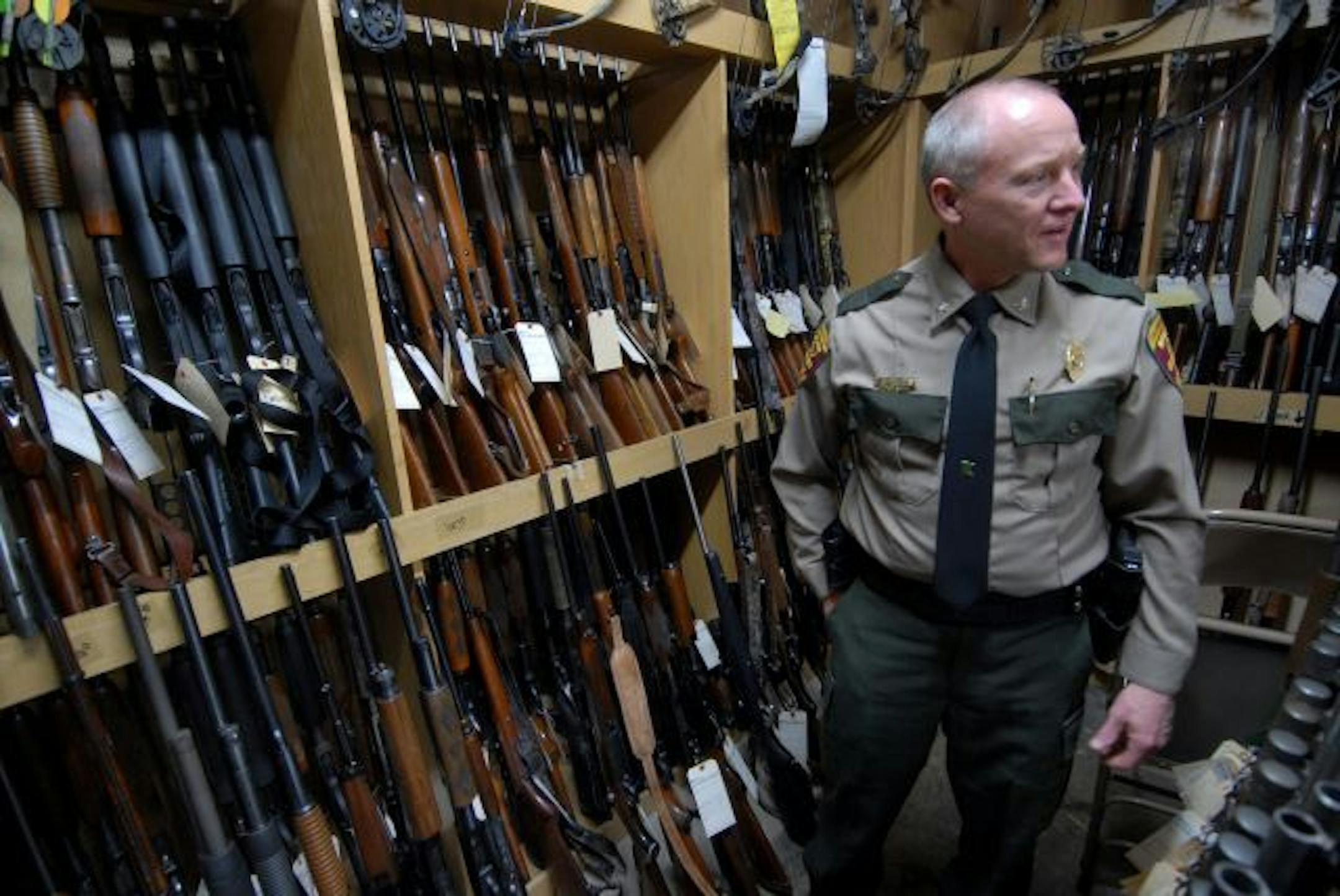
Jim Konrad cradled a camouflaged Remington Model 700 rifle with a Nikon scope, someone's dream deer rifle. "It's a nice gun," said Konrad, chief of enforcement for the Minnesota Department of Natural Resources. "It looks like it hasn't been used much." The rifle was confiscated by a DNR conservation officer after its owner was caught using it to illegally hunt deer over bait last fall in Becker County. It is among nearly 300 rifles and shotguns -- all forfeited by hunters for serious game violations -- that are soon going on the auction block to the highest bidders. And for the first time in a decade, the general public -- including those who had their guns seized -- will be able to buy them. If the price is right. "Some of the guns are pretty beat up, but there are some nice ones here, too," Konrad said this week as he looked over the firearms, nearly overflowing a small locked room in the bowels of the DNR's St. Paul headquarters.
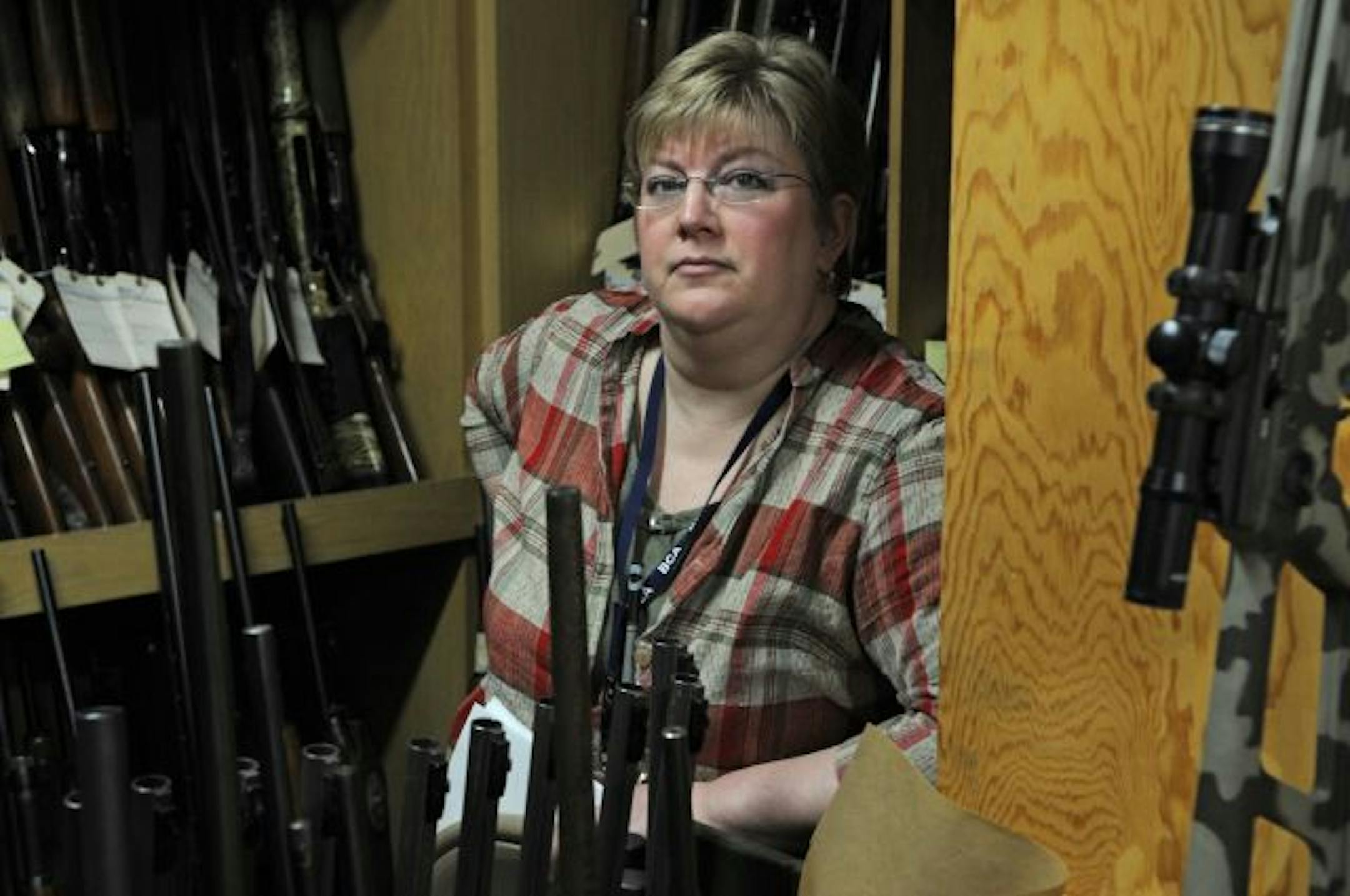
"I have about run out of storage space," said Patty Holt, the DNR's arrests and confiscations supervisor. "There's no more room." Also hanging above the wooden gun cases are about 20 bows, also seized from hunters. Those will be auctioned later.
Most of the 144 rifles and 146 shotguns were seized over the past four years.
"The last auction we had was 2005," Holt said. "Our goal is to sell them every two to three years, depending on how many come in. Once the shelves start getting full, we start thinking about a sale."
Before 1998, the DNR sold the guns in auctions open to the public. Hunters who had sentimental attachments to their seized guns, or just wanted them back, could outbid fellow buyers. But since 1998 -- when mandatory background checks became required by federal law to purchase long guns -- agency leaders decided to only auction the confiscated guns to gun dealers.
DNR Commissioner Mark Holsten decided recently to change the policy and reopen the gun sales to the public. The state is soliciting bids to handle the sale, which likely will occur next month. The vendor, which will get a percent of the proceeds, also will be responsible for the background checks of potential buyers.
"There's an educational component here, getting the word back out that we confiscate guns when it's a serious offense," Holsten said.
And he said he also liked the idea of letting the public bid on the guns.