1:48
1:48A statewide crackdown on heroin distributors launched this week has resulted in more than 65 arrests in the Twin Cities metro area and the seizure of more than $250,000 in cash, marking a major policy shift in how high-level drug investigations are conducted, federal prosecutors and county attorneys said Thursday.
The raids, carried out by federal and state drug agents in the Twin Cities, Duluth and Rochester, are the first coordinated efforts by federal and state drug agents to systematically crack down on the operations of Mexican drug cartels since the traffickers began flooding Minnesota with near-pure heroin over the past four years.
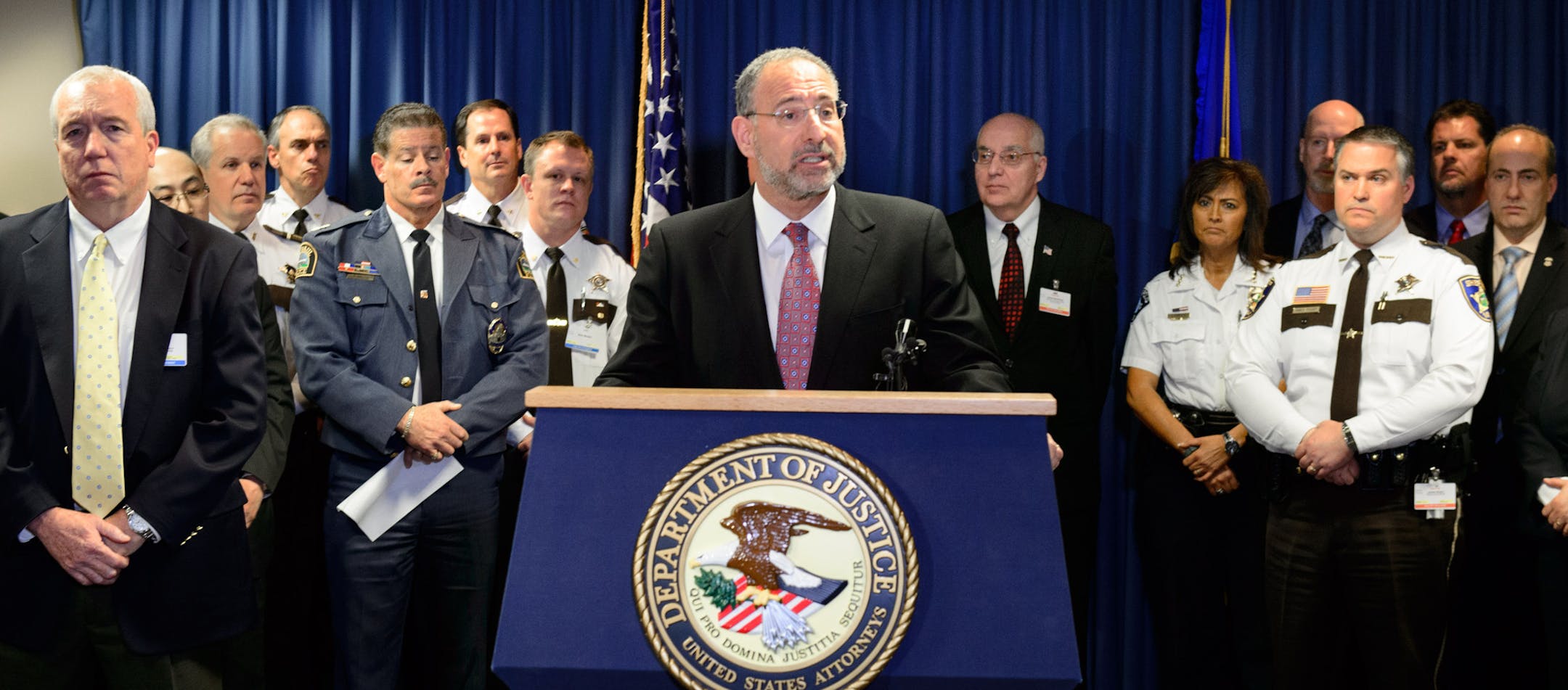
"Today, law enforcement has dealt a significant blow to those who are bringing heroin to Minnesota," U.S. Attorney Andrew Luger said, reading from a prepared statement at a news conference attended by more than two dozen county attorneys, sheriffs and federal law enforcement officials. "Today, we have made it clear to those who want to sell this deadly powder that we will stop them."
Last year, at least 63 people in the Twin Cities died from heroin overdoses, triple since 2011. So far this year, there have been 17 deaths in Hennepin County, ahead of last year's pace. In 1999, only three such deaths were reported in the metro area. Local hospital emergency rooms treated more than 3,500 heroin overdoses in 2011, the latest year with figures available. Minneapolis police say their officers seized heroin at a rate of nearly once a day in 2013.
The raids, which began early this week and continued through Thursday afternoon, were directed by the U.S. attorney's office and the U.S. Drug Enforcement Administration. The breadth of the investigation, dubbed Operation Exile, represents a philosophical shift under Luger's direction when it comes to choosing which drug cases in Minnesota will now be tried in federal court.
Luger's predecessor, Todd Jones, had directed federal prosecutors to concentrate mainly on interstate conspiracy cases, leaving some federal and state drug agents concerned that large-scale drug cases of heroin and methamphetamine were being tried in state courts, where sentences are lighter.
Strategy questioned
Drug agents questioned that strategy, saying there was still immense value in penetrating drug smuggling networks by turning low-level dealers into informants who could lead them to the major traffickers across the region or country.
Luger, who assumed office in mid-February, quickly made it clear in private conversations with federal prosecutors, county attorneys and drug agents that tackling heroin smuggling operations dominated by the Sinaloa Cartel, based in southwest Mexico, would require a statewide, coordinated response at all levels.