Appeals Court panel grills both sides during Amy Senser's appeal

Three-judge panel has 90 days to issue an opinion on her vehicular homicide convictions.

June 24, 2013 at 4:05PM
icon1:58
(Matt Gillmer/Matt Gillmer)

What Amy Senser knew — or should have known — the night she struck and killed a man on a darkened Minneapolis freeway ramp was the focus of her Court of Appeals hearing Wednesday, where a panel of judges grilled opposing attorneys in what could be her last bid to overturn her felony criminal vehicular homicide convictions.

The 35-minute oral arguments were peppered with questions by the judges, each of whom cast doubt on the key arguments raised: On Senser's side, insistence by attorney Eric Nelson that the evidence didn't support a jury's guilty verdicts that Senser knew she hit a person when she struck and killed Anousone Phanthavong on Aug. 23, 2011, before driving away.

They also challenged Assistant Hennepin County Attorney Lee Barry's counterclaim that circumstantial evidence proves Senser failed to stop when she knew there was damage to a vehicle or bodily injury — a requirement to prove criminal intent in criminal vehicular homicide cases.

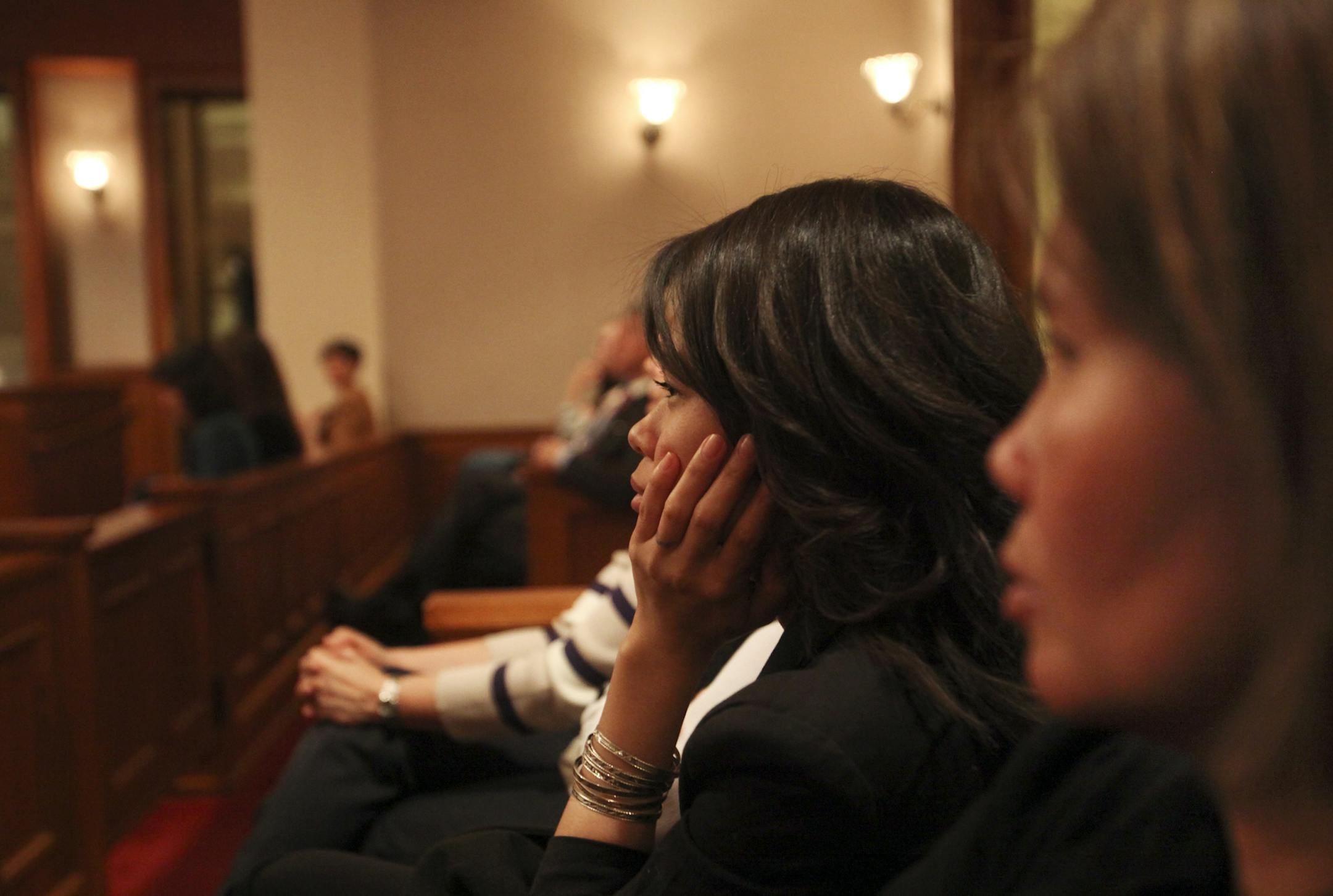
Senser's husband, former Minnesota Vikings player Joe Senser, looked on along with one of the couple's teenage daughters and Amy Senser's father, while members of Phanthavong's family sat on the opposite side of the courtroom.

Senser, who is nine months into a 41-month prison sentence at the state women's correctional facility in Shakopee, was not present. She is scheduled for release in 2014.

The Appeals Court has 90 days to issue an opinion. If the panel upholds Senser's conviction, her defense could petition the Minnesota Supreme Court to hear the case. The state's high court has the discretion to grant or deny review of a case.

Knowledge is key

The crux of the arguments surrounded a 2010 Minnesota Supreme Court decision in the case of Mohammed Al-Naseer, whose criminal vehicular homicide conviction was reversed after the court found the state failed to prove that Al-Naseer, who had fallen asleep, knew he struck and killed a man changing a tire; Al-Naseer left the scene.

Nelson said that based on the "clear, guiding precedence" of that case, the court should find that the evidence was more consistent with Senser's innocence than guilt, and that her convictions should be reversed. Although Senser was awake, he said, she was distracted and looking away from the roadway when she struck and killed Phanthavong, mistaking the impact for hitting construction equipment.
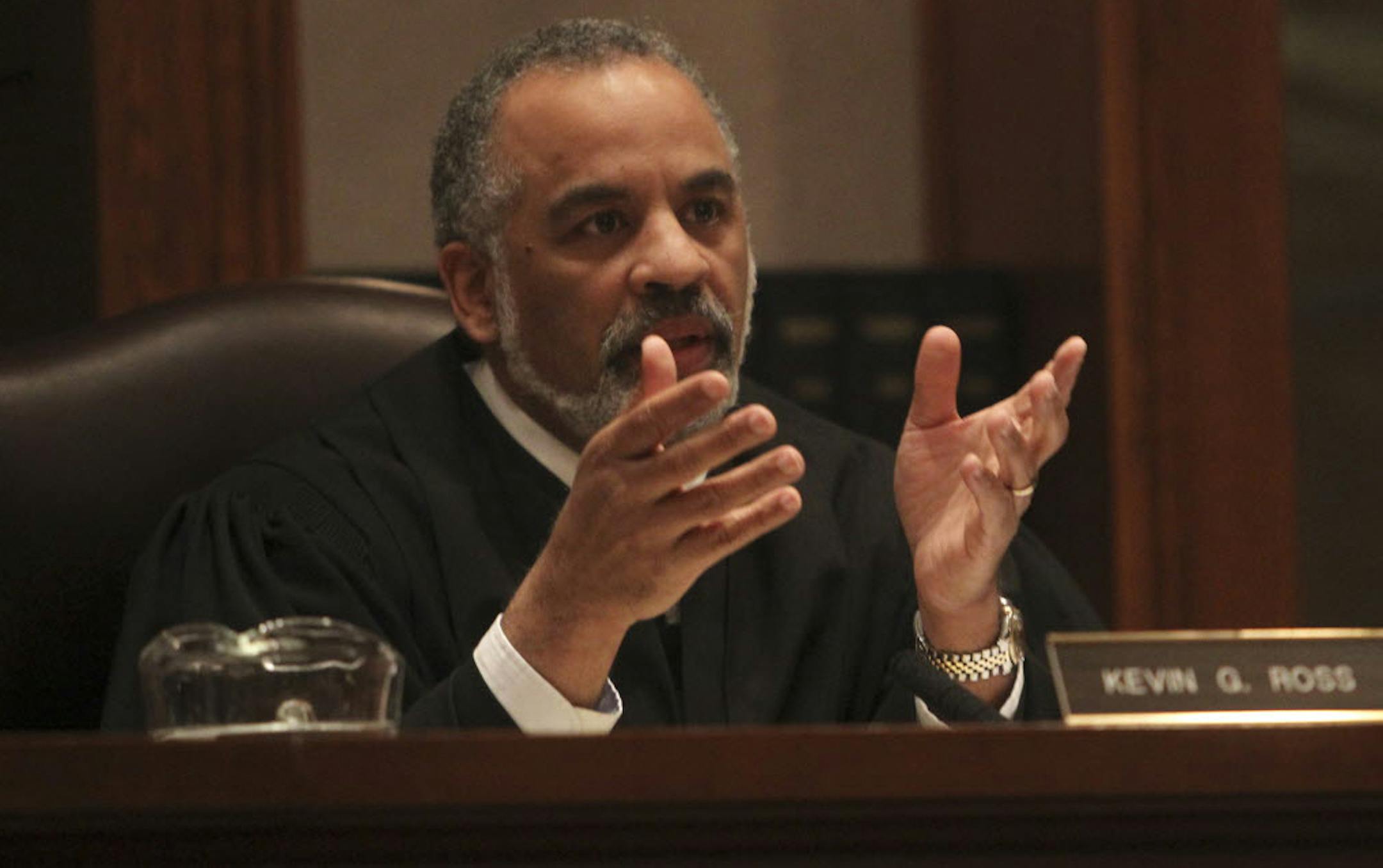
Presiding Judge Kevin Ross pressed Nelson, asking whether the jury's verdict indicated they didn't believe Senser's testimony that she was unaware she struck Phanthavong. Nelson countered that a jury's handwritten note delivered with the verdicts that they believed Senser struck a vehicle, not a person, indicates that the jury did believe her. In its deliberations, the jury was told to decide whether Senser knew she caused injury, death "or damage to another vehicle." The note explained that they convicted her on the latter part, even though she did not hit Phanthavong's car.

"There's the note, but then there's the jury's verdict. I'm focusing on the jury's verdict," Ross said. "Wouldn't you agree that the jury's verdict was inconsistent with your client's testimony as to knowledge?"

Nelson said the note highlighted the fact that the jury's verdict was based on flawed jury instructions. Judge Michael Kirk asked Nelson whether he objected to the agreed-upon instructions; Nelson said he objected in a post-trial motion when he learned of the note's existence.

During Barry's arguments, Judge Margaret Chutich asked whether District Judge Daniel Mabley abused his discretion regarding the note by neglecting to tell the attorneys about it immediately, before the verdicts were read "to basically not say a word about that until several days later?"

"It may have been the better thing to do," Barry said of whether Mabley should have disclosed the note immediately. "But it clearly wasn't an abuse of discretion."

Unconscious vs. distracted

Barry's arguments focused on the key differences between the Al-Naseer and Senser cases: Namely, that Al-Naseer was asleep, while Senser wasn't. Ross pressed Barry on the material difference between an unconscious driver and one who is distracted.

"That, to me, is a significant thing," Barry said, "whether somebody is conscious, awake and aware of their surroundings or unconscious and not aware of their surroundings and what's going on."

"This issue isn't awareness of surroundings, the issue was knowledge of impact." Ross said.

Nelson, Barry and the Sensers declined to comment following the hearings. As she stepped onto the elevator, Phanthavong's sister, Vilayphone Phanthavong, said it was important for the family to attend. The Phanthavongs settled a wrongful-death lawsuit with the Sensers before the trial began.

Although she said the family doesn't want Senser to endure more punishment, "We don't want them to think that after the case is done we just don't care."

Abby Simons • 612-673-4921

Minnesota Court of Appeals Presiding Judge Kevin Ross questions Amy Senser's attorney Eric Nelson during Court of Appeals arguments Wednesday.
Minnesota Court of Appeals Presiding Judge Kevin Ross questions Amy Senser's attorney Eric Nelson during Court of Appeals arguments Wednesday. (Stan Schmidt — Star Tribune/The Minnesota Star Tribune)
Attorney Eric Nelson, Amy Senser's attorney, left, shakes hands with Senser's husband Joe prior to the start of the Court of Appeals arguments before a panel of three judges Wednesday, May 1, 2013, at the Minnesota Judicial Center in St. Paul, MN. ](DAVID JOLES/STARTRIBUNE) djoles@startribune.com Amy Senser's Court of Appeals arguments before a panel of three judges nearly a year to the day from Senser's guilty verdict in a hit-and-run death of death of Anousone Phanthavongthat.
Attorney Eric Nelson, Amy Senser’s attorney, left, shook hands with Senser’s husband, Joe, before the start of the Court of Appeals arguments Wednesday. (The Minnesota Star Tribune)
Minnesota Court of Appeals Presiding Judge Kevin Ross questions Amy Senser's attorney Eric Nelson during Court of Appeals arguments Wednesday, May 1, 2013, at the Minnesota Judicial Center in St. Paul, MN. ](DAVID JOLES/STARTRIBUNE) djoles@startribune.com Amy Senser's Court of Appeals arguments before a panel of three judges nearly a year to the day from Senser's guilty verdict in a hit-and-run death of death of Anousone Phanthavongthat. **Kevin Ross,cq
Minnesota Court of Appeals Presiding Judge Kevin Ross gestured as he questioned Amy Senser’s attorney Eric Nelson. (The Minnesota Star Tribune)
Latsany Phanthavong, right, sister to Anousone Phanthavong, and her daughter Cindy Phanthavong listened in during Amy Senser's Court of Appeals arguments before a panel of three judges Wednesday, May 1, 2013, at the Minnesota Judicial Center in St. Paul, MN. (DAVID JOLES/STARTRIBUNE) djoles@startribune.com Amy Senser's Court of Appeals arguments before a panel of three judges nearly a year to the day from Senser's guilty verdict in a hit-and-run death of death of Anousone Phanthavong.**Latsany P
Latsany Phanthavong, right, sister of the late Anousone Phanthavong, and her daughter Cindy Phanthavong listened to arguments Wednesday at the Minnesota Judicial Center in St. Paul. (The Minnesota Star Tribune)
about the writer

about the writer

Abby Simons

Team Leader

Abby Simons is the Minnesota Star Tribune's Public Safety Editor. Her team covers crime and courts across the metro. She joined the Minnesota Star Tribune in 2008 and previously reported on crime, courts and politics.

See Moreicon

More from No Section

See More
FILE -- A rent deposit slot at an apartment complex in Tucker, Ga., on July 21, 2020. As an eviction crisis has seemed increasingly likely this summer, everyone in the housing market has made the same plea to Washington: Send money — lots of it — that would keep renters in their homes and landlords afloat. (Melissa Golden/The New York Times) ORG XMIT: XNYT58
Melissa Golden/The New York Times

It’s too soon to tell how much the immigration crackdown is to blame.