

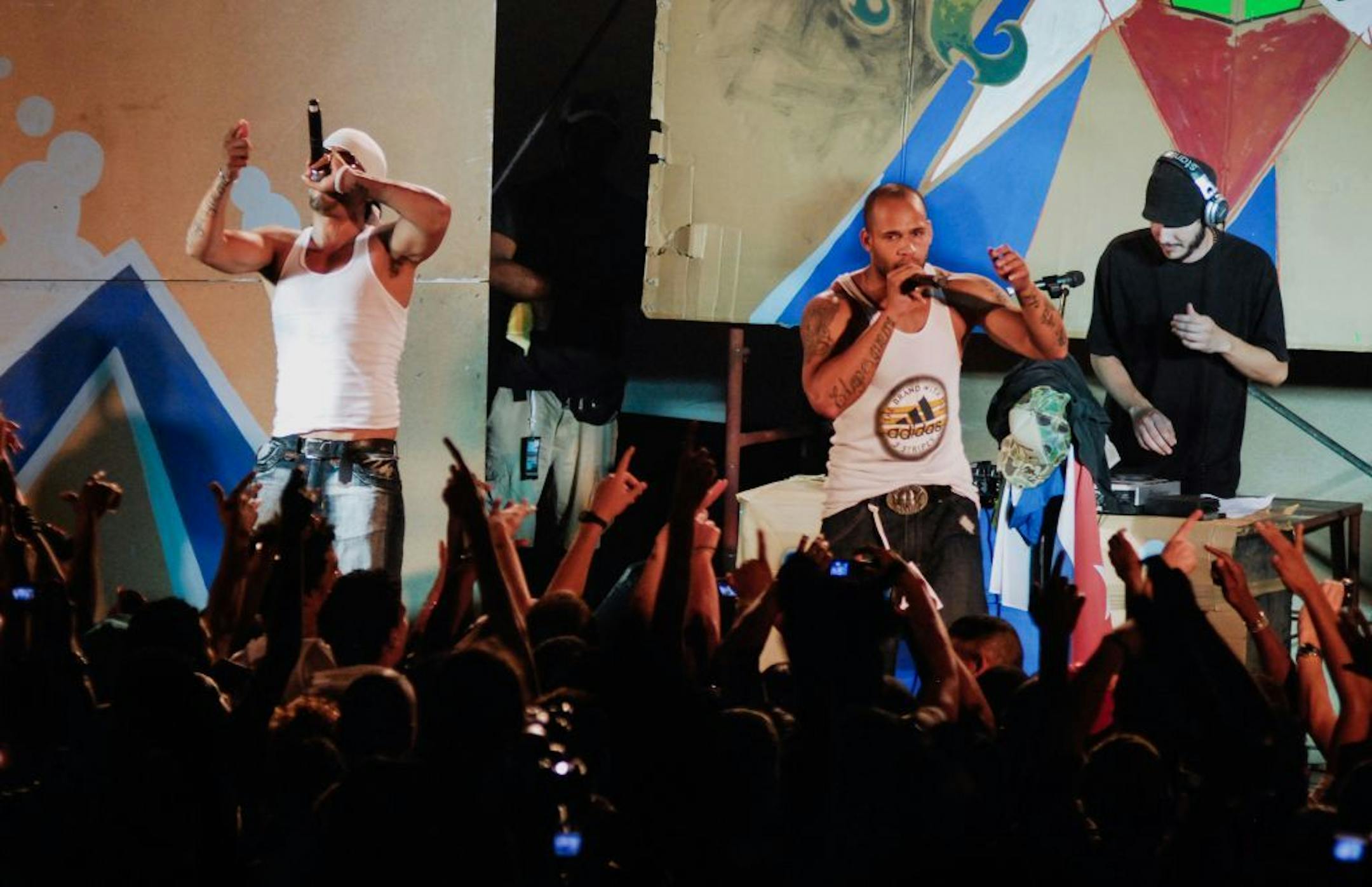
HAVANA — In early 2009, a U.S. government contractor sent a Serbian music promoter to Cuba with these covert marching orders: Recruit one of Havana's most notorious rappers to spark a youth movement against the government.
In communist Cuba, it was a project that could have landed Rajko Bozic in jail. So when he made his pitch to team up with hip-hop artist Aldo Rodriguez, Bozic left out the part about his true intentions — or that he was working for the U.S. Agency for International Development.
Dreadlocked, muscled and tattooed, Aldo, as he was known, was a hero in the hip-hop underground for lyrics protesting the Castro government's grip on everyday life in songs like "El Rap Es Guerra," or "Rap Is War," words he tattooed on his forearm.
He and his group, Los Aldeanos, were about to unknowingly get sucked into a tug-of-war between Havana and Washington, as thousands of pages of documents obtained by The Associated Press and dozens of interviews show.
With Aldo's own government already harassing his group — his first album was titled "Censurado" — Bozic had been sent to turn up the volume of his protest songs.
USAID's secret Cuban hip-hop project sought to spread democracy, but like other U.S. operations on the island, it was executed by amateurs.
Documents show USAID repeatedly put innocent Cubans and its own operatives in jeopardy despite warning signs. Authorities detained or interrogated musicians or USAID operatives at least six times, often confiscating their computers and thumb drives, which in some cases contained material linking them to USAID.
Instead of sparking a democratic revolution, it compromised an authentic source of protest that had produced some of the hardest-hitting grassroots criticism since Fidel Castro took power in 1959, an AP investigation found.


