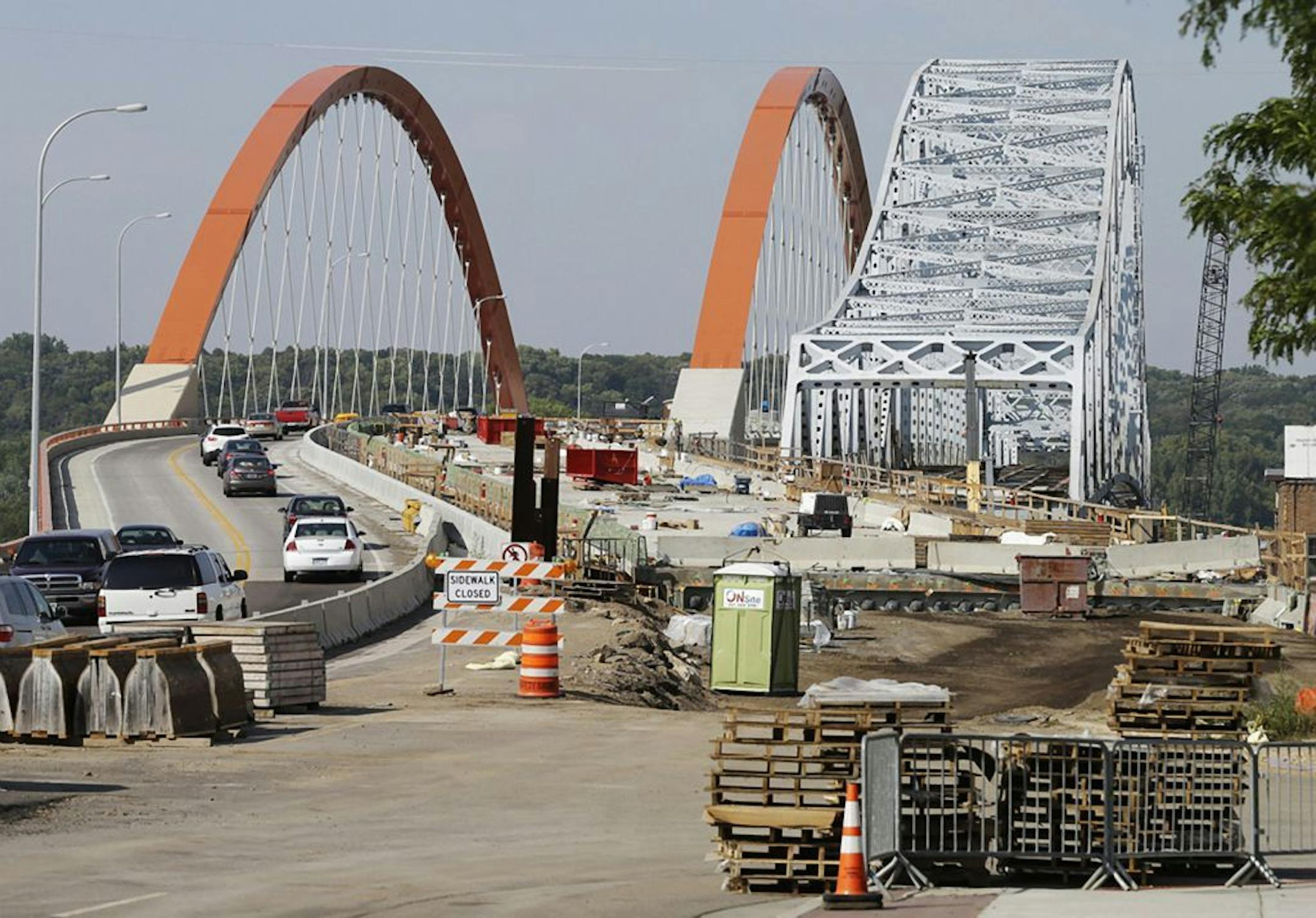
WASHINGTON — The United States has so many bridges in need of repair or replacement, and so little money to do the work, that state and local officials say they are engaged in a kind of transportation triage: They fix the most important and vulnerable spans first, nurse along others and, when there's no hope, order a shutdown.
Many of today's aging bridges carry more vehicles than they were originally expected to handle; truckloads that pass over are much heavier, too. Many also are years past their designed life expectancy.
They are expensive to fix and far more costly to replace — sometimes billions of dollars for a single bridge.
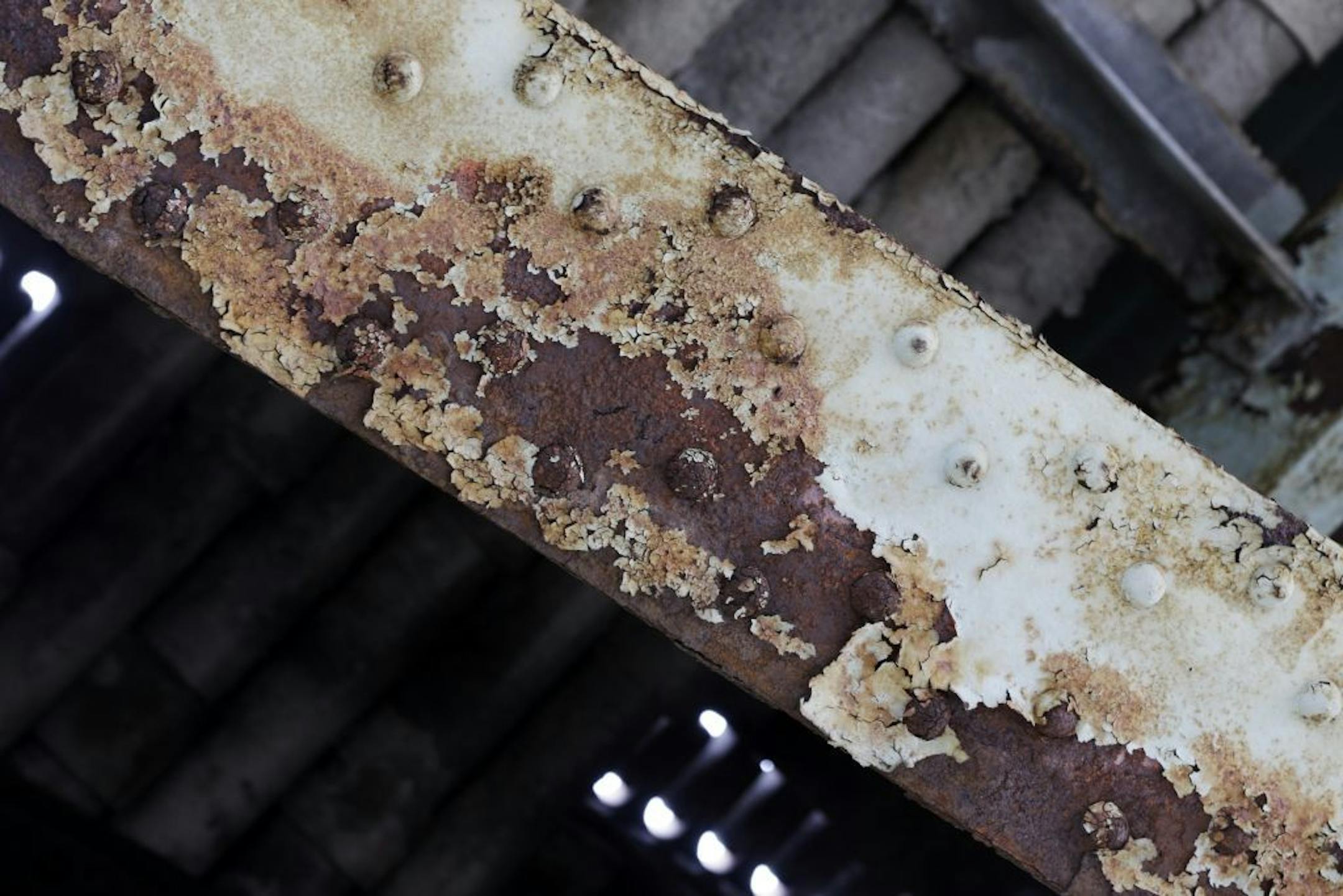
Of special concern are bridges that are both "fracture critical" and "structurally deficient." A bridge is deemed fracture critical when there's no backup to protect against collapse if a single key element fails. Structurally deficient means it is in need of rehabilitation or replacement because at least one major component has advanced deterioration or other problems that lead inspectors to deem its condition poor or worse.
An Associated Press analysis of 607,380 bridges in the most recent federal National Bridge Inventory showed that 65,605 were classified as structurally deficient and 20,808 as fracture critical. Of those, 7,795 had both red flags.
"Those would be ones you'd worry about more," said Ted Zoli, chief bridge engineer for HNTB Corp. in New York.
Officials say the bridges are safe. And despite the ominous-sounding classifications, engineers say that even bridges that are structurally deficient and fracture critical should not collapse if monitored and maintained properly.
"We have a term for unsafe bridges, and that is 'closed,' " said Massachusetts State Highway Administrator Frank DePaola.