

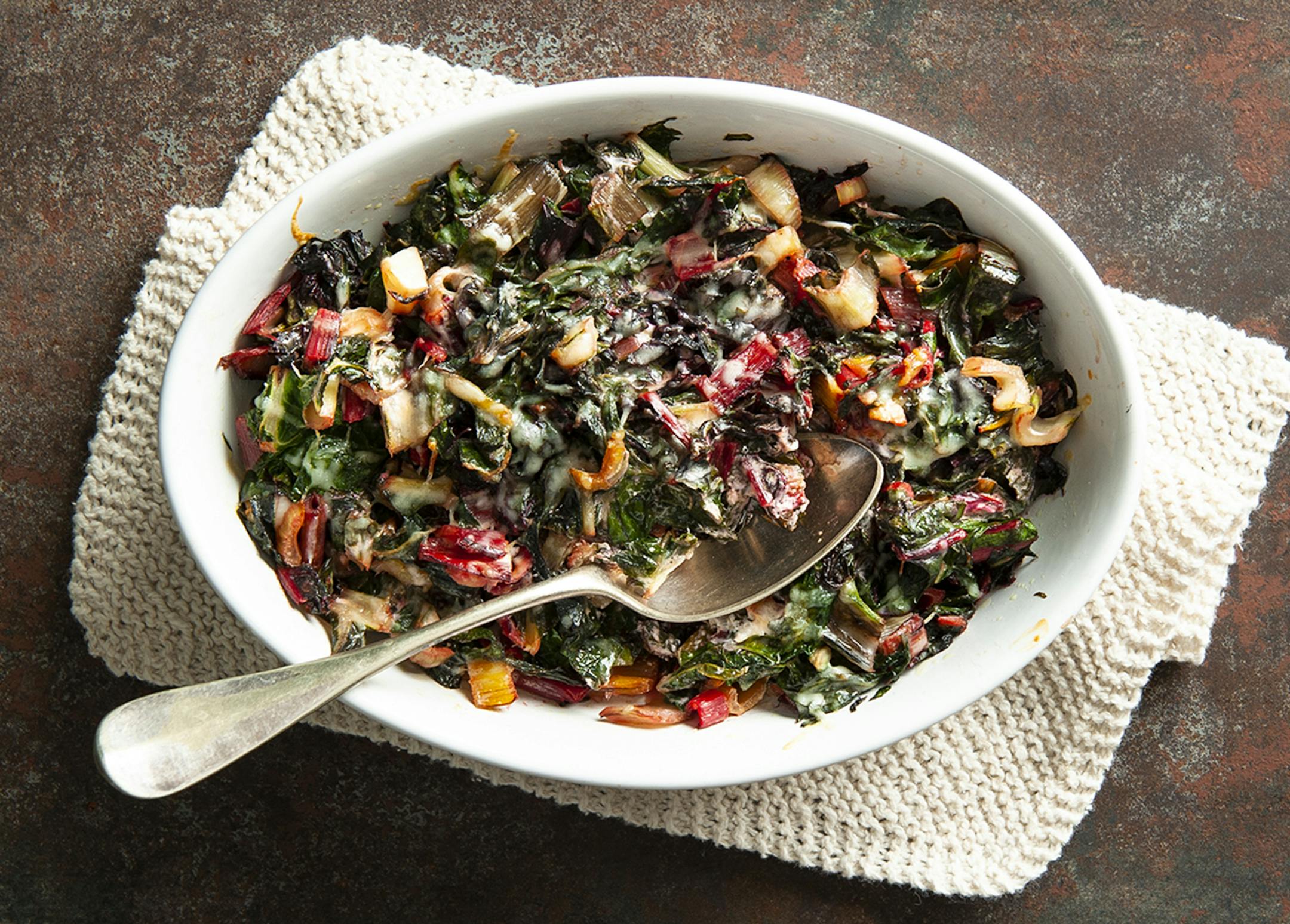
Swiss chard hasn't achieved the celebrity status of kale, but anything kale can do, this gorgeous fall vegetable can do better.
With multicolored stems of peach, strawberry and orange and its floppy veined leaves, the flavor of Swiss chard is hard to describe. It's bolder than spinach, not as assertive and spicy as kale, not as bland or tough as collards, and it's as good raw as it is cooked.
When the leaves are finely chopped and dressed with a tangy lemon or balsamic vinaigrette, it makes a wonderful salad or slaw. Gently braise both stems and leaves in oil or butter with a few cloves of garlic, and Swiss chard turns tender and slightly sweet, making a terrific side dish to chicken or pork. Tangled with pasta, layered into a gratin, folded into an omelet or heaped onto polenta, it becomes a delicious entree, or simply toss the chopped leaves and stems into soups, curries, casseroles and stir-fries — you get the idea.
Most recipes recommend blanching the stems before sautéing or braising, but that seems like an unnecessary step. It's easier and quicker to first sauté the stems until tender and then add the leaves and continue cooking, then finish off the dish.
Also known as silver beet, beet spinach and leaf beet, Swiss chard originated in the Mediterranean, not Switzerland as the name implies. How it became Swiss chard is unclear.
Along with its culinary delights, Swiss chard makes a pretty centerpiece when arranged in a vase until ready to cook.
Swiss Chard Parmesan
Serves 4
Note: From Beth Dooley


