![A fly fisher casts his line in the waters of the South Branch of the Root River in Forestville/Mystery State Park Saturday, April 15, 2017, in Preston, MN.] DAVID JOLES • david.joles@startribune.com Trout fishing opener on the South Branch of the Root River Saturday, April 15, 2017, in Preston, MN.](https://arc.stimg.co/startribunemedia/V2ZS5I3I2ESP5BKOMAQXVTRBZA.jpg?&w=1080)
Adam Johnson was at his home near Brainerd, Minn., one recent day — a cool morning surrendering to what would become a glorious spring day — pondering how to spend a few open hours. There is a lot for an outdoorsman to do as the days grow longer and the ice relinquishes its hold. Johnson, for his part, was deciding between organizing his turkey-hunting gear or taking off the cover from his boat to begin the process of making sure it was ready for the rigors of a season on the water.
Had the date been later by a week or two, Johnson's decision about how to pass the time likely would have been an easy one: Grab a fishing rod, some basic tackle and a handful of night crawlers, and drive to one of the creeks or rivers near his home to fish for suckers. Wait, suckers?
"The fish fight hard and make nice, long runs," said Johnson, an aquatic biologist. "If you can get into the bigger pods of fish, it can really keep you entertained for quite some time."
For many Minnesotans, open-water fishing at this time of year is simply something to which they're looking forward. The walleye-fishing opener, after all, isn't until May 13 — and for many folks the opener marks their foray onto open water. But it doesn't have to be that way. There are a variety of fishing options, including for walleyes, that don't require anglers to wait until the middle of May to wet a line.
Following are five available to fishermen of every skill level:
Small-water suckers
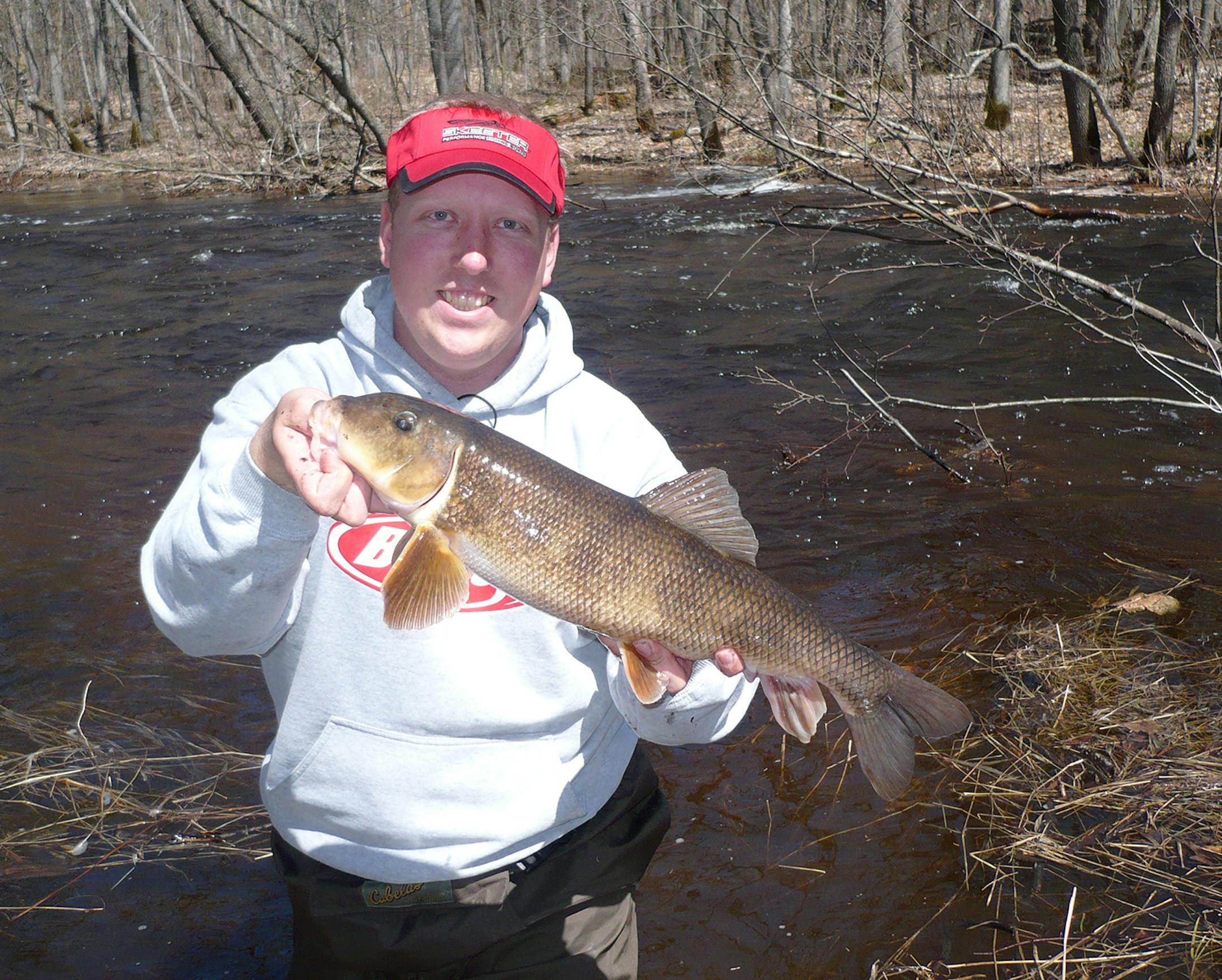
Suckers, which slurp food that lives on the bottom, are common in Minnesota. When they're spawning during April and May, anglers find them in a wide variety of waters. Around his home, Johnson focuses on small creeks, streams and tributaries of the Mississippi River. Along with the latter, he counts the Crow Wing, Nokasippi, and Pine rivers as his favorite spots for targeting suckers.
Johnson keeps gear choices simple: A spinning rod and reel, a hook, and a split-shot or two. He uses night crawlers for bait. Scouting is a big part of finding and catching suckers, and Johnson's approach is to drive to a few rivers, find a spot close to the water, and start looking for fish. There's no need for a boat. "I try to focus on the deeper holes because that's where the fish congregate," he said. "Four to six feet of water is a pretty major hole for some of these smaller feeder creeks and streams."
He doesn't start casting until he sees the greenish-colored fish. Once he does, he casts upstream of them and then lets the current carry his bait toward them. When fish bite, it's often light, but a hooked sucker will put up a valiant struggle. Some anglers keep suckers and eat them, but Johnson primarily catches and releases them, content simply to spend a spring day chasing one of Minnesota's most underappreciated fish.