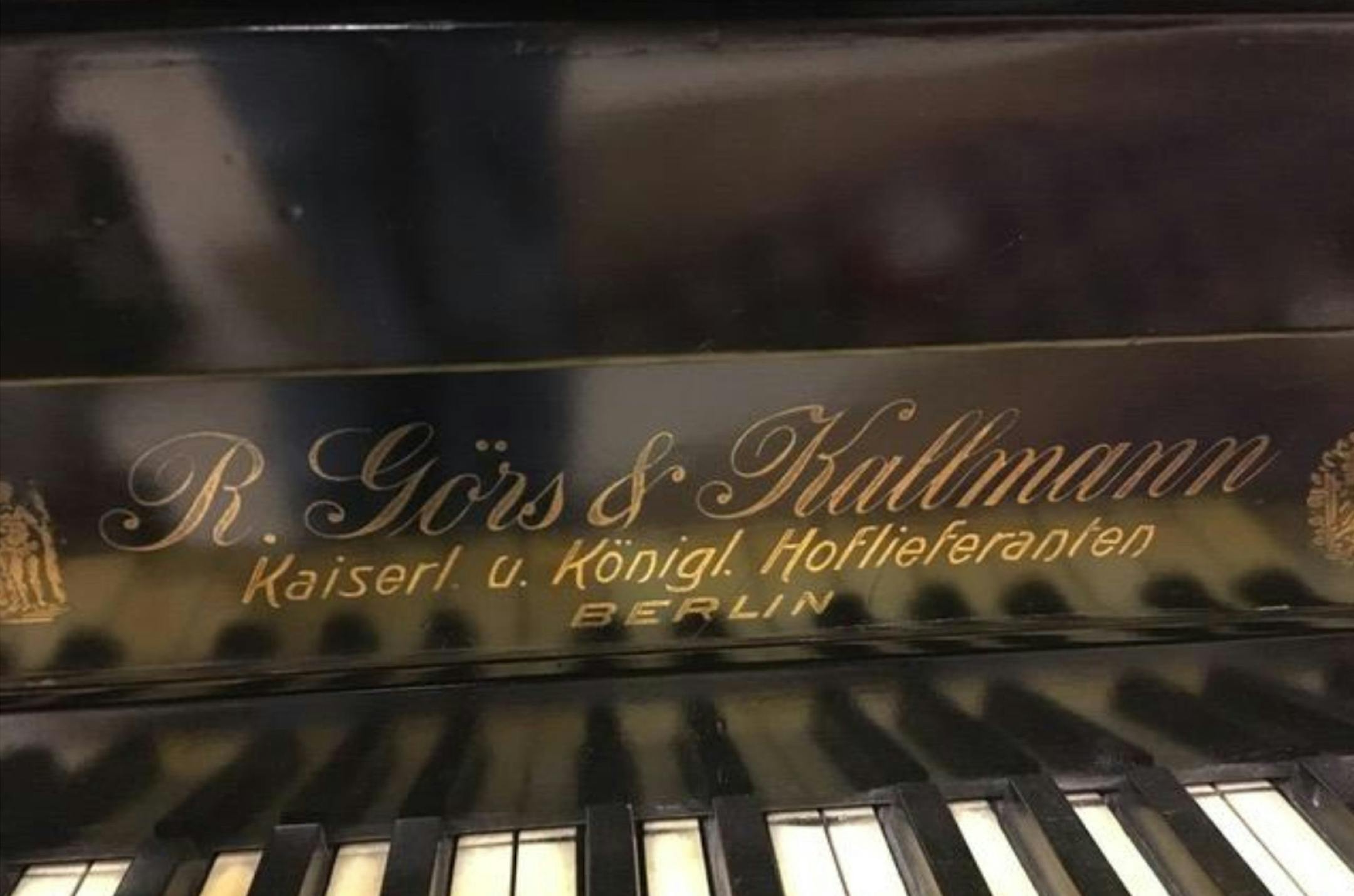
Q: I inherited this antique upright piano marked "R. Gors and Kallmann, Kaiserl. U. Konigl. Hoflieferanten, Berlin." I believe it dates from approximately 1913 or 1914. The black finish was polished but all else seems to be original. I know it was given to my family by an emperor and would like to know its true history and value. We still play it and intend to keep it in the family for the near future.
A: We understand why you might believe this was given by an emperor because of the double-headed eagle insignia and the words "Kaiserl U. Konigl. Hoflieferanten." But all this means is R. Gors and Kallmann were purveyors to the imperial household and royal court of the Austro-Hungarian Empire. It does not mean an actual emperor ever owned this particular piano, played it or gave it away.
R. Gors and Kallmann of Berlin had a royal warrant to supply pianos to the court. But the same company made many more pianos for everyday use by everyday people.
To put this piano into the hand of an actual Austro-Hungarian Emperor, indisputable, written proof would have to exist. Anecdotal family legend is nice, but far from conclusive.
Gors and Kallmann is said to have used serial number 1,000 in 1881 and made pianos with numbers in the 55,600 to 57,000 range in 1914. The instrument in today's question has a serial number of 52,628, which makes it pre-1914 according to some sources, but serial numbers on Gors and Kallmann pianos are not absolute proof of a specific manufacture date.
Unless upright pianos are regularly and rigorously serviced, they tend to wear out and have a life span of around 60 to 70 years. Older uprights often require a complete rebuild. This keeps their value down on the secondary market.
Upright pianos will sometimes sell as practice pianos for beginners, but they are seldom rated as fine musical instruments. Realistic values of old/antique upright pianos seldom rise above the $500 mark.
Television lamps
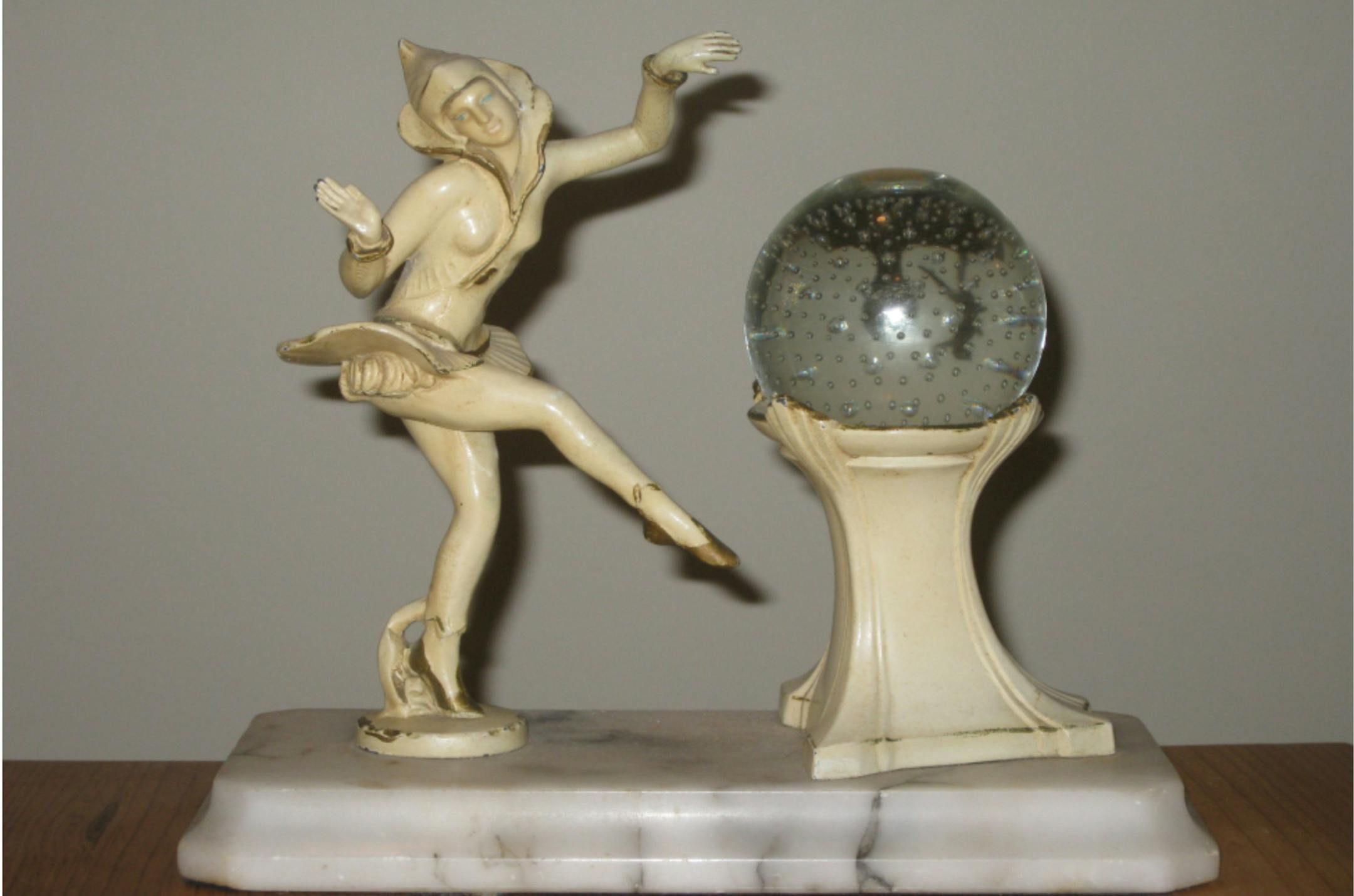
Q: I have a vintage television lamp that depicts a ballerina on a marble base with a glass globe on a stand over a light bulb. The only marking I see indicates it was made by Murano Glass in Italy. It still works. What can you tell me about it?