

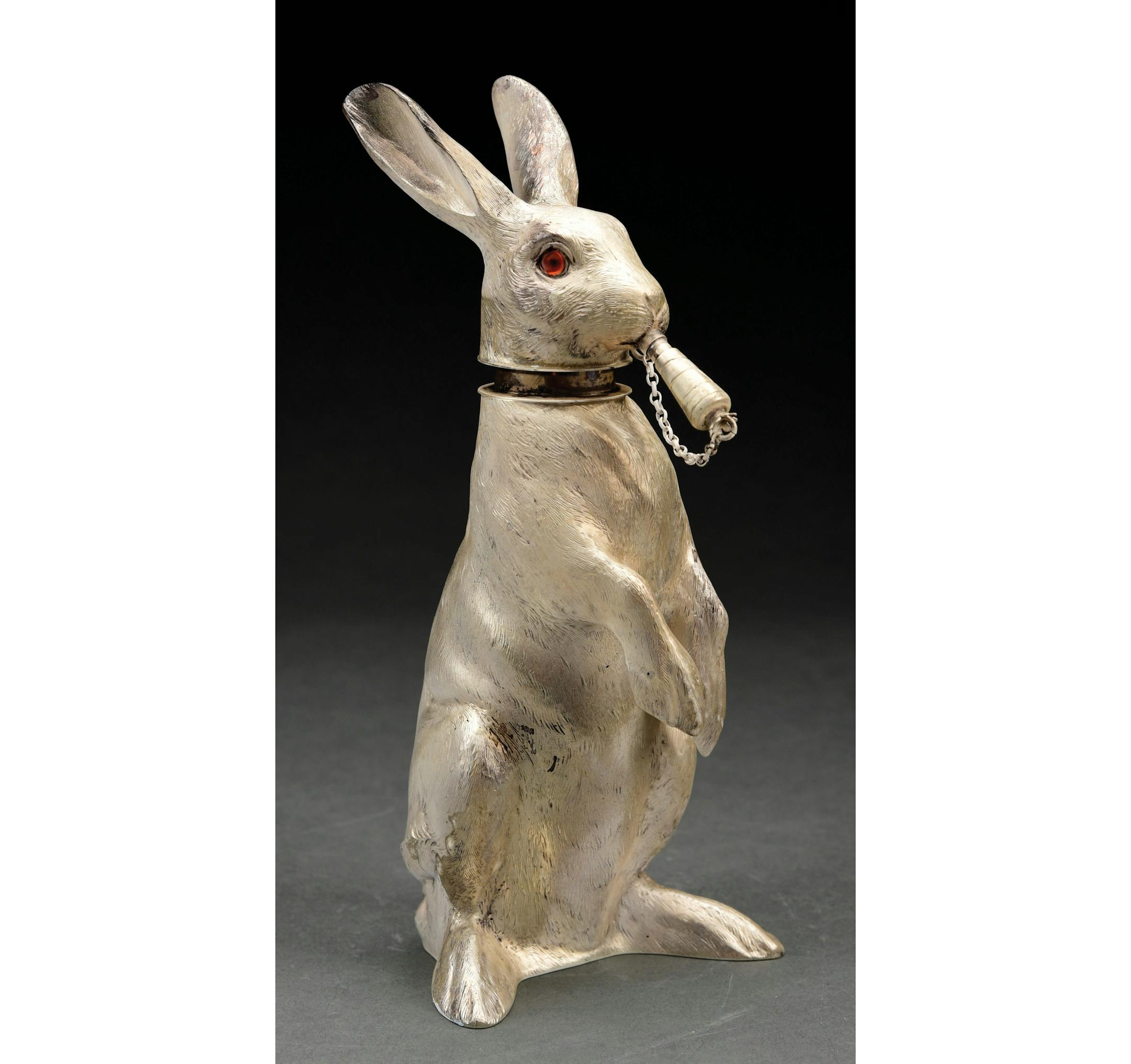
At first glance, this silver standing rabbit chewing on a silver carrot has a few things in common with Easter collectibles. It's metal, like the tin or iron Easter bunnies made as toys or doorstops. Like a candy container, it is hollow with a removable lid so it can hold a consumable treat. But unlike most Easter collectibles, which tend to be made for children, this rabbit has a decidedly adult purpose: It's a cocktail shaker.
The word "cocktail" appeared in print to refer to a mixed drink about 1806. Today's cocktails and cocktail shakers have their roots in the Prohibition era of the 1920s to the 1930s. Speakeasies created mixed drinks to disguise the unpleasant taste of bootleg liquor.
Cocktails became more popular as people started making them at home. Silver manufacturers quickly realized they could make cocktail shakers as luxury items. Figural shakers were especially stylish and continue to please collectors. Animal figures are always popular in decorative arts, and cocktail shakers are no exception. The animal's neck is a convenient point for the lid (in the form of the animal's head, of course) to detach, and a beak or snout provides a spot for a spout.
The best known is the penguin-shaped shaker made by Napier in the 1930s. It is a well known example that has been reproduced. A buyer paid $6,150 for this rabbit cocktail shaker at Morphy Auctions. The carrot in its mouth is a removable cap for its spout.
Q: I have several salt and pepper shakers I would like to get appraised. Do you know someone who can do that? I live in Ontario.
A: There are several major appraisal associations that list appraisers by specialty and area. We've listed them before, and you can find them in the Business Directory on Kovels.com. First, decide what kind of appraisal you need. The value for insurance purposes may require a written appraisal by an expert. If you want to know what the salt and pepper shakers are selling for today, check online prices, including sold prices on websites like eBay. If the salt and pepper shakers are silver, they are worth at least the meltdown value of silver. Don't forget, the value for insurance purposes is a retail price and can be different from the price you will get if you want to sell them.
Q: I have a cedar chest that was a wedding gift from my father to my mother in 1927. She said it came from China. I think it's mahogany. It has various Asian scenes and figures carved on the top and all four sides, a brass lock and a flat "key." It's 32 inches wide, 14 inches deep and 16 inches high. I plan to move into a senior residence where I won't have a place for it. Can you tell me its value and who might be interested in it?
A: Chests of this size are sometimes called "blanket chests." They were made of different kinds of woods. If the chest is made of cedar, it will have a distinctive smell. Woolen blankets and other items are sometimes stored in a cedar chest because the smell of the wood deters moths. These chests are popular for storage and sell well if attractive and in good condition. Contact a local shop that has sold other Chinese items. They may want to buy it or will sell it on consignment, giving you a percentage of the sale price.

