

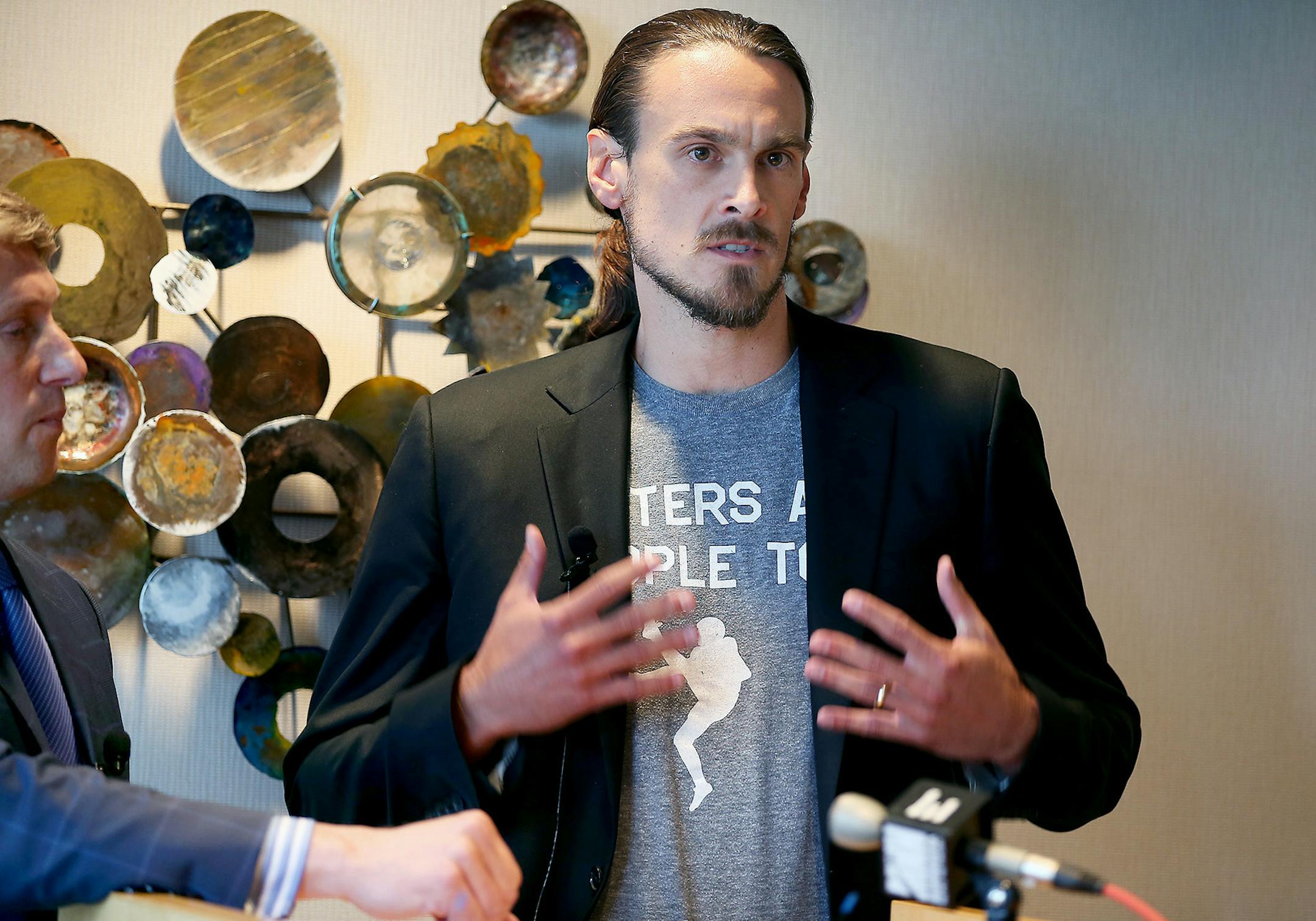
On a great day this week for Major League Baseball — a sport sometimes criticized for dragging its feet — the league embraced its gay, lesbian, bisexual and transgender community in a meaningful, very public way during an All-Star Game news conference led by Commissioner Bud Selig in Minneapolis. In another part of town, Chris Kluwe articulated just how far the National Football League still must go in creating a welcoming and inclusive culture.
At a news conference, Kluwe and his lawyer, Clayton Halunen, explained that the Minnesota Vikings have not fulfilled their promise to release the results of an internal investigation into Kluwe's claims about homophobic statements made by assistant coach Mike Priefer. We hear troubling reports that the Vikings seem to think publishing the results is not necessary because they already have taken internal measures to improve their clubhouse culture. (The Vikings did release the findings of their investigation Friday night.)
In these two stories, we learn that the truth can't be hidden. Only with an open and explicit public dialogue about complex issues does society move the ball forward for an LGBT community that has been inexcusably marginalized and discriminated against. Baseball realizes this now, while football is still struggling to demonstrate the leadership it can and should provide.
Here's what we do know: Kluwe was correct in his decision to report his coach's homophobic tirade, and he demonstrated the kind of leadership that I hope the wrestlers I coach would emulate.
Let's be clear: The National Football League is not anti-gay. Michael Sam is testimony to that fact. And years before Sam became the first openly gay player drafted by an NFL team, the NFL, like other professional sports leagues, added a sexual orientation nondiscrimination clause to its collective-bargaining agreement. The NFL posts its anti-discrimination code in every locker room. These are fundamental, concrete steps that meaningfully advocate inclusion and respect.
Yet when it comes to discrimination, there's a difference between doctrine and culture. Even with anti-discrimination measures in place, sports leagues are living, breathing organisms, composed of teams with players and personnel from all different backgrounds, demographics, generations, faiths and perspectives. After formal impediments to equality are eliminated, informal bias persists via deeply ingrained cultural norms and behaviors.
As Kluwe has said, some players are hesitant to proactively support equality out of concern that they will be labeled a distraction or lose favor with team management, coaches and fans. Trying to bury information about Priefer's alleged behavior serves only to reinforce a culture of expected attitudes and highlights the importance of having out LGBT athletes and their allies in sports.
There are clear parallels between the quest for gay inclusion in professional men's sports and the battle for equal access and fair treatment by female sports reporters. When writer Lisa Olson dared to speak out in the 1990s about the sexual harassment she endured from Zeke Mowatt and other players in the New England Patriots locker room, she was vilified by fans and lambasted by then-Patriots owner Victor Kiam. But a thorough league investigation concluded that Olson was, in fact, "degraded and humiliated." Mowatt and two others were fined. The team was fined, as well, and the general manager was fired.


