

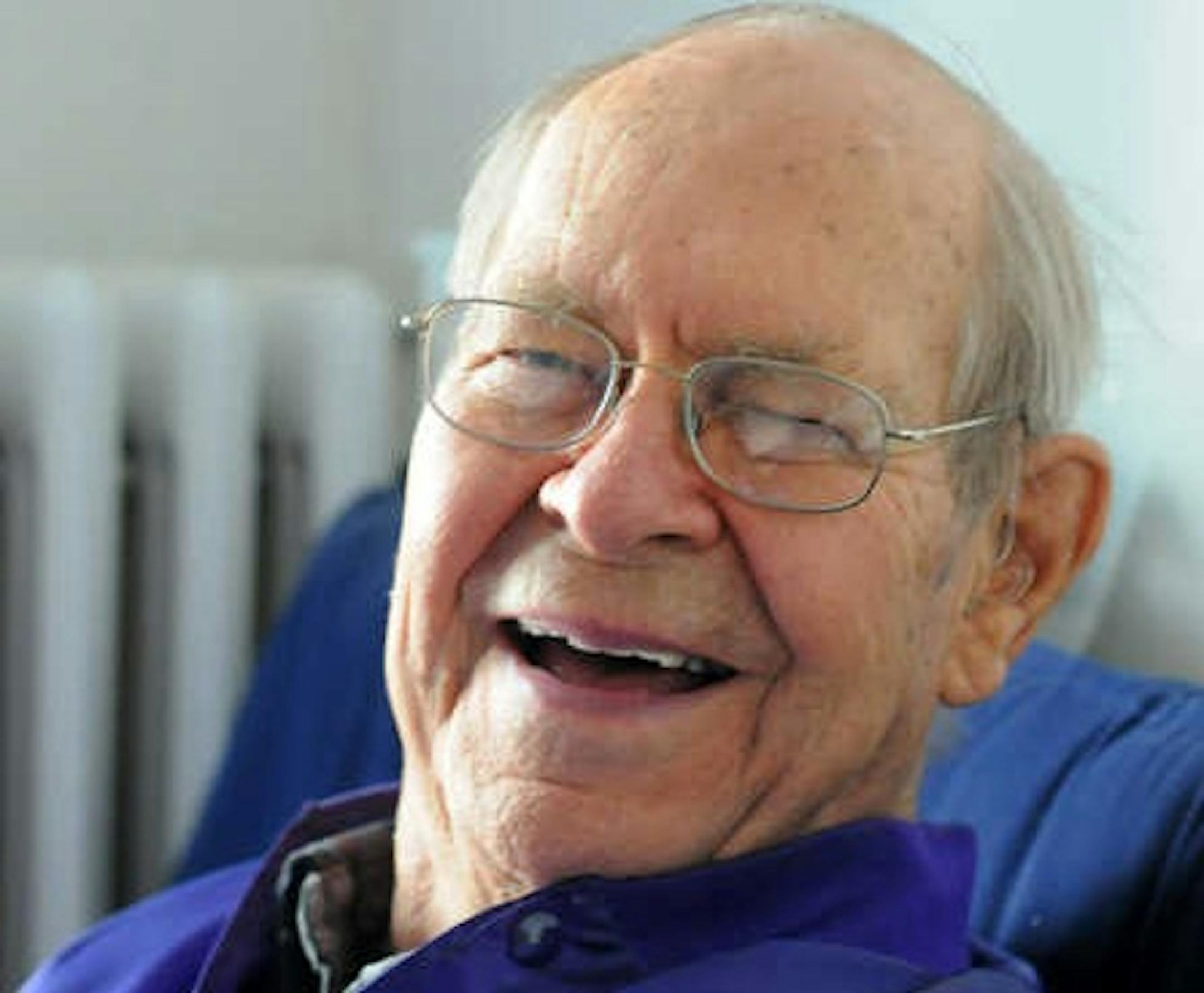
Theodore Homdrom was flying Air Force missions during World War II when he decided that if he survived, he would try to give back in some way.
"During those 30 missions over the mainland of Europe, he intensified a certain religious sense that if God protects him through this next mission, he'll try to give back in any way he can," said Homdrom's son Steven.
After the war, Homdrom worked as a teacher before becoming an anti-apartheid Lutheran missionary in South Africa. He met some of the leading anti-apartheid activists of the time, including Desmond Tutu and Beyers Naudé.
Homdrom, of St. Anthony Park, died April 3 at 100.
He grew up on his family farm in Erskine, Minn., and attended Concordia College as a history major. After joining the Air Force, he was trained in navigation and then flew missions over Europe in a B-17. His missions included D-Day. "He said that was one of his lightest missions, actually," Steven said. "The tough ones were flying over places like Berlin."
Homdrom received several honors for his service, including the Purple Heart. But he wasn't one to boast about his life, even in the two books he published that covered his war and missionary experiences.
In "Mission Memories: World War II," his father wrote that "he was simply doing what he had to do," Steven said.
After the war, Homdrom became a Lutheran pastor. This led him to South Africa with his wife, Betty, who died in 2010. The couple spent 30 years there. As their children grew up going to white schools and living on church land, they experienced the two sides of apartheid.


