

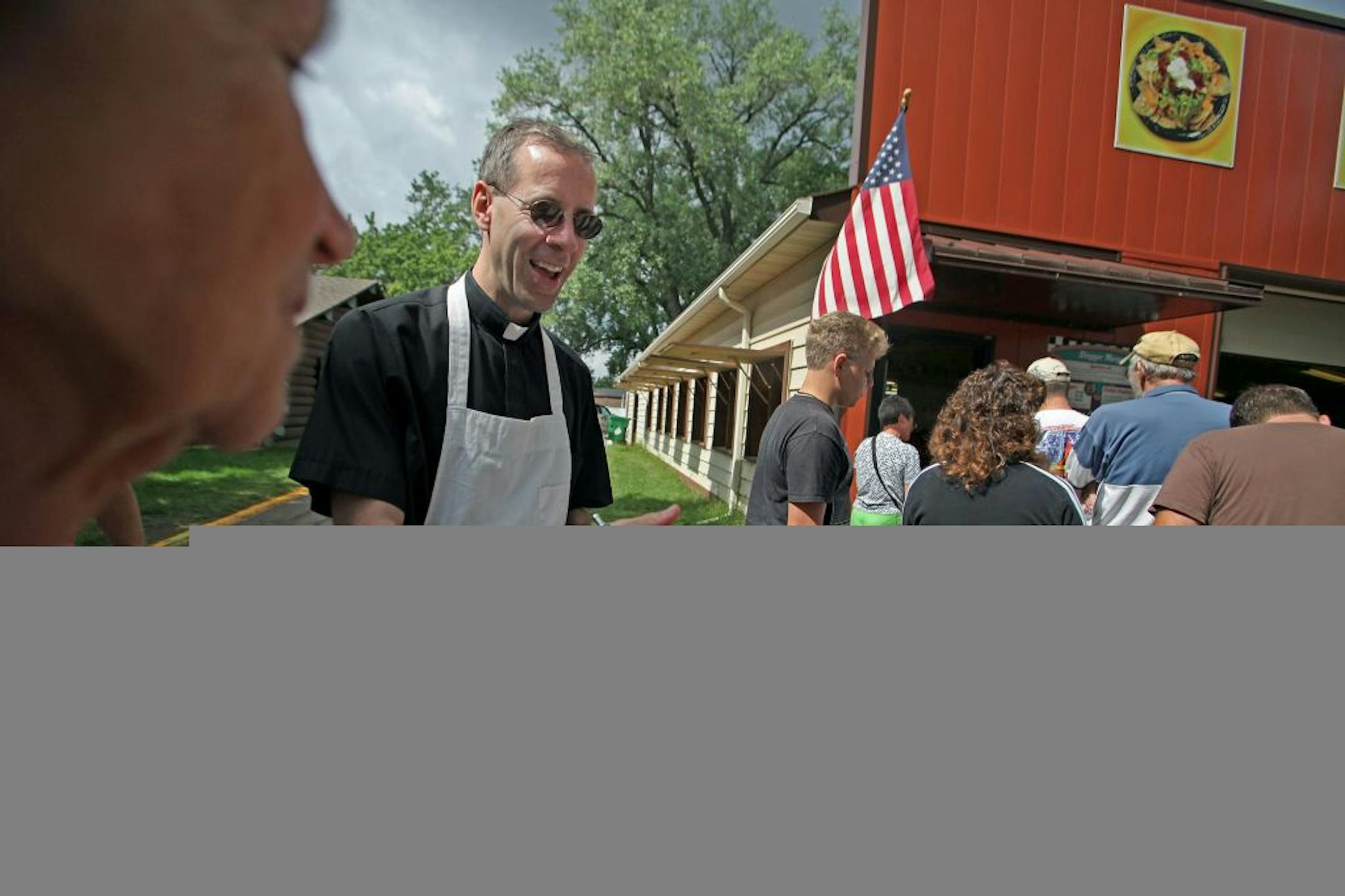
File this one under E, for End-of-an-Era. Or at least the beginning of the end.
When the State Fair opens for its 148th year next Thursday, it's going to be the last season for the Epiphany Diner. The landmark dining hall, operated by the Church of the Epiphany in Coon Rapids and one of the fair's three remaining church-run operations, is closing up shop after this year's fair. Its space will be used for tasting Minnesota wines.
"It's been a tough decision, and we hate to see it go," said the Rev. Dennis Zehren.
The main reason for the closure is simple: declining revenues. According to figures released by the State Fair, the dining hall had gross sales of $156,851 in 2009. Last year they were $137,456.
That fall in revenues is likely tied to changing tastes. Fairgoers aren't supporting the traditional cafeteria-style dining halls and their three-square-meals menus the way they once did. At one point, the fair boasted nearly 20 church-sponsored halls, but this year only Salem Lutheran Church, Hamline United Methodist Church and Epiphany remain. St. Bernard's dining hall closed in 2009 and was replaced by O'Gara's at the Fair, an upscale beer hall.
Then there's the all-important buzz, or the lack thereof. On fairgrounds riddled with hundreds of food vendors, when is the last time a church diner featured the kind of gotta-taste item -- along the lines of chocolate-dipped bacon, or deep-fried candy bars on a stick -- that grabs the attention of fickle fairgoers and lights up cash registers?
Zehren also said expenses at the Epiphany are on the rise. The building, which the church owns (the fair holds title to the land), underwent a $30,000 facelift a few years ago, but still demands significant investment, including a new dishwasher, oven and deep-fryer, along with replacement work on the roof. "We were looking at spending the next five or six year's profit" just to maintain the building, said Zehren.
And staffing has become an issue. Epiphany's Coon Rapids parish is one of the state's largest, with nearly 4,700 families. But the all-volunteer fairgrounds operation requires manpower to the tune of 70 workers each day, requiring that the church fill more than 800 positions over the course of the 12-day event.


