

This is a story of pirates and pop stars, of Beltway intrigue and an industry we shouldn't love, but probably do.
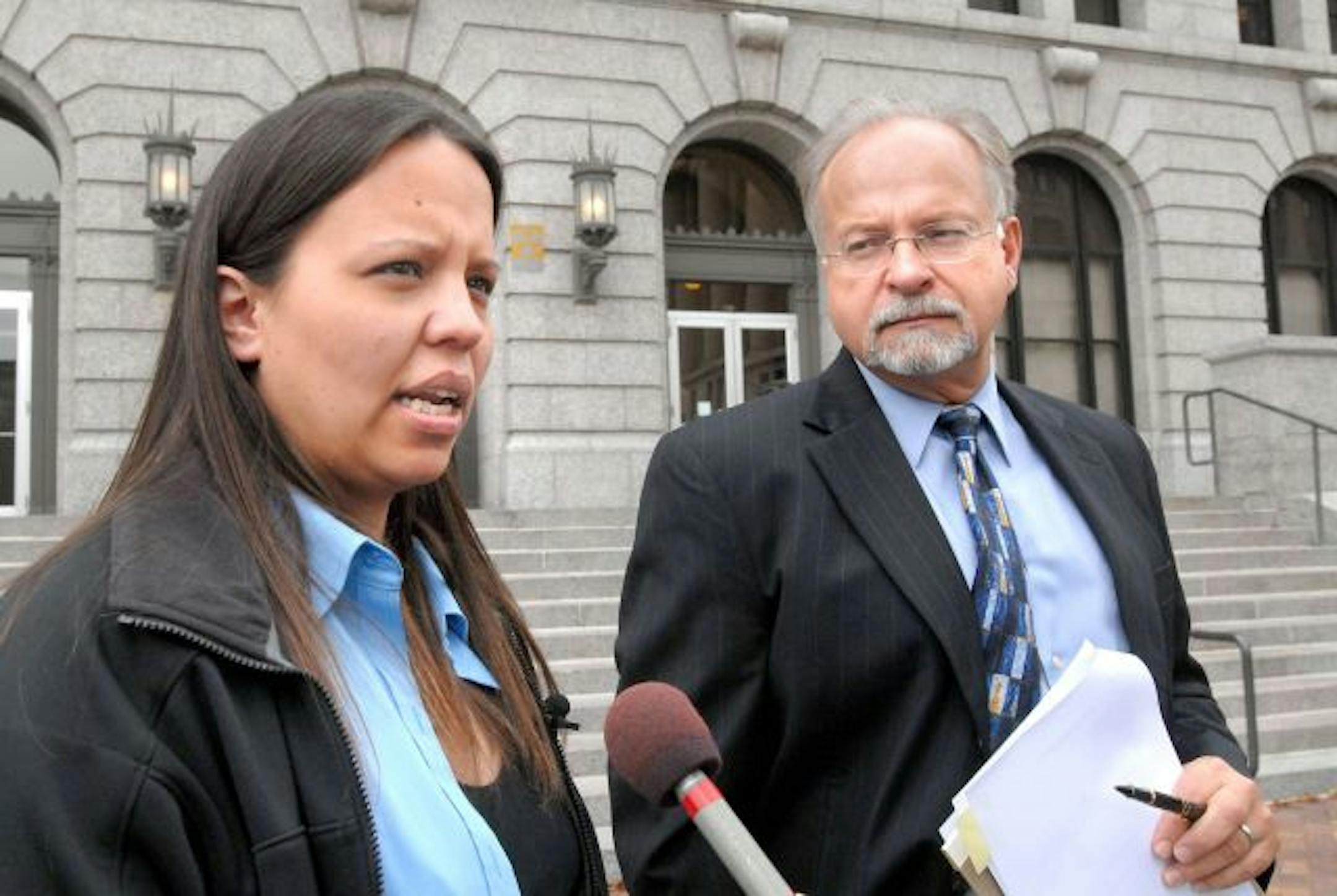
It's also the story of Jammie Thomas-Rasset, the Brainerd, Minn., mother of four fined $222,000 for downloading and making available 24 songs in a file-sharing application ("Ruling revives music-sharing case," Sept. 12). And it's the story of Joel Tenenbaum, a freshly minted physics doctorate from Boston University fined $675,000 for posting 30 songs.
If the penalties strike you as outlandish, you're not alone. Presiding trial judges have called the fines "appalling ... severe and oppressive" (in Thomas-Rasset's case when the fine reached $1.5 million) and "grossly excessive" (in Tenenbaum's). However, higher courts have imposed precedents that restrain judges in reducing these statutory damages (which are specified by Congress, rather than assessed in court).
Thomas-Rasset and Tenenbaum both infringed for noncommercial personal use, and Tenenbaum's judge has questioned whether Congress actually intended statutory damages to apply in such cases. Trial judges in both cases have pleaded with Congress to fix the problem, with Tenenbaum's saying "something [is] wrong with a law that routinely threatens teenagers and students with astronomical penalties." Adding insult to injury: No one knows if actual damages exceed the cost of the songs (roughly $50). Under copyright law, however, if statutory damages are applied then actual damages are moot.
(A quick aside to cynics thinking "just declare bankruptcy": Bankruptcy protection is uncertain, and contingent on court interpretation of "willfulness and malice.")
The lawsuits against Thomas-Rasset and Tenenbaum have been spearheaded not by musicians, but by the RIAA -- the record labels' notoriously aggressive trade organization. The RIAA last year argued for trillions in damages from file-sharing service LimeWire. The RIAA was a front-line supporter of SOPA/PIPA Web censorship, and actually sued Tenenbaum for criticizing the statutory damages (losing decisively on free-speech grounds). The RIAA still views mix tapes/CDs as illegal.
The RIAA is a Beltway powerhouse. Since 2009, five key members of the Department of Justice (including the solicitor general and associate attorney general) have come from Chicago law firm Jenner/Block, an RIAA favorite to whom they paid $10.25 million in fees over the last three years. In February 2011, the Justice Department actually filed a brief supporting the constitutionality of a $1.5 million judgment against Thomas-Rasset (since superseded).
Prominent lobbyist Hilary Rosen (recently newsworthy for the "Ann Romney never worked" gaffe) is a former RIAA president. Her tenure was marked by the "work for hire" controversy:


