

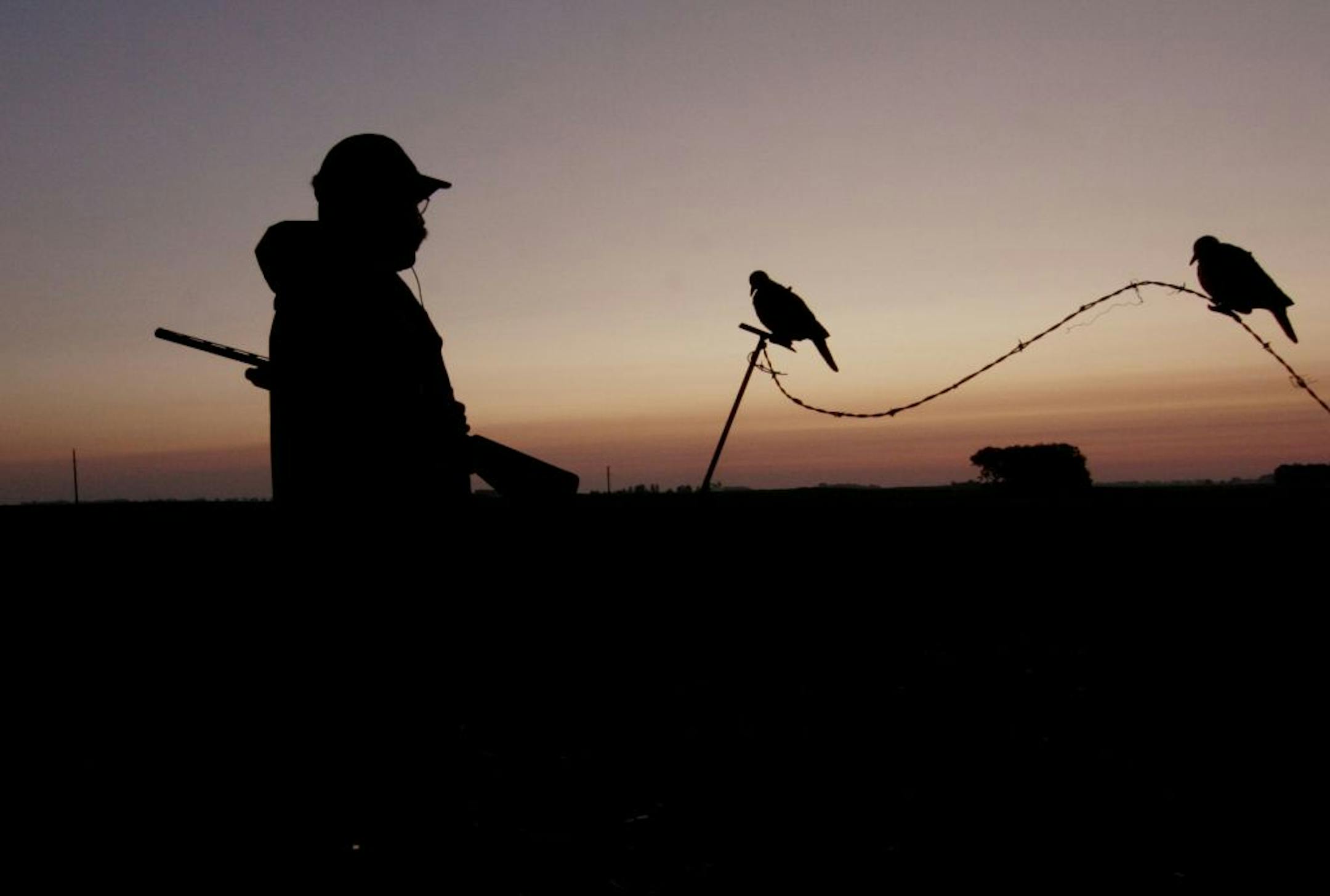
Come sunrise Thursday, thousands of camouflaged hunters will be hunkered in Minnesota fields, looking for the flutter of mourning doves.
They'll likely see birds. The bigger question is whether they can hit the erratic-flying doves, which bob and weave like a knuckleball and can humble even the best wing-shooter.
It will be Minnesota's eighth season since dove hunting was reinstated by the Legislature in 2004 after a nearly 60-year ban. And for many, it's been a learning experience.
Talk to veteran dove hunters, and they'll say scouting is the key. You've got to find high concentrations of doves for a successful hunt. And the No. 1 location: harvested small-grain fields, such as a field of wheat stubble.
Last year, hunters bagged about 100,000 doves -- which is about the average harvest for the past seven years. Hunter numbers continue to hover between 10,000 and 11,000.
It likely will stay at that level, "until we establish more of a dove tradition in Minnesota," said Dennis Simon, DNR wildlife chief. In comparison, 92,000 hunt ruffed grouse, 89,000 hunt pheasants, 73,000 hunt ducks and 53,000 hunt Canada geese.
Transporting doves
A change in state law brings some sanity to how hunters can transport doves from the field. Previously they had to leave both feet and a feathered head attached. Now hunters can transport doves fully dressed -- meaning they don't need to retain any identifying body parts.


