0:32
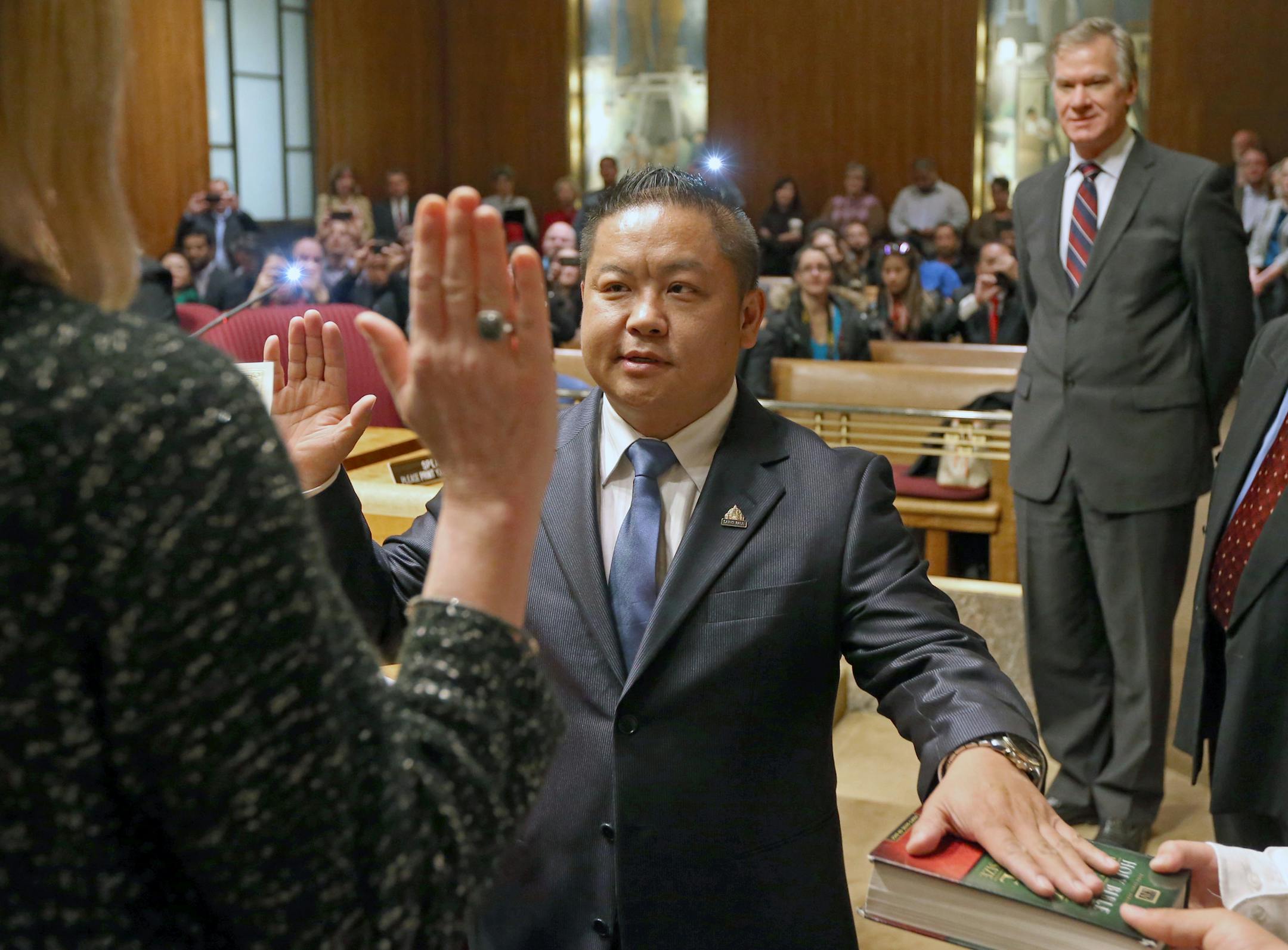
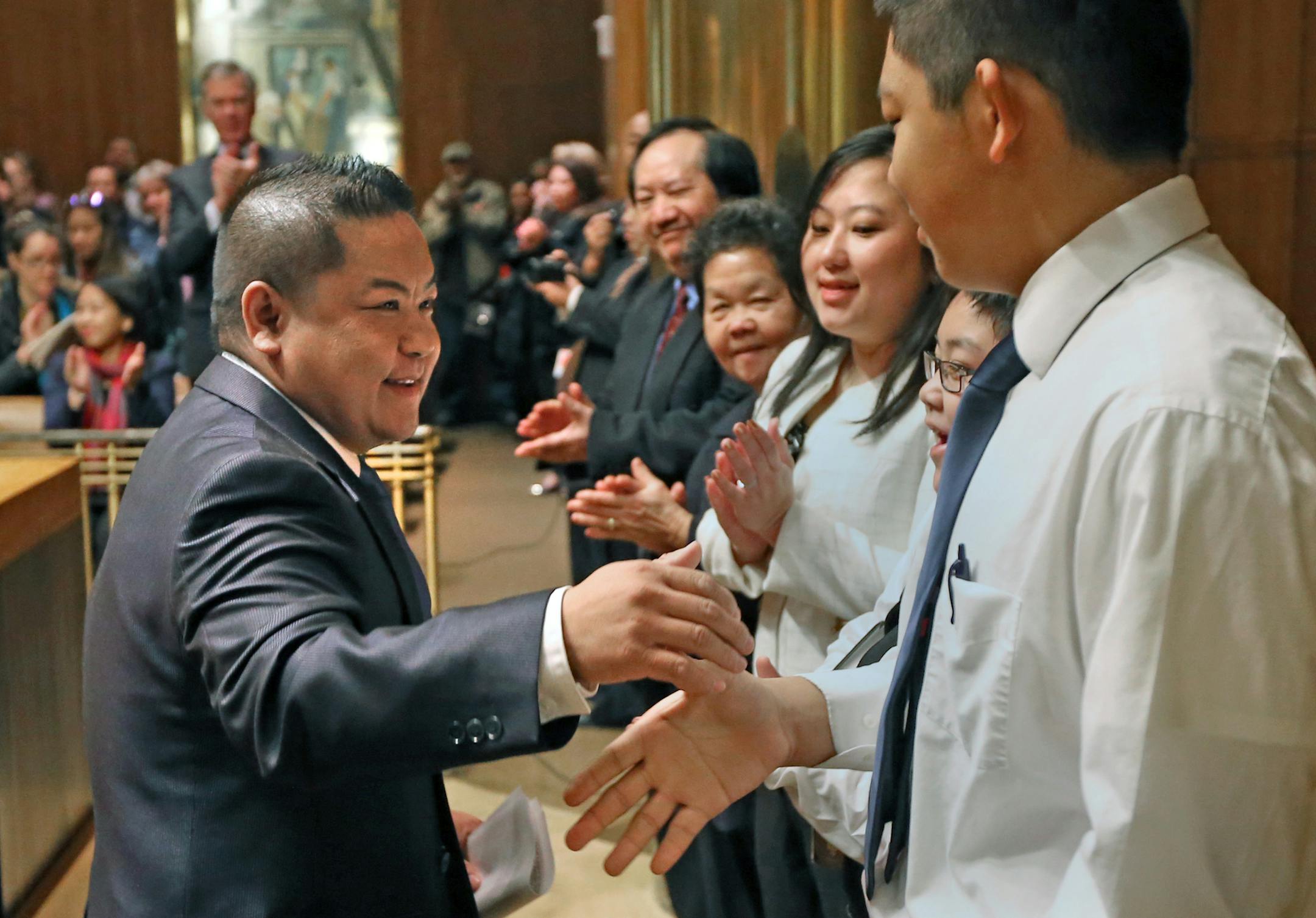
0:32Dai Thao delivered his inaugural message Thursday with confidence after being sworn in as St. Paul's newest City Council member. But he paused a few seconds to collect his emotions before declaring that the city's "diversity is our strength."
"I believe that being the first Hmong-American council member of our great city of St. Paul is no different from the first Irish, German, Swede, African-American, Polish, so on," he said. "You not only carry the extraordinary expectations but also the hopes and dreams of your own community.
"With that said, I want to make it clear that I'm here for all communities, that your family is like my family."
Thao's election to the City Council's First Ward seat this month was the latest chapter in the Hmong community's remarkable political rise in the Twin Cities only two generations after thousands fled Communist persecution in Southeast Asia in the 1970s.
In a few weeks, another chapter will be written when Blong Yang takes office as the first Hmong-American on the Minneapolis City Council.
David Schultz, a Hamline University professor and political analyst, said that the Hmong community might be approaching "a tipping point" where it has sufficient population, experience and influence to elect growing numbers.
The Hmong "have learned how to play politics in the sense where they're now in position to form coalitions with other groups, as opposed to being isolated," Schultz said.
Kazoua Kong-Thao, a former St. Paul school board member and one of six candidates who lost in the First Ward race, said that she was "excited" by Thao and Yang's victories and that they would open doors to other Hmong candidates.