

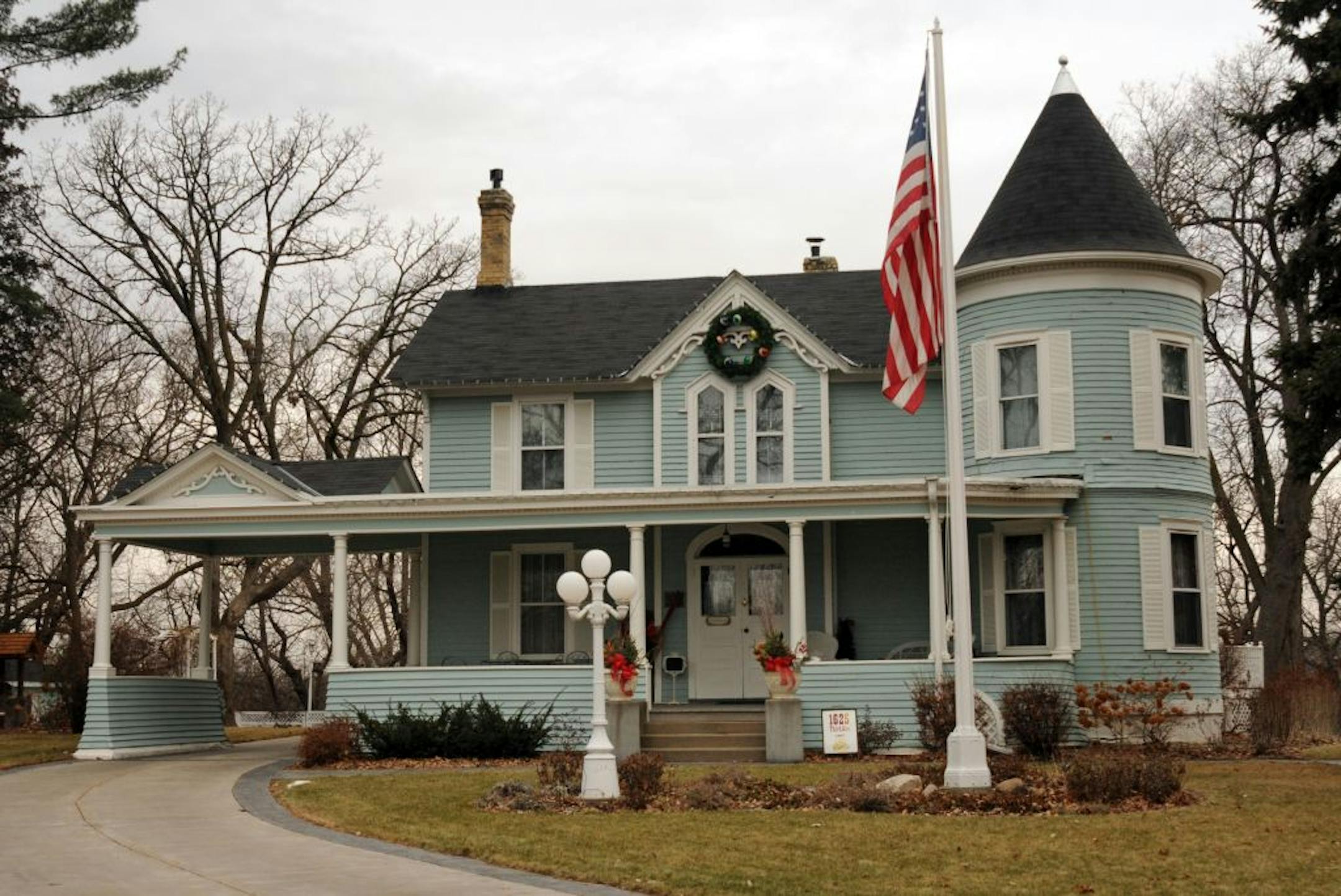
When Laurie Elvig moved from Cold Spring, Minn., to Anoka's Swede Town neighborhood in September, she knew little about the city and absolutely nothing about the historical area she was about to embrace.
"The first thing we realized," Elvig began, "was how friendly the neighbors were. They brought us homemade chocolates.
"And we noticed that three of the houses on our block have chickens."
Then she began seeing the sandwich-board signs on neighbors' lawns, telling when the homes were believed to have been built. One house on Harrison Street was erected in 1856. One on Van Buren Street was built in 1863. Another sign on Van Buren says 1859, although owner Linda Voska says it was built in 1856. And all the signs say Swede Town.
"Before that, I lived in another area of Anoka, the Whiskey Flats neighborhood," Voska said. "I don't know much about these neighborhoods, but I love all the old houses."
Anoka is a city of neighborhoods, much like Minneapolis and St. Paul, on a smaller scale, but no less grand. The city's quaint Main Street district is what attracts tourists. But travel a few blocks away -- in any direction -- and you step into history.
A Civil War first
For decades, a stretch of Third Avenue, just south of Main Street, was the northern metro area's answer to St. Paul's Summit Avenue. This is the Christian Hill neighborhood, named for the many church steeples that once stood stoically not far east of the Mississippi River. Today, many of the post-Civil War homes remain as a monument to a once-lavish and still highly desirable neighborhood.

