

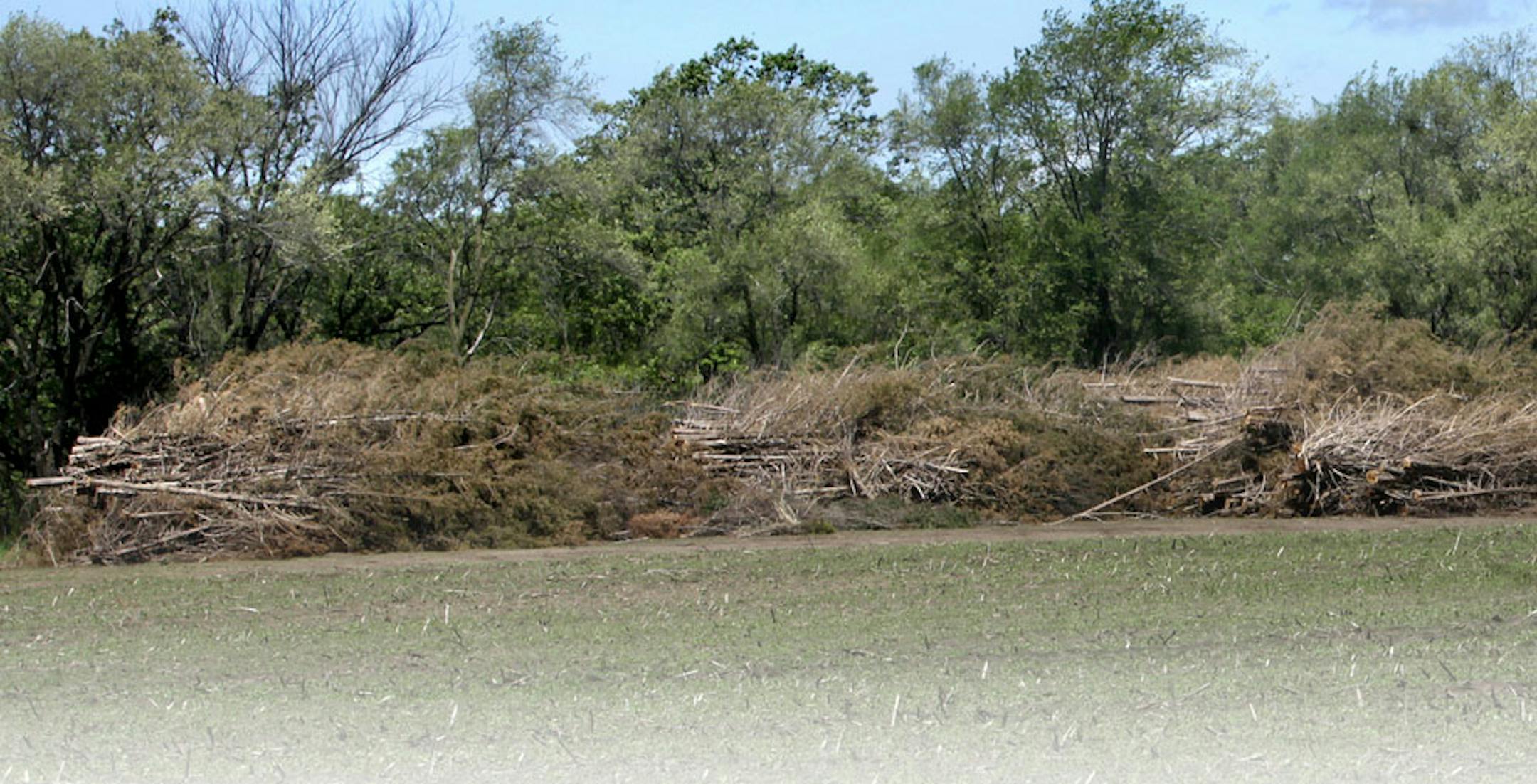
In a woodland a half-mile north of Anoka High School lie the remains of one of the great buckthorn battles of recent years.
Nearly half of the 200-acre Anoka Nature Preserve along the Rum River has been cleared of snagging buckthorn and other invasive plants since February. Twenty-two semitrailer truckloads of vegetation have been shredded and hauled away already, and a nearly equal amount — a football field-sized pile, 15-feet high — will soon be obliterated by a 95,000-pound, 1,000-horsepower mulching machine.
The $179,000 project is part of a pilot program launched in 2008 by the Minnesota Department of Natural Resources, with the aim of restoring habitat and reaping a fuel source in the process. Hundreds of acres in the metro area have been ridded of invasive plants, and the mulch has been used as fuel at the District Energy plant in St. Paul, said Barb Spears, coordinator of the DNR's Woody Biomass Project, which ends this month.
For years, buckthorn has been removed largely with hand equipment and burned at the site. The DNR program "is an opportunity to get something good from buckthorn — bioenergy," Spears said.
At the Anoka Nature Preserve, the scenic change is dramatic. Hundreds of white and bur oaks, buried last fall by a thorny wall, are now visible. Hillocks once submerged in the thick, green buckthorn now add graceful contours to the returning oak savanna.
"Before, the buckthorn was so dense you couldn't see 30 feet ahead in the winter with all the gray stems. Now, you can see 250 feet and clearly see the big oak trees," said Chris Lord, project manager for the Anoka Conservation District, which has overseen the project.
Soon, the stack of invasives will be gone, after the grinding machine turns them into mulch. It will take about 20 semitrailer trucks, each carrying about 20 tons, to haul the remaining material to St. Paul.
There it will help fire a boiler in the District Energy plant that provides steam heat and cooling for downtown homes and buildings, including the State Capitol, said Jeff Guillemette, biomass fuel manager for Environmental Wood Supply. Twenty truckloads would feed the boiler furnace for less than half a day, he said.


