

As the sun rose over the St. Croix River and thermometers struggled to reach zero, Joe Merchak and about two dozen volunteers were out at their posts on New Year's Day, hiking through conservation land or peering through frosted car windows to count every bird they could see.
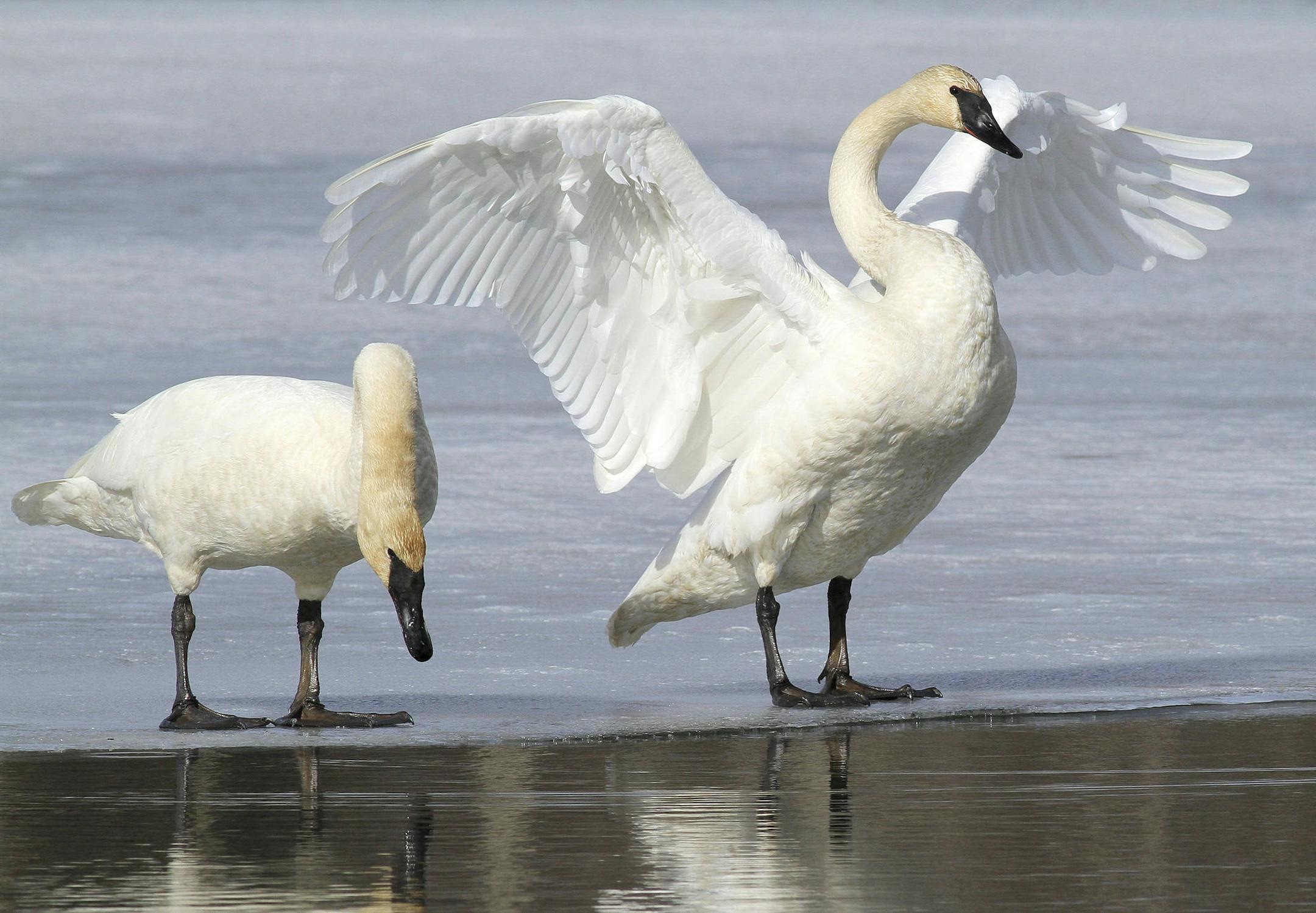
More than 100 trumpeter swans, which had not nested in southeastern Minnesota for nearly a century before being reintroduced, were seen near the still-open water at the Belwin Conservancy in Afton. Three bald eagles were spotted, along with more than 1,400 geese. By nightfall, the counters were hoping to see or hear which species of owls may have flown down from Canada.
The Christmas Bird Count is a tradition that has been going on since 1956 in the Afton area, encompassing both the Minnesota and Wisconsin sides of the St. Croix. The Audubon Society started the national effort in 1900 as a way to get citizens around the country to collect a census of every species that could be seen or heard on a day that would act as a counterweight to the once popular Christmas bird shoots.
Locally, it serves as a snapshot of how healthy once- or still-struggling species are and as a way to mark the differences through the decades of particularly tough or mild winters.
"Sometimes we'll get these invasions of red finches or snow owls from Up North, depending on what the climate and the food is like in Canada," said Merchak, who has been doing the count for decades. "You never know. But you put it together with national data from over the years, and you see there's climatic changes and habitat changes that are reflected not just across the country but throughout the Americas."
Family tradition
David Tanner has been doing the counts along the St. Croix every year with his family for about 45 years, starting by trailing along with his grandmother when he was a teenager.
He said he's most amazed by the success stories, by seeing the birds we now almost take for granted but were all but extinct in this area just a few decades ago — birds such as bald eagles, wild turkeys and trumpeter swans.
"Back in the '70s our goal was to see an eagle," Tanner said. "Now you can't turn around without running into an eagle."
![A bald eagle scans its surroundings on the Mississippi River, near Lock and Dam No. 1, after temps dropped into the single digits overnight and seen Tuesday, Nov. 13, 2018, in Minneapolis, MN.] DAVID JOLES • david.joles@startribune.com B3 standalone](https://arc.stimg.co/startribunemedia/I5DQZTM5RINGMOSD4E7BT2M2NI.jpg?&w=1080)


