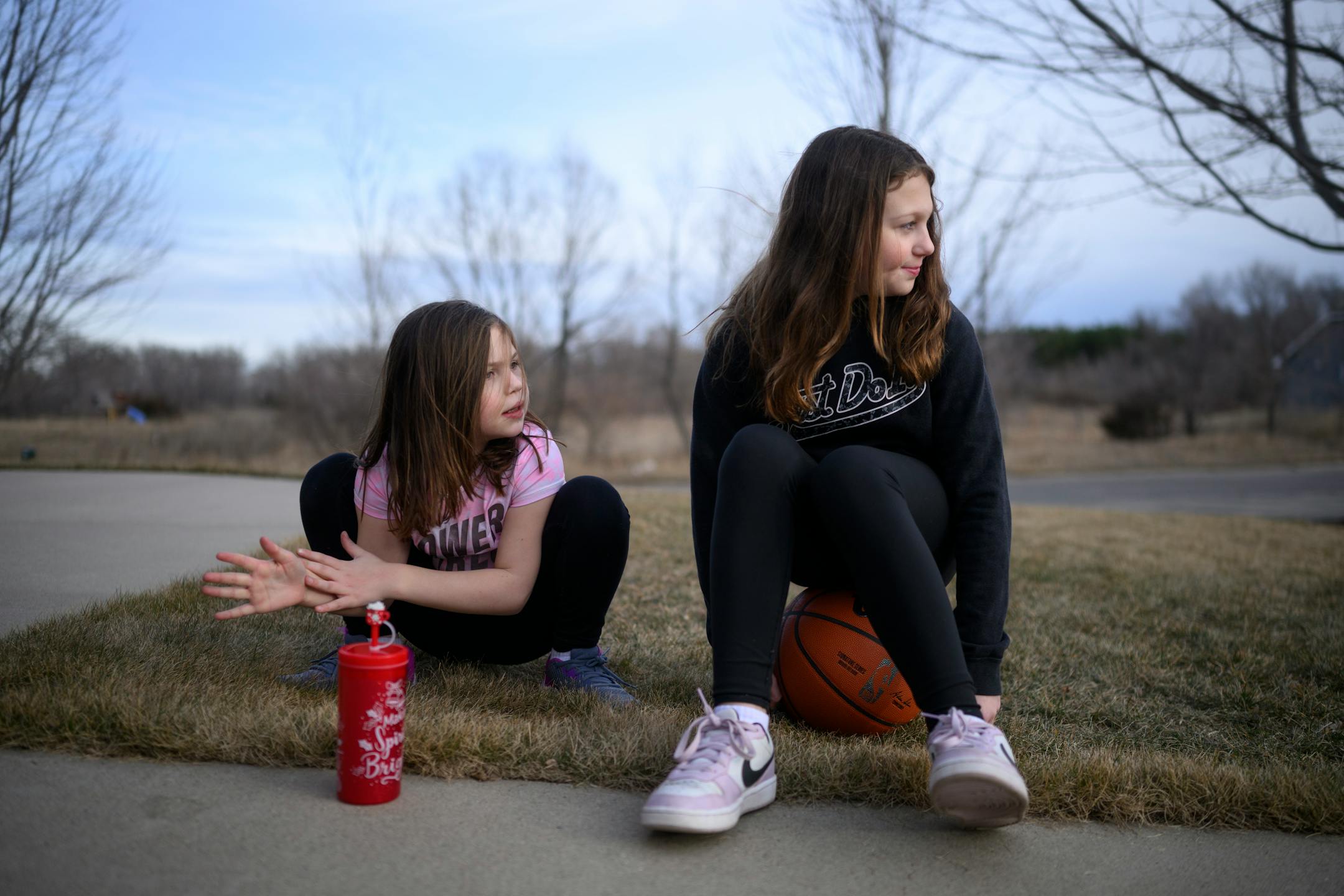
ST. AUGUSTA, MINN. - Abigail Voigt was born to talk.
On a recent weekday afternoon, the 11-year-old was chattering about how gymnastics is her favorite sport, grumbling about not being able to go on a promised trip to the Bahamas (more to come on that), and explaining how a cochlear implant device connects to her head.
But for the first three years of her life, Abigail wasn’t able to communicate vocally.
“Before she really had words, she would be very theatrical. She would try so hard to tell me what she was thinking and it would frustrate her,” said Stacy Voigt, Abigail’s mom.
Abigail was born five weeks early and failed the newborn hearing test, which isn’t uncommon for premature infants. But she continued to fail hearing tests and was soon diagnosed with severe to profound hearing loss — a surprise to parents Stacy and Jeremy because they had no family history of congenital hearing loss.
“As a new parent, it was pretty nerve-wracking and terrifying,” Jeremy said. “You don’t know what the future holds.”
The St. Augusta parents, now 37, learned they both have a recessive gene called “connexin-26″ that can cause hearing loss. Because of that, there was a 25% chance their child would be born with hearing impairment. And it happened twice: the Voigt’s second daughter, Zoey, now 10, was also born with profound hearing loss.
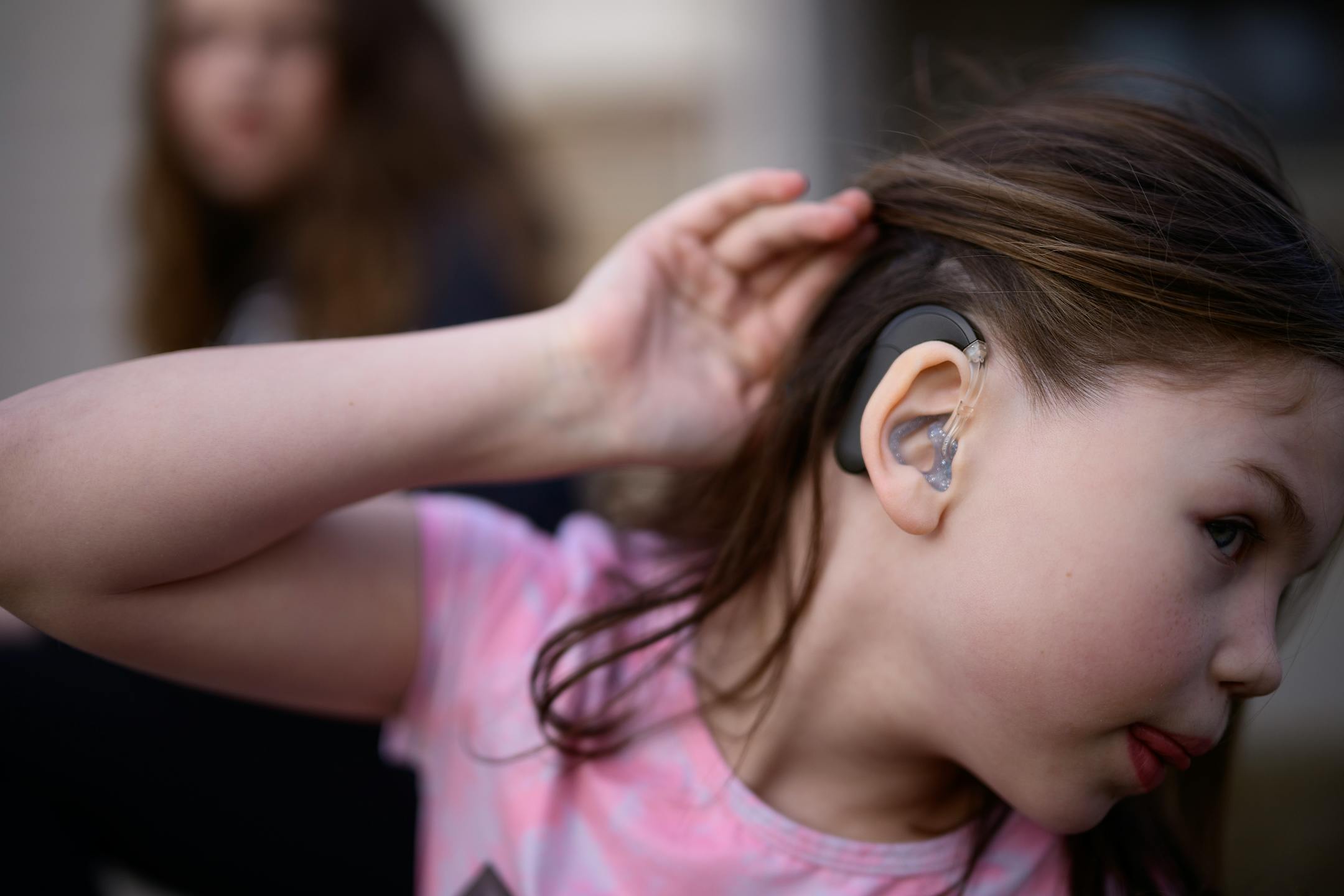
Like her older sister, Zoey can be a chatterbox but is a bit more shy, both with classmates and a reporter visiting on a recent weekday afternoon. She instead was more interested in playing outside with the neighbors.